





Traditional Japanese Vase Pair
These traditional japanese vase pair examples bring striking symmetry and historic craftsmanship into a room.
Traditional Japanese Vase Pair
A traditional japanese vase pair comprises matching decorative vessels created in Japan across the eighteenth, nineteenth, and early twentieth centuries. Buyers seeking these items will encounter diverse forms ranging from large floor vases and garden urns to lidded jars and table lamps.
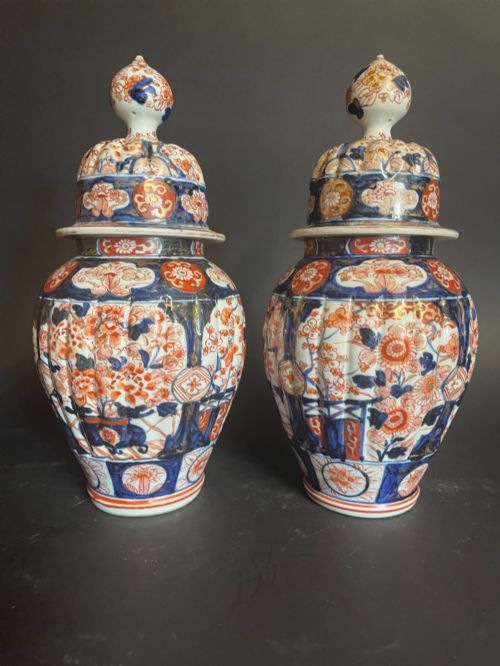
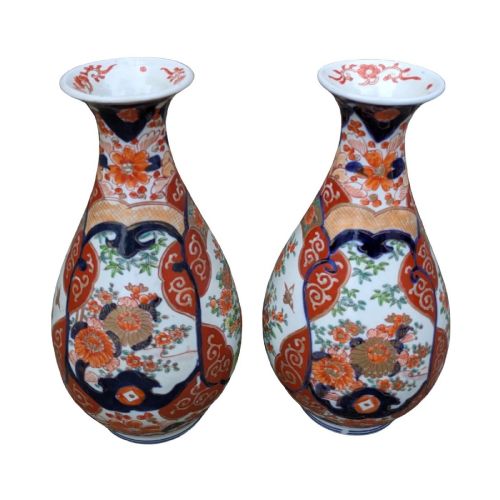
The selections span distinct periods including the Edo and Meiji eras, alongside items bearing nineteenth-century and early twentieth-century dates. Imari ware and Satsuma ware feature prominently among the styles available on this page.
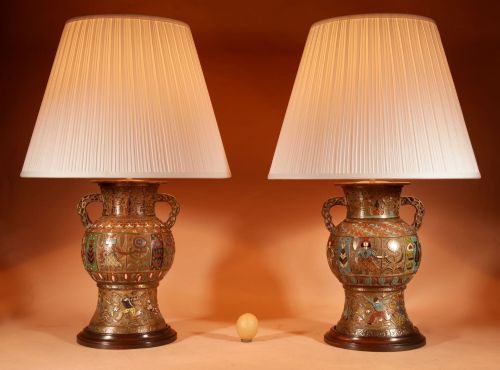
Many of these matched vessels have been adapted over time into table lamps while retaining their original ceramic and bronze bodies. Their dual nature offers interior decorators balanced focal points for mantelpieces, entrance halls, and reception rooms.
How traditional japanese vase pair objects were made
Artisans shaped these pieces from porcelain, bronze, and brass, often incorporating intricate enamel work and applied gold leaf. Ceramic bodies were hand-painted with detailed motifs before undergoing high-temperature kiln firing.
Metal vessels utilised techniques such as champlevé enamel to create complex surface patterns within recessed metal cells. Wood components and fabric additions occasionally supplement the primary ceramic and bronze structures.
Traditional Japanese Vase Pair Retail Price Guide 2026
Typical asking prices for traditional japanese vase pair among the pieces listed under this phrase on Sellingantiques today, from the lower quarter to the upper quarter. They describe what is for sale here now, not the wider market.
Listings span multiple decades, incorporating porcelain and bronze materials alongside distinct Meiji period and Imari styles.
What varies in quality
The refinement of the hand-painted brushwork and the complexity of the enamel designs determine the visual sophistication of each piece. Finer examples display meticulous control over gold leaf application and precise pigment blending.
Subtleties in the casting of bronze elements and the symmetry achieved between both items in the pair influence overall desirability. The integrity of the original ceramic body and the preservation of surface decoration distinguish superior specimens.
The Traditional Japanese Vase Pair Glossary
- Imari
- A traditional Japanese style of porcelain originating from the port of Arita, typically characterised by a palette of underglaze blue, iron red, and gilt highlights. These wares were heavily exported to Europe from the seventeenth century onwards.
- Satsuma
- A type of earthenware originating from the Satsuma province, known for a crackled creamy glaze decorated with polychrome enamels and gilding. Pieces from the Meiji period frequently depict elaborate figural scenes.
- Champlevé
- An enamelling technique where artist-craftsmen carve troughs into a metal surface to hold enamel paste before firing. This method produces vivid, multi-coloured decorative panels on bronze lamp bases and urns.
- Meiji Period
- The historical era spanning from eighteen sixty-eight to nineteen twelve, marked by extensive international trade and highly detailed artistic output. Works from this time often exhibit remarkable technical precision.
- Arita
- The Japanese town recognised as the birthplace of porcelain production, where local kilns supplied extensive wares for domestic use and export. Artisans here perfected durable ceramic bodies suitable for large-scale floor vessels.
Traditional Japanese Vase Pair: Frequently Asked Questions
How were traditional Japanese vases used?
These vessels served primarily as decorative interior ornaments within traditional Japanese homes and later as prominent export pieces for Western drawing rooms.
Larger floor vases and garden urns occupied entrance halls and reception spaces, while smaller jars and baluster vessels sat upon tables and mantelpieces.
Are these pairs actually wired for electricity?
Several pieces listed on this page have been converted into table lamps utilising the original ceramic or bronze vases.
This adaptation allows buyers to integrate antique bodies into modern lighting schemes without altering the historical decorative elements.
How do I date a Japanese vase pair?
Dating relies on identifying stylistic markers associated with specific periods such as the Edo or Meiji eras, alongside material characteristics.
Examining the glaze consistency, pigment types, and any associated manufacturing traits helps place the objects within the eighteenth, nineteenth, or early twentieth centuries.
How do I care for antique porcelain and bronze?
Maintenance requires gentle dusting with a soft, dry cloth to protect delicate enamel and gold leaf details from abrasion.
Avoiding harsh chemical cleaners and moisture preserves the historic glaze surfaces and metal patinas over time.