



Traditional Japanese Porcelain Dishes
Traditional Japanese porcelain dishes bring centuries of firing mastery to the table, offering bold colour and intricate patterns that anchor any room.

Traditional Japanese Porcelain Dishes
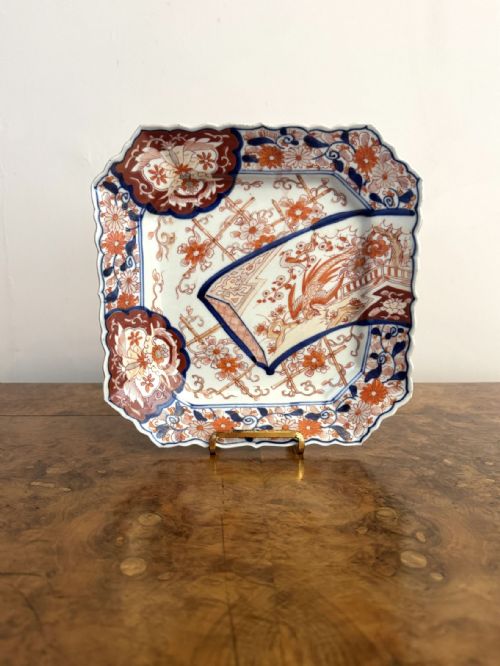
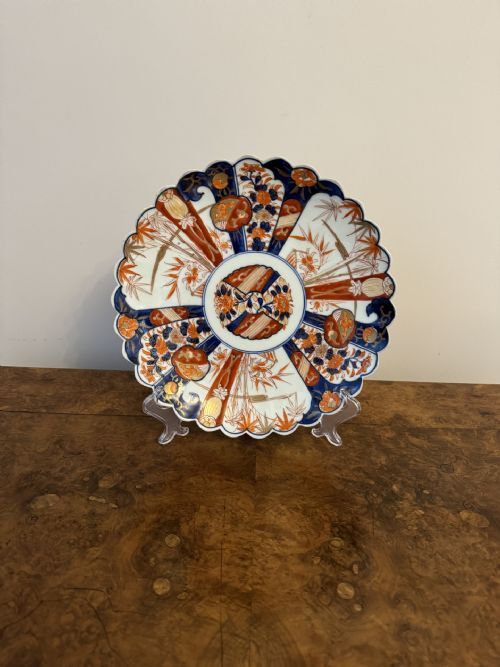
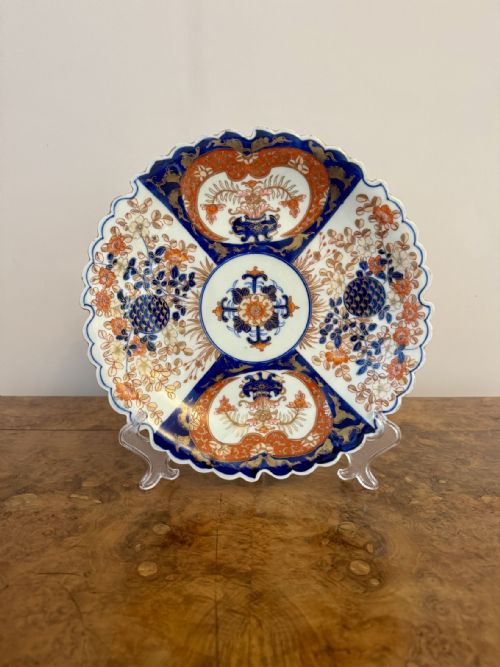
Traditional japanese porcelain dishes encompass an array of decorative plates, bowls, platters, and large chargers spanning the seventeenth century through to the Edwardian era and the Meiji period. Buyers encountering these pieces will most frequently find Japanese Imari wares, alongside specific forms such as Arita Aka-e dishes.
The objects take various shapes, including square formats, scalloped edges, and large circular chargers designed for display or fruit presentation. Many groupings arrive complete with their original storage boxes, reflecting their preservation over generations.
Materials and Technique
The makers formed these pieces from fine porcelain, applying cobalt underglaze pigments to create deep blue motifs before the initial firing. Artisans then added enamel colours, gold leaf, and gilt details over the glaze.
Certain pieces received additional hand-painted embellishments and gilding, set against wood elements where storage boxes accompanied the ceramics.
Materials recorded across the inventory include porcelain, enamel, cobalt underglaze, gold leaf, gilt, and wood storage boxes.
Factors of Quality
The distinction between standard examples and the finest pieces lies in the precision of the hand painting and the complexity of the palette. Crisp cobalt underglaze combined with refined enamel work and deliberate application of gold leaf elevates a charger or plate.
Structural variety also defines the range, from simple circular plates to unusual square shapes and scalloped edges that demand greater skill from the potter. Complete sets housed in matching storage boxes maintain a higher degree of historic integrity.
The Traditional Japanese Porcelain Dishes Glossary
- Imari
- A style of Japanese porcelain decorated in underglaze blue, iron red, and gold, named after the port from which the wares were shipped. This palette defines the vast majority of pieces encountered here.
- Aka-e
- Japanese for red pictures, describing porcelain decorated primarily in iron red enamel. It often appears on seventeenth-century wares from the Arita kilns.
- Charger
- A large decorative plate intended primarily for display on a wall or sideboard rather than for serving food. These pieces provide a wide surface for complex painted designs.
- Cobalt Underglaze
- A blue pigment applied to the raw porcelain body before glazing and firing at high temperatures. This technique ensures the colour remains durable beneath the glossy surface.
- Scalloped
- Having an edge formed into a series of curves resembling the edge of a scallop shell. This shaping appears frequently on plates and bowls within the selection.
Traditional Japanese Porcelain Dishes: Frequently Asked Questions
What is an Imari dish?
An Imari dish is a piece of Japanese porcelain decorated in a distinctive palette of cobalt blue, iron red, and gold. These ceramics were produced for export and domestic use alike.
They appear frequently in large charger formats and smaller scalloped plates, dating from the late nineteenth century and earlier periods.
How do I display a charger?
Chargers are large decorative plates designed for visual impact rather than dining use. Many feature robust proportions suitable for resting on plate stands or mounting securely on walls.
Their detailed underglaze blue and gilt surfaces catch ambient light effectively in a reception room or dining space.
What is Arita porcelain?
Arita porcelain originates from the Hizen province around the town of Arita, the cradle of Japanese porcelain production. These wares date back to the seventeenth century and represent some of the earliest export ceramics.
Pieces from this tradition display refined potting and controlled enamel painting.
Are these plates meant for dining?
While historic sushi plates and serving dishes were made for culinary use, many surviving antique examples function primarily as decorative objects. The presence of delicate gold leaf and enamel work encourages careful handling.
Collectors generally treat chargers and fine plates as display pieces rather than everyday tableware.