

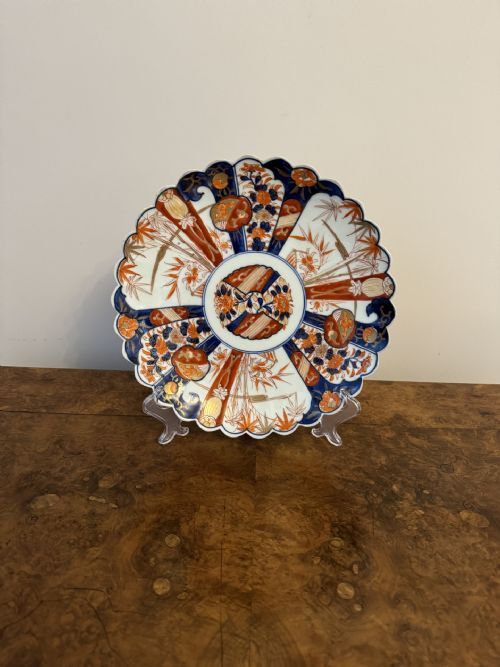
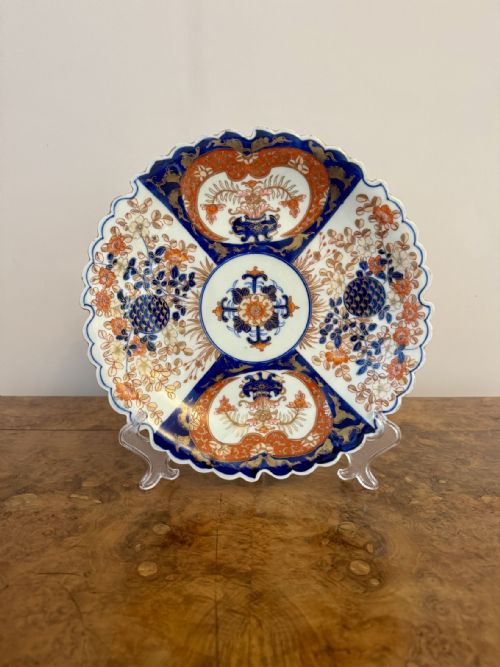


Traditional Japanese Imari Dish
A traditional japanese imari dish brings vibrant iron-red and cobalt decoration to a table, combining centuries of ceramic heritage in a single decorative piece.
Traditional Japanese Imari Dish
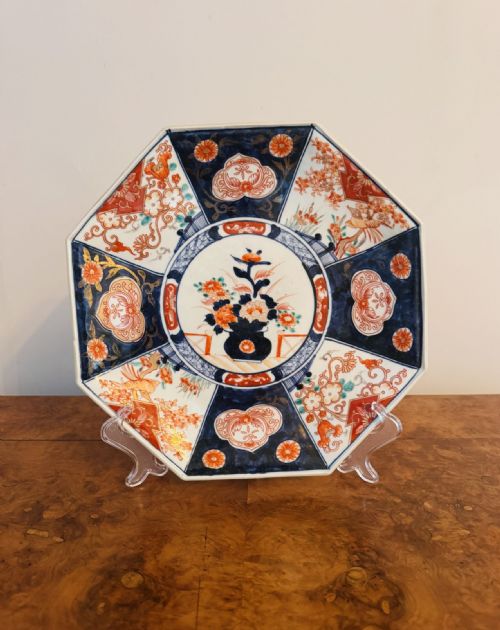
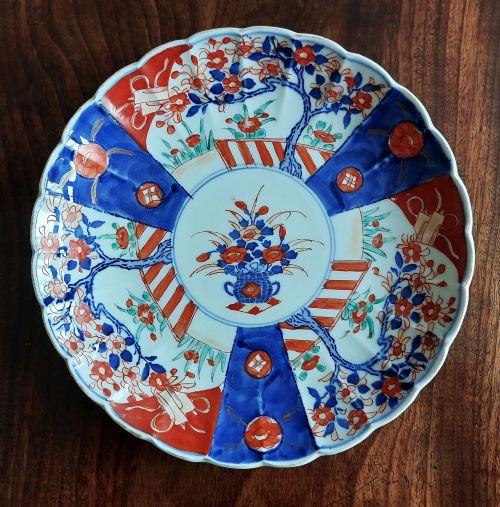
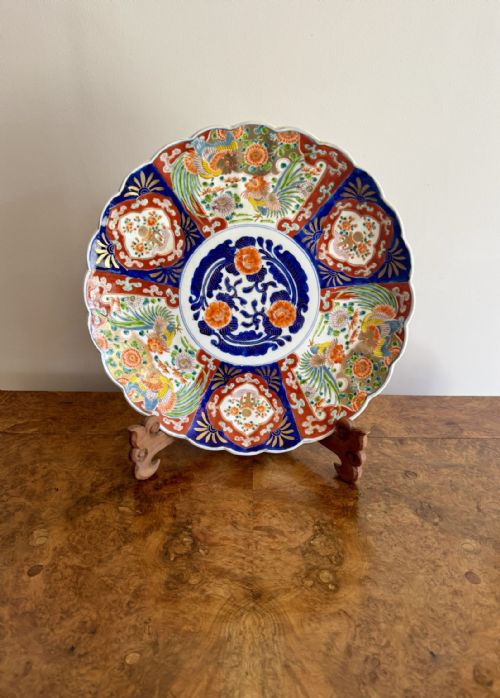
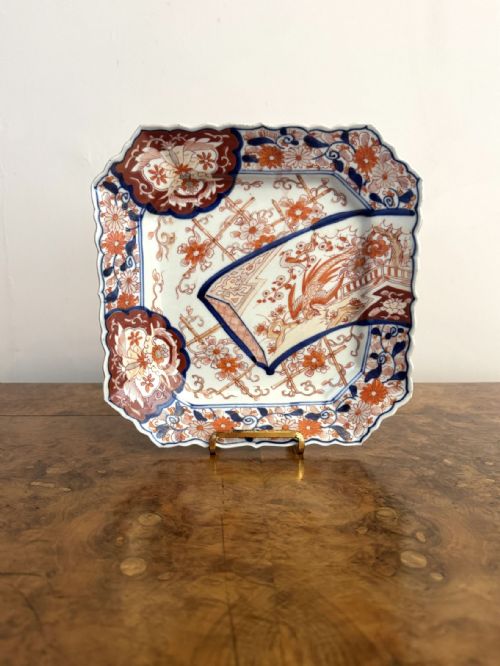
When you search for a traditional japanese imari dish, you find a variety of ceramic forms ranging from deep bowls and chargers to scalloped and hexagonal plates. The pieces span periods from the late seventeenth century through the Victorian and Edwardian eras into the early twentieth century.
Plates and chargers dominate the selections available, often appearing as individual decorative items or in matched pairs and collections. Bowls and shaped dishes provide alternative forms within the wider category, each sharing the distinctive palette associated with Imari ware.
How They Were Made
Potters built these items using porcelain and ceramic bodies, finished with cobalt underglaze to establish the deep blue foundation of the design. Enamel colours and gold leaf or gilding were then added over the glaze to create the characteristic multi-coloured surface.
Hand-painted techniques dictated the intricate patterns seen on plates and chargers, requiring careful firing to set the underglaze cobalt alongside the subsequent enamel and gilt details.
A proud fruit display plate once held Victorian apples, now content to sit quietly and look splendid without a single piece of fruit in sight.
What Varies in Quality
The precision of the hand-painted brushwork sets the finer examples apart from simpler production, particularly in the control of the cobalt underglaze and the application of enamel details. Richness in the use of gold leaf and gilding contributes further to the visual weight of a charger or plate.
Form and silhouette also differentiate the range, with hexagonal, scalloped, and square shapes demanding greater skill in moulding than standard circular plates. Age plays a role, with late seventeenth-century items carrying historical significance distinct from Meiji period or Edwardian export pieces.
The Traditional Japanese Imari Dish Glossary
- Imari
- A style of Japanese export porcelain originating from the port of Arita, traditionally decorated in cobalt blue, iron red, and gold.
- Charger
- A large decorative plate intended for display rather than for serving food at the table.
- Cobalt Underglaze
- A blue pigment applied to the raw ceramic body before glazing and firing, ensuring the colour remains permanent beneath the glassy surface.
- Meiji Period
- The era in Japanese history spanning from 1868 to 1912, marked by significant export trade to Western markets.
- Aka-e
- A Japanese term for red-painted ware, often used to describe the dominant iron-red enamel highlights found on Imari pieces.
Traditional Japanese Imari Dish: Frequently Asked Questions
How do I display a traditional japanese imari dish?
Larger chargers and platters suit wall mounting with appropriate fixings or placement on sturdy plate stands for sideboard display. Smaller bowls and shaped dishes fit well within cabinets or on open shelving where the surface patterns remain visible.
Because the decoration often includes delicate enamel and gilding, positioning away from direct, harsh sunlight helps protect the colours over time. Handling them with clean hands preserves the integrity of the overglaze details.
Are these pieces meant for daily dining?
These items serve primarily as decorative plates, chargers, and fruit display platters rather than practical tableware for everyday meals. Their historical nature and surface gilding mean they benefit from careful handling and display rather than regular use.
Hand washing in lukewarm water with mild soap is recommended if cleaning becomes necessary, avoiding dishwashers entirely to protect the ceramic and glaze.
What is the difference between Edo and Meiji pieces?
Edo period pieces, particularly those from the late seventeenth century, represent earlier traditions of Japanese export porcelain originating from production centres like Arita. Meiji period items reflect the later nineteenth and early twentieth-century export boom tailored for Victorian and Edwardian households.
Both periods share the iconic Imari palette, but earlier examples carry the weight of foundational Japanese ceramic history, while Meiji items show the refined scale of later production.
Why do some plates have scalloped edges?
Potters shaped the edges of plates and dishes into scallops, hexagons, or squares to add sculptural interest to the ceramic body before painting. These varied outlines complemented the radial and panelled designs typical of traditional Japanese decoration.
Shaped edges required greater technical skill during the forming and firing processes, distinguishing more elaborate tablewares from simple circular dishes.