
Traditional Hallway Storage
Traditional hallway storage pieces organise coats, boots and umbrellas using solid timber forms from the Georgian, Victorian and Edwardian periods.
Traditional Hallway Storage
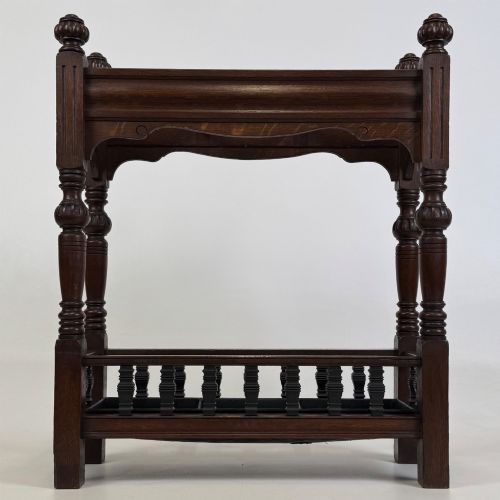
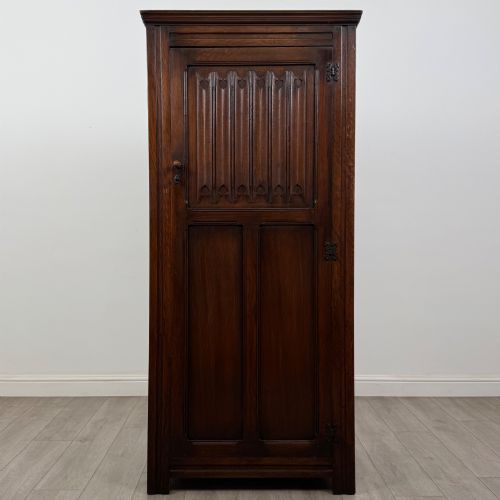
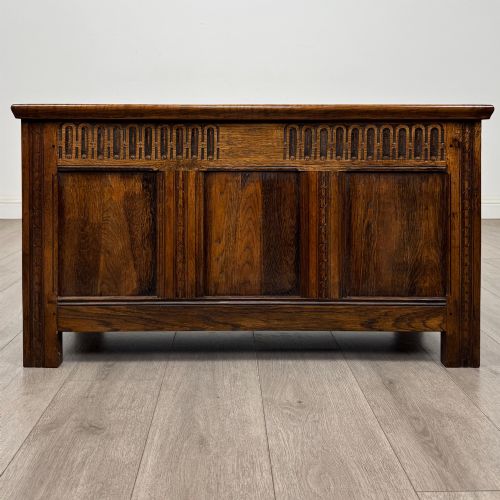
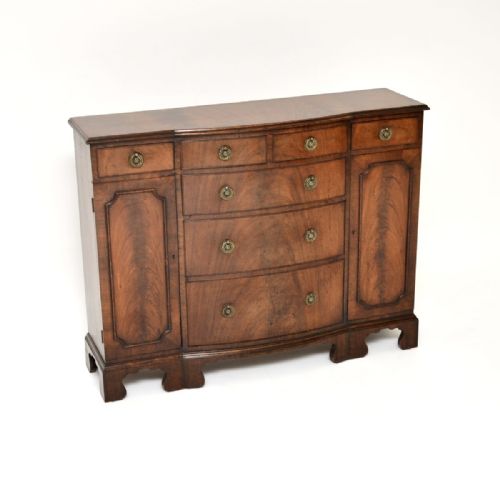
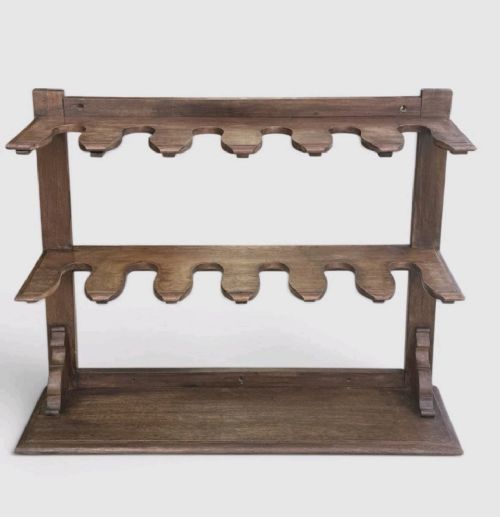
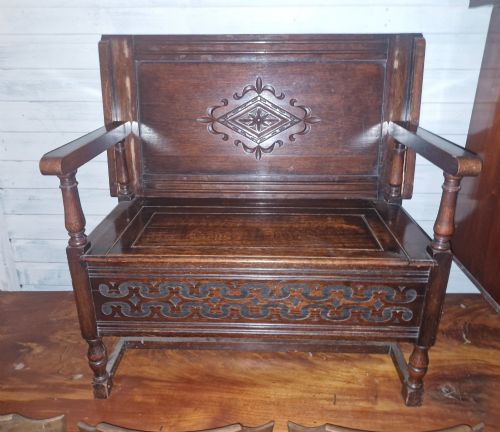
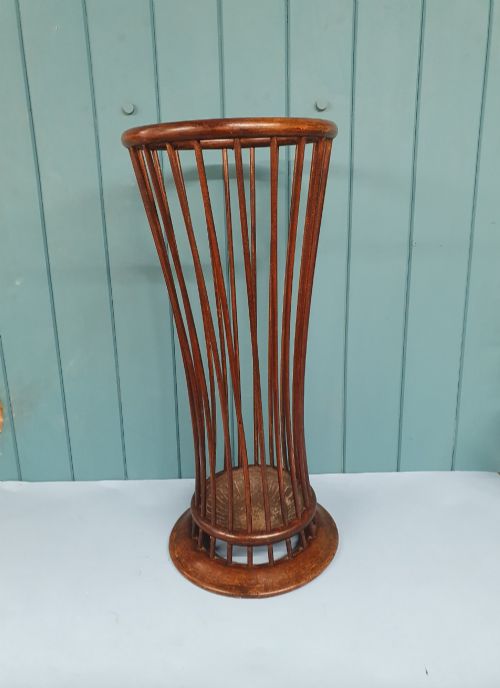
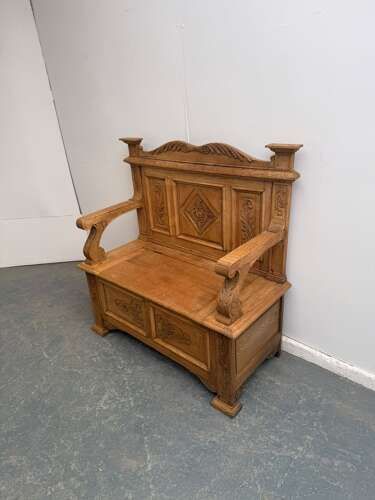
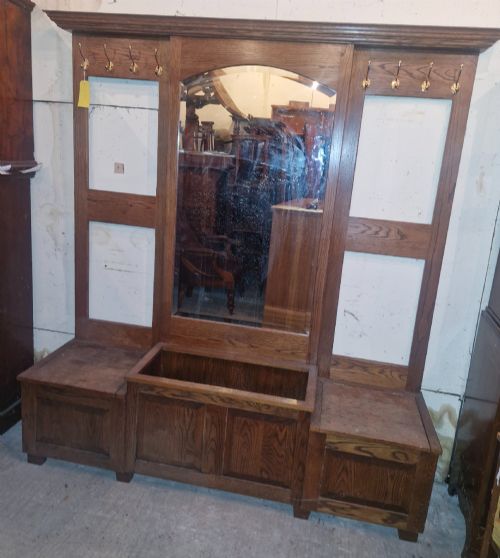
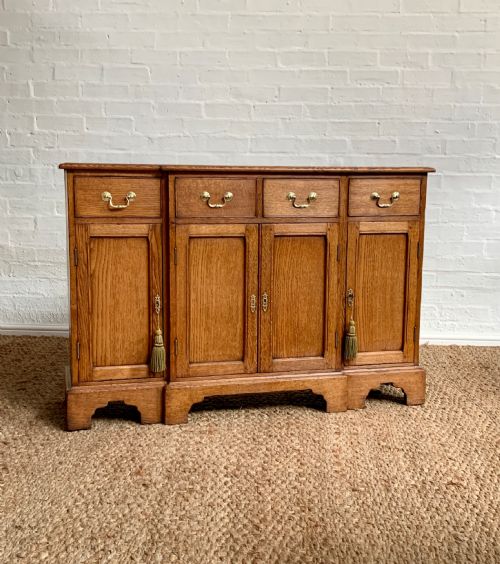
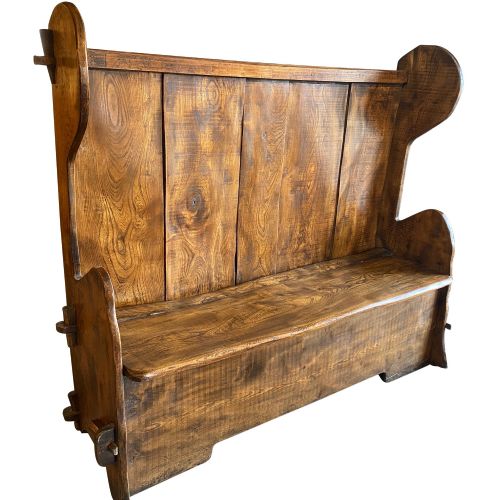
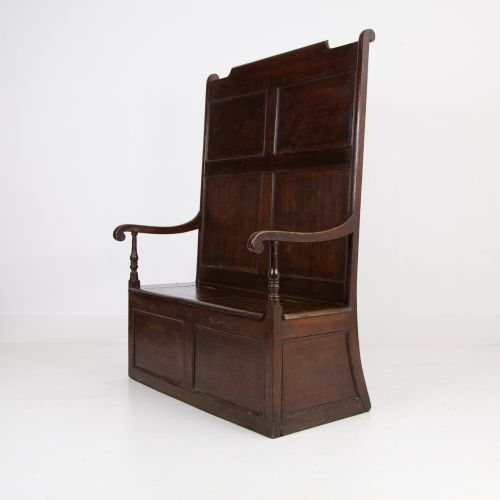
Traditional hallway storage encompasses practical timber furniture designed to manage entranceways, featuring items such as box settles, benches, umbrella stands, coat racks and small wardrobes. These pieces serve to keep muddy boots, wet coats and walking sticks contained within domestic entry spaces.
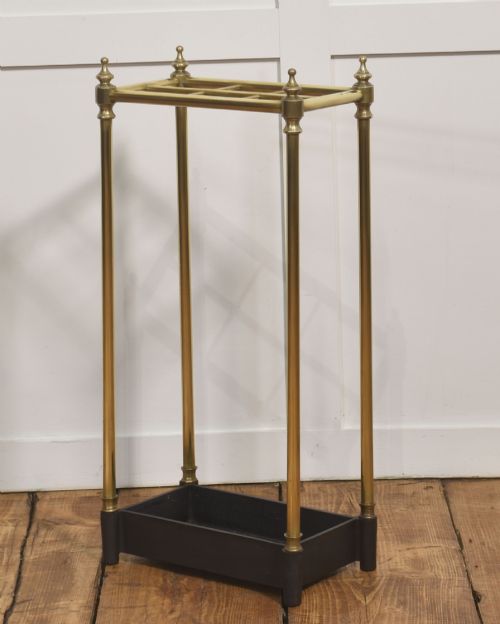
The pieces appearing most frequently in this selection span the Georgian, Victorian and Edwardian eras, constructed primarily in oak, pine and mahogany. Benches frequently incorporate lift-up lids for hidden storage, whilst dedicated stick stands include metal or brass drip trays to catch rainwater.
How they were made
Cabinet makers utilised durable domestic and imported hardwoods such as oak, mahogany, walnut and elm for heavy-use furniture like settles and boot racks, frequently finishing the timber with wax to highlight the natural grain. Pine formed the basis for utility cupboards and benches, which often received coats of paint or simple wax finishes.
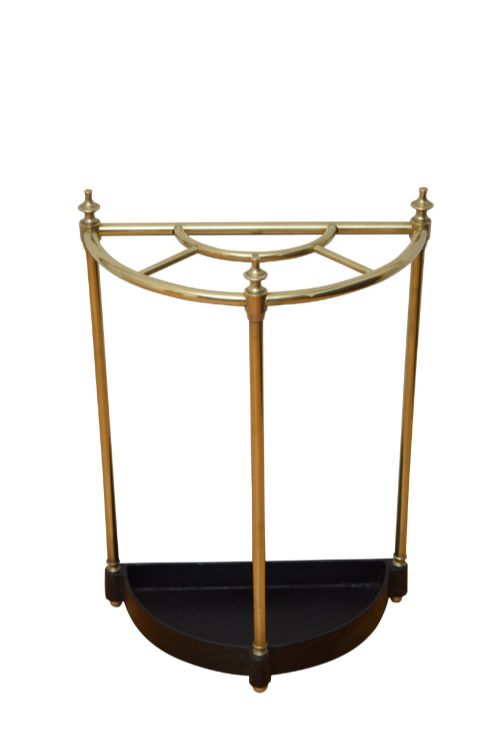
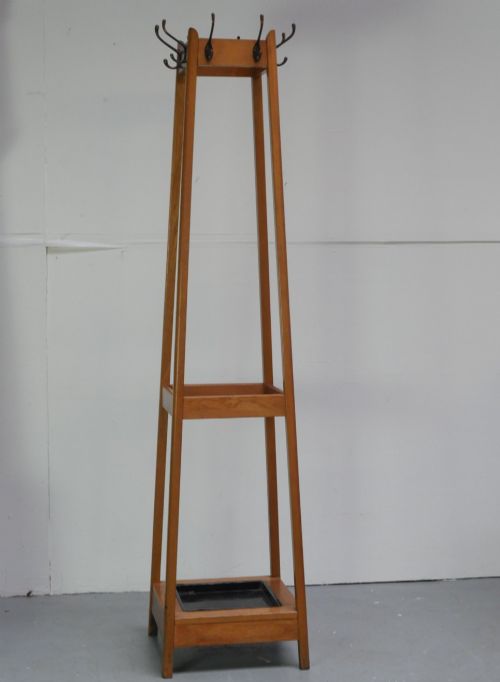
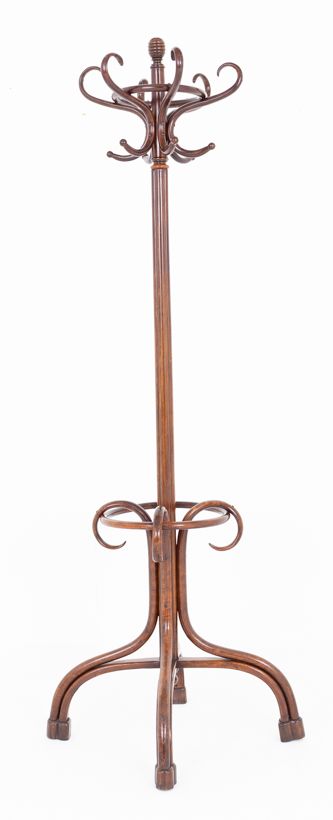
Metal components such as brass, cast iron and standard iron appear extensively on umbrella stands, hooks and drip trays, providing functional strength to withstand daily moisture and weight. Bentwood techniques shaped lightweight elm or beech into curving hatstands and demi-lune frames.
Some umbrella stands still contain decades of dried mud settled deep within their original cast-iron drip trays.
What varies in quality
The standard of timber selection and joinery marks the primary difference between everyday utility items and finer examples, with denser grains and traditional panel construction indicating superior craftsmanship. Pieces retaining original hardware, such as brass drip trays, cast-iron hooks and functional lift-up seat hinges, hold greater integrity than those with replaced fittings.
Surface treatments also dictate quality, as deep waxed patination accumulated over decades on oak and pine differs significantly from stripped or heavily repainted modern alterations. Original painted finishes on Hungarian pine benches contribute significantly to a piece's character and historical worth.
The Traditional Hallway Storage Glossary
- Box settle
- A high-backed wooden bench featuring a hinged seat that opens to reveal a storage compartment underneath. This form kept sitting areas warm by blocking draughts while offering concealed space for boots and textiles.
- Drip tray
- A shallow metal basin placed at the base of stick and umbrella stands to catch moisture from wet items. These trays are frequently removable to allow standing water to be emptied easily.
- Demi-lune
- A half-moon shape used for tables, stands and hall furniture designed to sit flat against an entryway wall. This profile saves floor space in narrow passages.
- Bentwood
- Timber softened by steam and bent into curved structural forms under pressure. The technique creates lightweight yet robust frames for coat stands and hallway seating.
Traditional Hallway Storage: Frequently Asked Questions
How do I choose the right size hall bench?
Measure the length and width of your entryway carefully, ensuring adequate clearance for doors to open fully while past the furniture.
Consider whether you need lift-up seating storage or an open boot rack beneath to match the volume of footwear in your household.
What is the difference between a stick stand and an umbrella stand?
Stick stands and umbrella stands generally share identical forms, though older variants designed for walking sticks often feature narrower divisions.
Both types typically incorporate metal liners or trays at the base to protect wooden flooring from dampness.
Are painted pine benches original?
Many Hungarian pine benches retain historical painted finishes in blue, black or grey, which formed a standard decorative treatment for regional furniture.
Examine the paint surface for natural wear patterns and underlying layers to determine its age relative to the timber body.
How should I care for waxed oak and pine furniture?
Apply a traditional beeswax polish sparingly with a soft cloth and buff gently to maintain the protective moisture barrier on the wood.
Position timber pieces away from direct heat sources and radiators to prevent the wood from drying out and splitting over time.