



Brass Walking Stick Container
A brass walking stick container is a practical hallway staple in brass, oak, and copper that keeps wet umbrellas and canes contained.
Brass Walking Stick Container
When you search for a brass walking stick container, you are looking at sturdy hallway vessels designed to hold wet umbrellas and walking canes. The pieces gathered here predominantly date from the Victorian and Edwardian eras, spanning the nineteenth and early twentieth centuries, though some earlier Georgian examples appear.
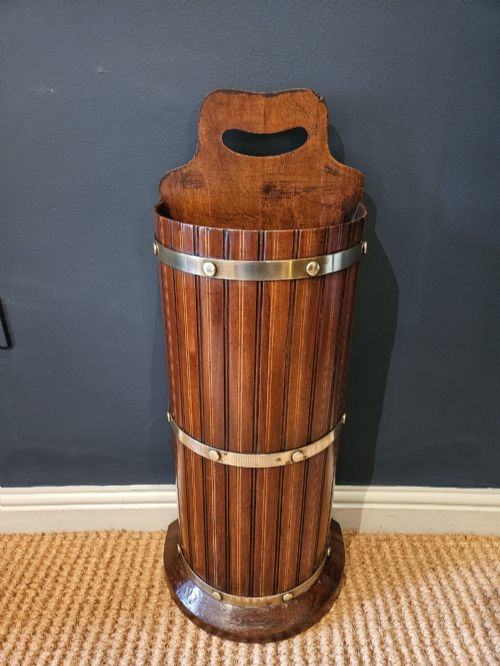
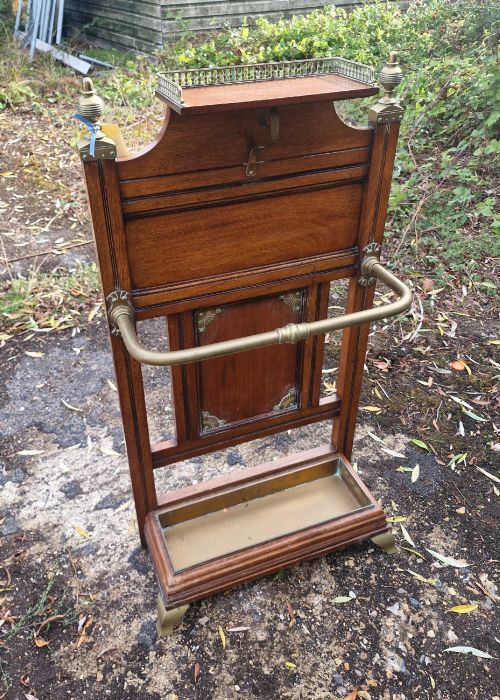
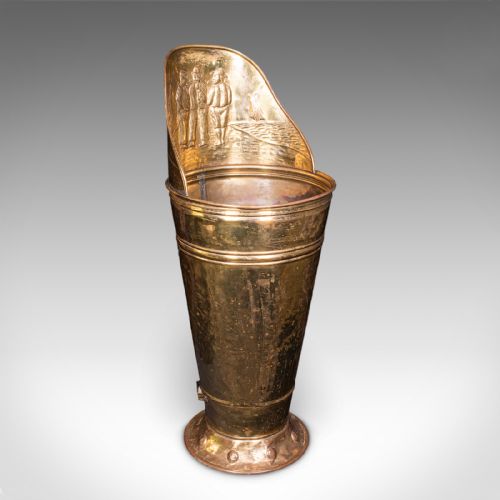
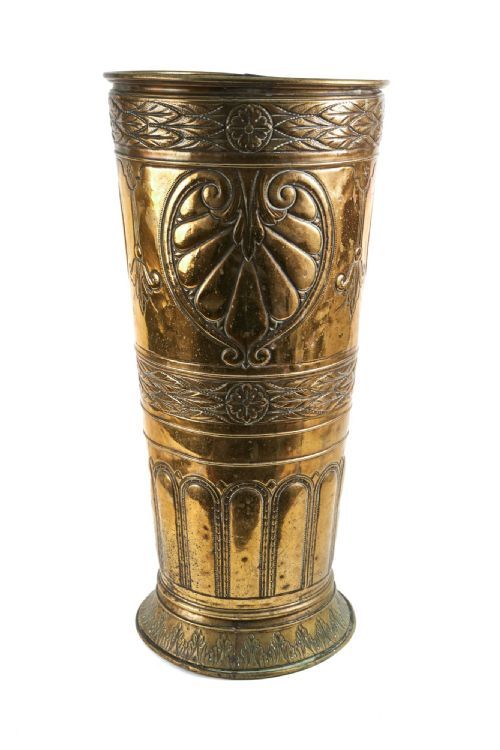
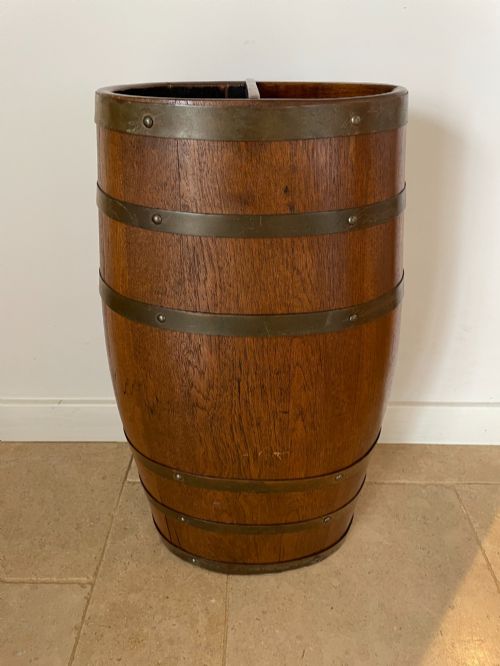
You will encounter cylindrical and oval barrels, often bound in bright metal or pierced with decorative patterns. These objects typically take the form of stick stands, umbrella stands, or combined umbrella and stick stands meant to sit directly on a hallway floor.
The most common versions met on this page are Victorian brass-bound wood barrels and pierced brass cylinders. They combine utility with the warm gleam of polished metal and timber, reflecting the domestic habits of English country houses and town halls alike.
How they were made
Makers constructed these containers using traditional cooperage and metalworking techniques. Oak and mahogany staves were shaped and held together with tight metal bands, creating robust barrels capable of withstanding daily dampness.
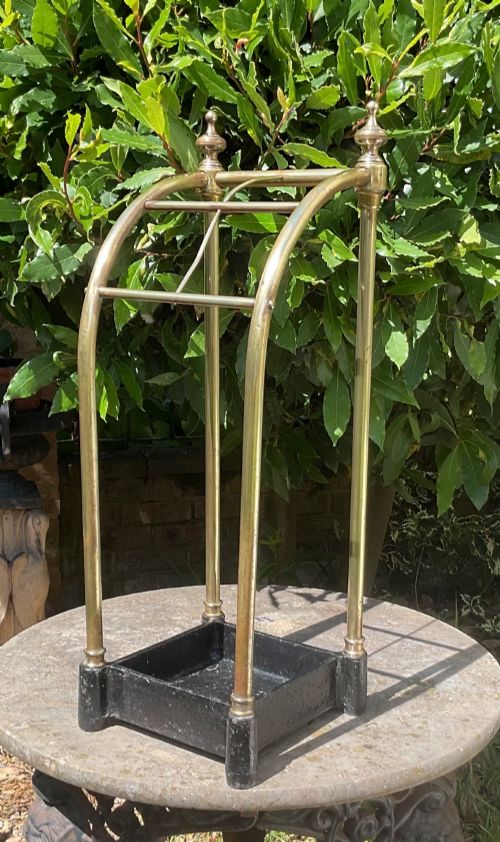
For the metal examples, sheet brass and copper were rolled, riveted, and pierced with decorative motifs, sometimes paired with heavy cast iron bases for stability. These combined materials allowed workshops to produce vessels that were both decorative and heavy enough not to tip when loaded with heavy walking sticks.
Brass Walking Stick Container Retail Price Guide 2026
Typical asking prices for brass walking stick container among the pieces listed under this phrase on Sellingantiques today, from the lower quarter to the upper quarter. They describe what is for sale here now, not the wider market.
Many of these sturdy holders have spent over a century catching drips without ever complaining about the weather.
What varies in quality
The distinction between ordinary and superior pieces rests on the weight of the materials and the crispness of the construction. Solid timber staves with tight joints and heavy gauge brass or copper demonstrate a higher standard of craftsmanship than thinner, lighter alternatives.
Subtleties in decorative execution also separate the better examples. Pierced brass work with clean, sharp edges and well-fitted metal bindings indicate a careful hand, whereas simpler stamped or looser assemblies show a more utilitarian production.
The Brass Walking Stick Container Glossary
- Coopered
- Made by a cooper using wooden staves bound together with metal hoops, much like a traditional cask or barrel. This technique ensures the vessel remains stable when holding wet items.
- Pierced brass
- Metal sheet that has been cut through in decorative patterns to let light and air pass. This technique lightens the visual weight of the container while adding ornamentation.
- Stick stand
- A freestanding hallway furniture piece designed specifically to hold walking sticks and canes upright. They often feature metal liners or drip trays at the base.
- Brass bound
- Fitted with structural or decorative metal bands around a wooden body. These bands reinforce the structure against shrinking and swelling.
Brass Walking Stick Container: Frequently Asked Questions
What is a brass walking stick container?
It is a hallway receptacle designed to hold walking sticks, canes, and umbrellas.
These pieces use metal and wood to keep floors dry and hallway items organised.
How were they used historically?
They stood in entrance halls to receive wet umbrellas and walking aids upon entering a home.
Guests and residents placed their damp gear inside to protect interior wooden floors from moisture.
How do I live with one?
Place it in a porch or hallway where wet items can be deposited easily.
Ensure any inner metal liner is checked for water retention to protect the surrounding floor.
How can I tell the periods apart?
Victorian and Edwardian pieces often display heavier brass bindings and distinctive pierced metal designs.
Coopered oak examples from the nineteenth century rely on traditional barrel-making methods visible in the timber staves.