
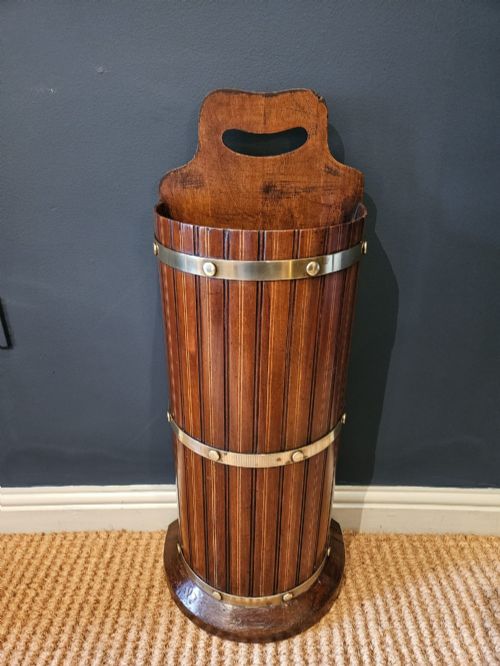
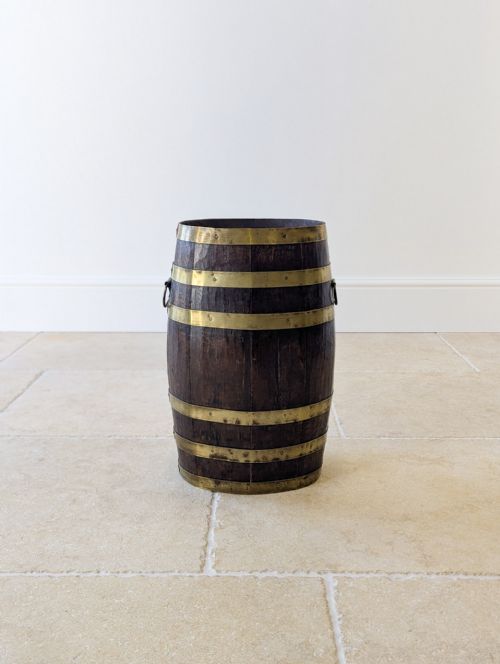
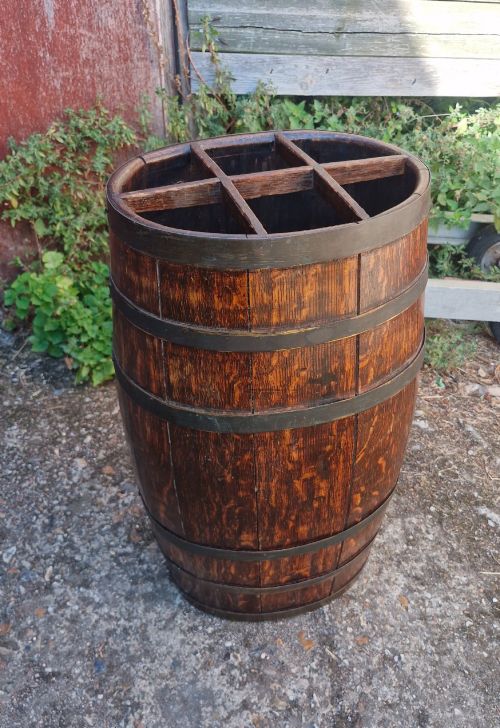
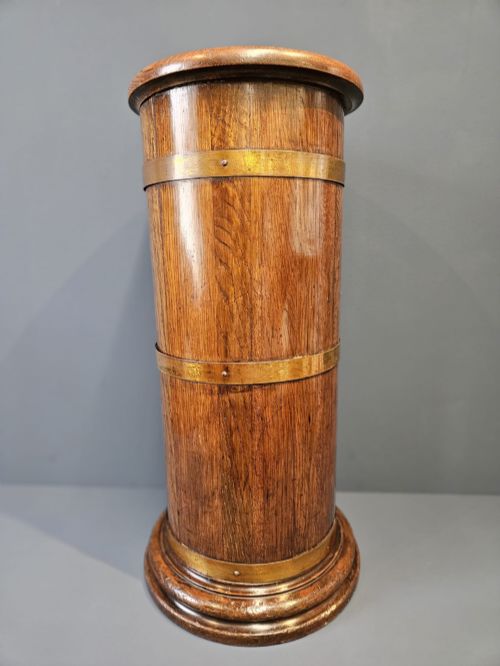




Brass Bound Umbrella Barrel
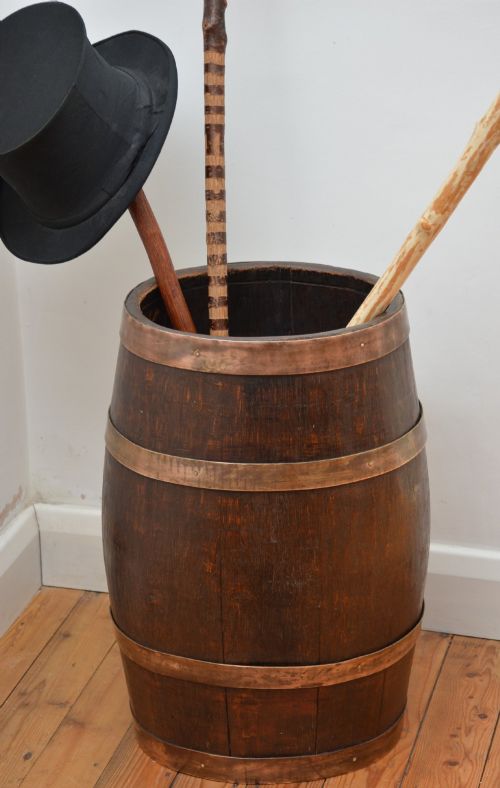
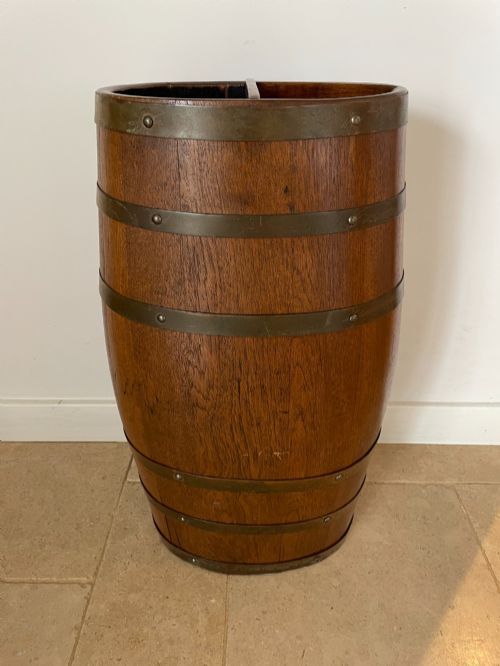
These brass bound umbrella barrel designs offer sturdy hallway storage, built from coopered timber and secured with heavy metal bands.
Brass Bound Umbrella Barrel
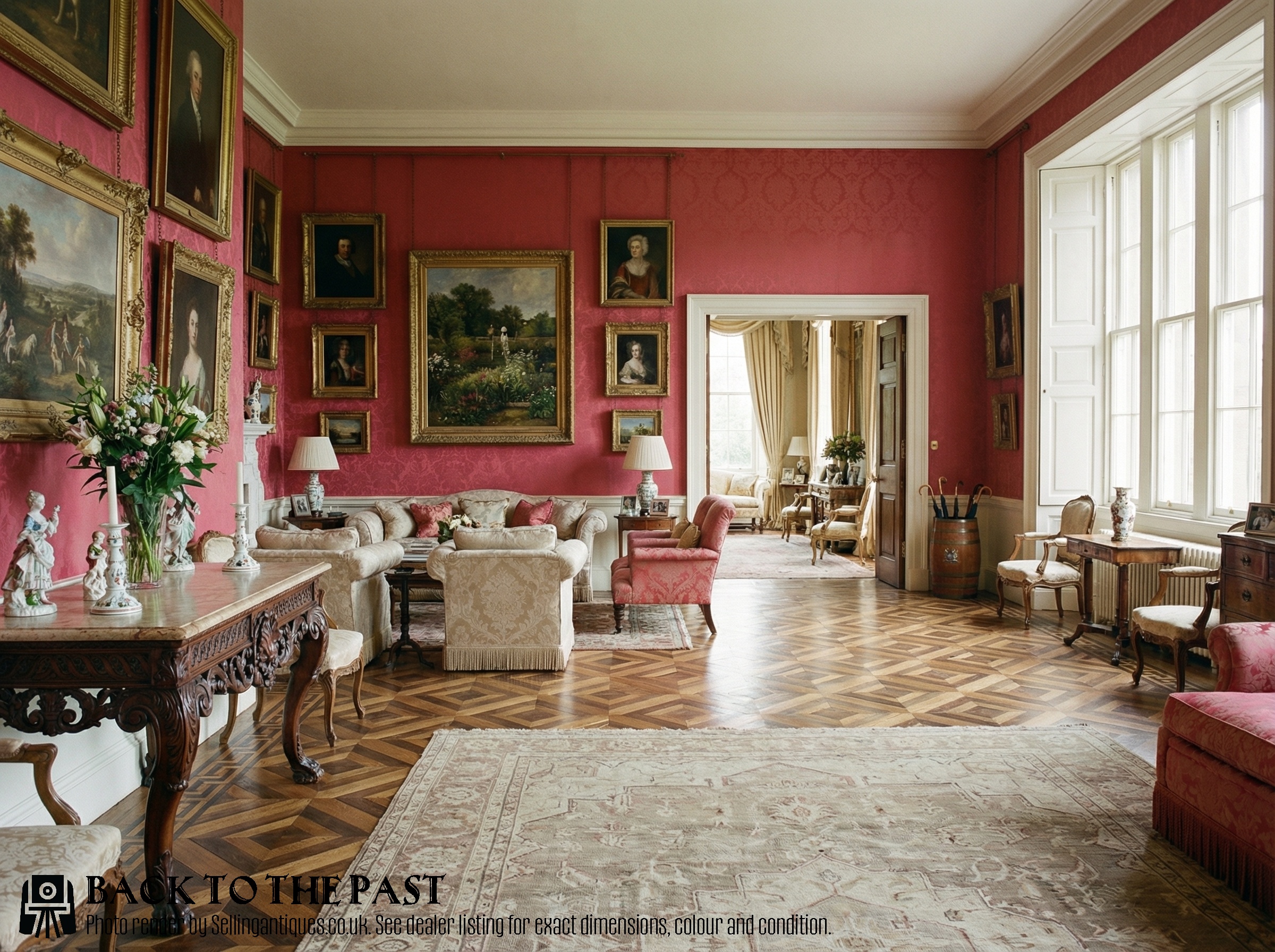
A brass bound umbrella barrel serves as a practical hallway vessel for walking sticks and wet umbrellas, typically taking a cylindrical or oval form. These pieces emerge most frequently from the Victorian and Edwardian periods, reflecting a long tradition of utilitarian English country house furniture.
Buyers encounter sturdy coopered construction most often on this page, where individual wooden staves are bound together with metal bands. Oak provides the primary body across the majority of examples, occasionally joined by mahogany or copper variants.
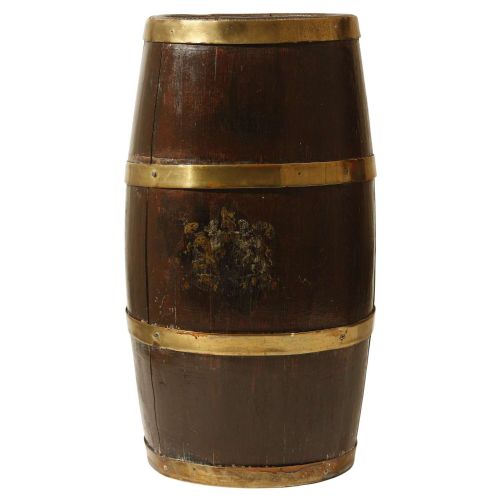
Many of these vessels function as dedicated stick stands, sometimes featuring interior loops or divisions to keep long items upright. The forms range from simple tapered barrels to oval tubs bearing applied coats of arms or maker plaques.
Materials and construction
Coopers built these barrels using shaped wooden staves fitted tightly together without glue, relying on tension to hold the watertight form. Oak dominates the material record, selected for durability and grain, alongside occasional use of rich mahogany.
Polished brass or copper bands encircle the timber body, secured with metal rivets or pins to maintain structural pressure. These metal hoops protect the vulnerable edges of the staves and add decorative contrast to the warm timber surfaces.
Distinctions in quality
Quality rests in the precision of the cooperage and the weight of the metal fittings. Finer pieces display tight, seamless stave joints and heavy gauge brass bands that sit flush against the timber.
Provenance and timber selection further elevate an example, such as dense quarter-sawn oak or figured mahogany. The inclusion of original interior fittings or distinct heraldic details separates standard utility items from superior country house pieces.
R.A. Lister
The Brass Bound Umbrella Barrel Glossary
- Coopered
- Constructed from curved wooden staves bound together with metal hoops, much like traditional liquid casks. This technique allows the wood to expand and contract naturally with atmospheric changes.
- Stave
- One of the narrow vertical strips of wood that form the curved sides of a barrel or tub. Craftsmen bevel the edges of each stave to ensure a tight fit.
- Quarter-sawn
- Timber cut radially from the log, producing a durable board with a straight grain pattern. This cut minimises warping over decades of use.
- Oval
- Having a rounded oblong shape rather than a pure circle. Oval barrels allow items to sit neatly against a hallway wall while maintaining interior capacity.
Brass Bound Umbrella Barrel: Frequently Asked Questions
Are these barrels waterproof?
Most of these pieces were built using traditional cask-making methods that held liquids originally. However, decades of use mean timber can dry out slightly.
Place a modern saucer or protective liner inside the base to catch drips from wet umbrellas. This protects the historic wood from moisture damage over time.
How do I date a stick stand?
Examine the construction marks, the type of timber, and the style of the metal bracing. Victorian and Edwardian examples show distinct hand-finished stave work and patination.
Compare the fastener types and overall proportions against known period pieces. Cooperage methods changed very slowly, making timber maturity a key indicator.
Where should I place a barrel?
Position the piece in a dry hallway or entrance lobby where walking sticks and umbrellas gather. Ensure it stays away from direct heat sources like radiators to prevent wood shrinkage.
Allow enough surrounding space to appreciate the coopered form and brass details. A stable, flat floor prevents any rocking motion.