
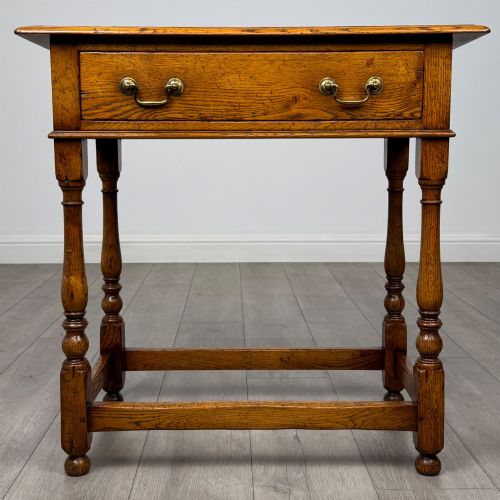
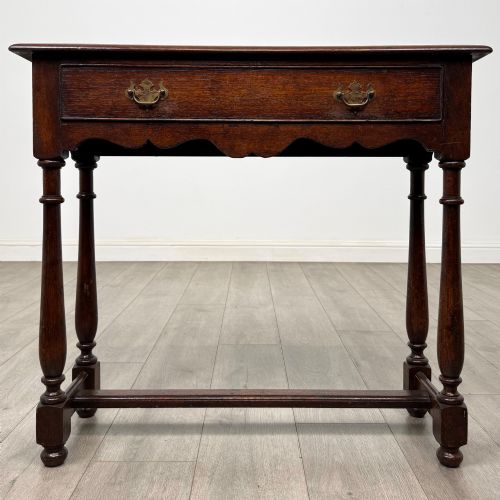
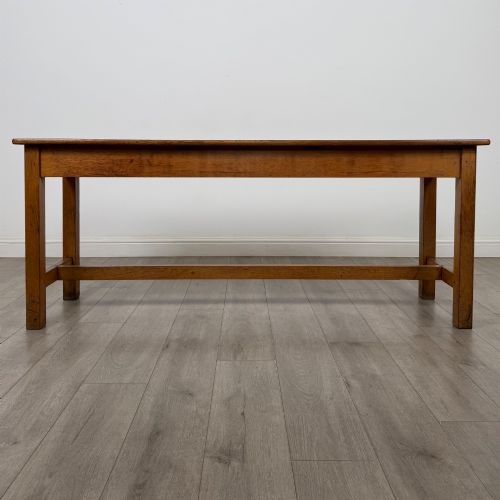
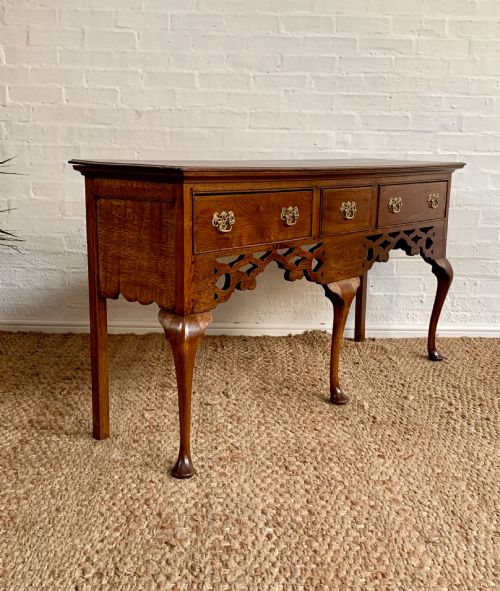
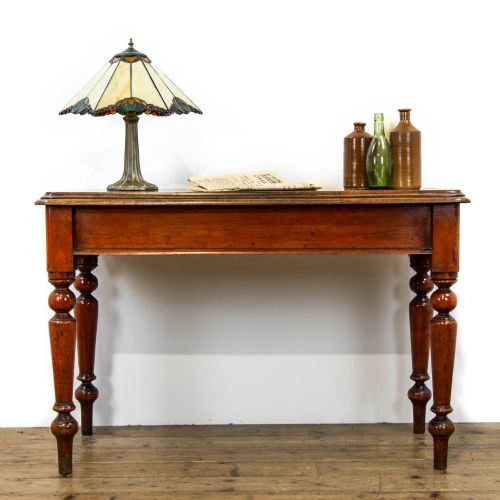
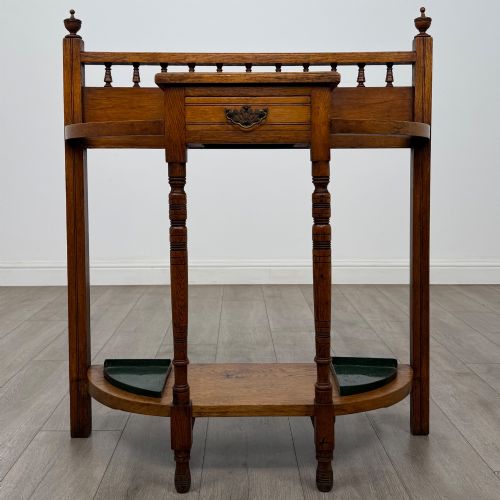
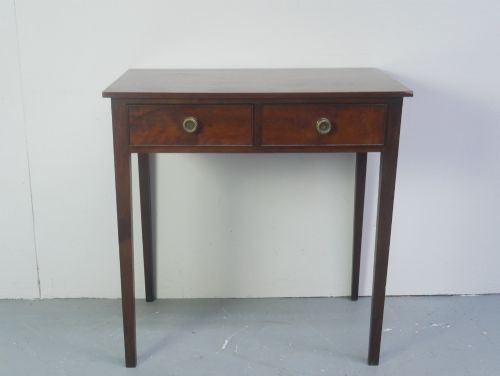
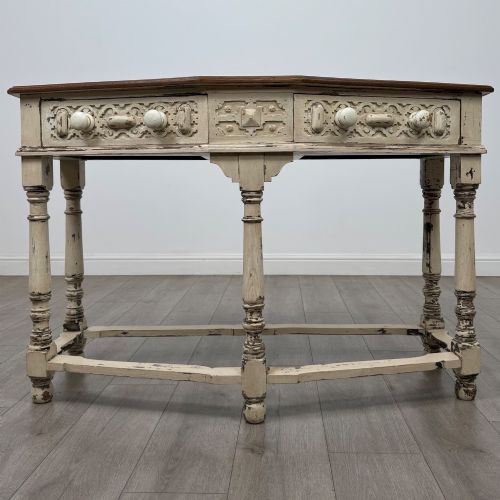
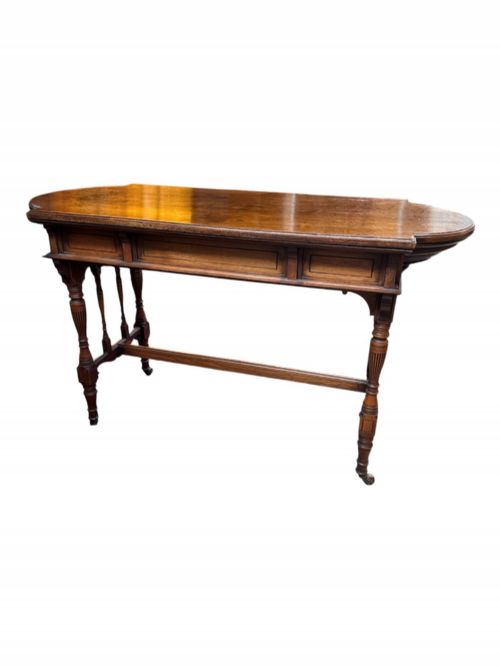
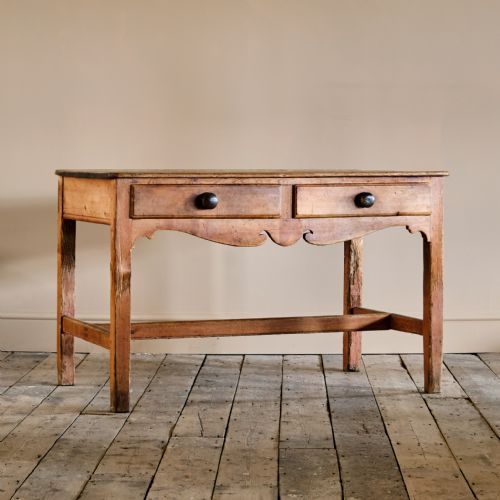
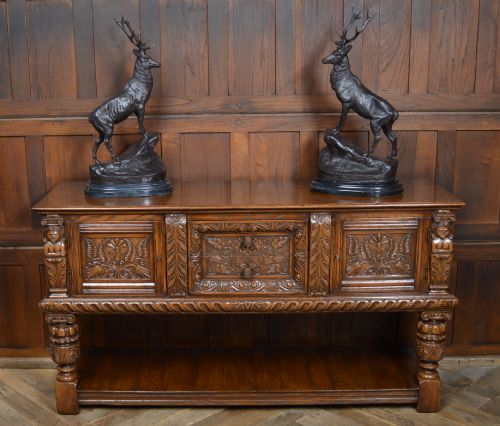
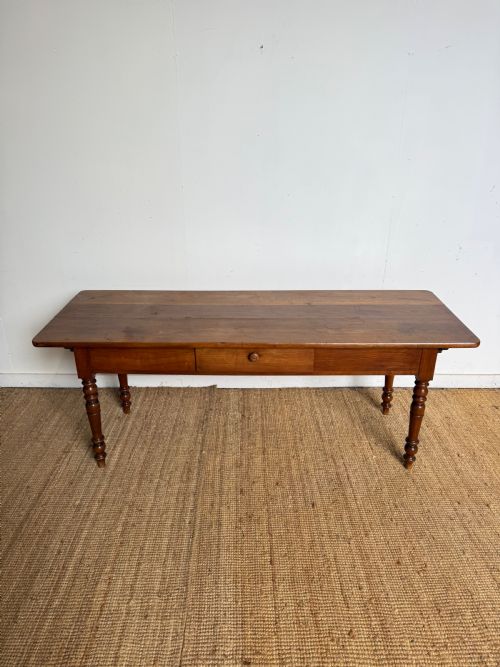
Traditional Hallway Console
A traditional hallway console solves the perennial problem of the narrow entrance, offering a surface for letters and keys that respects the proportions of older rooms.
Traditional Hallway Console
When you search for a traditional hallway console, you are looking at narrow furniture designed to stand against an entrance wall without blocking passage. The pieces gathered here span from the 18th century through the Edwardian era and the 1920s.
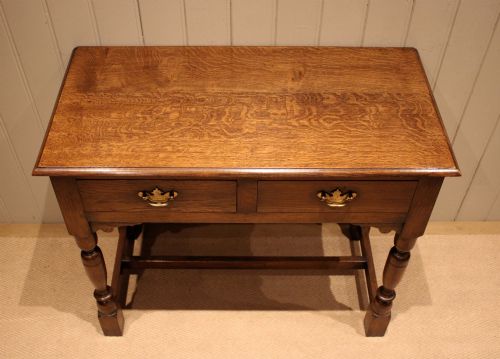
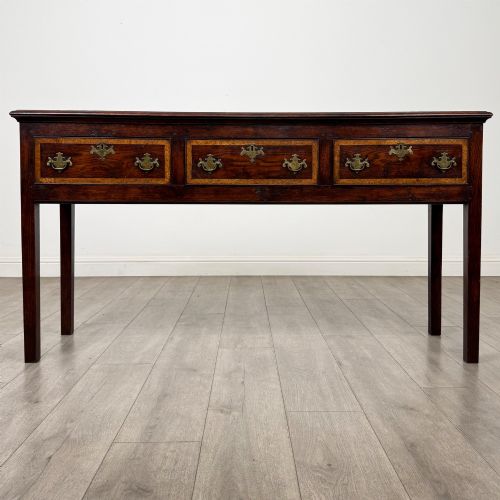
The version you are most likely to meet on this page is an oak or mahogany side table, dresser base, or server. These forms arrive from Georgian, Victorian, and Edwardian workshops, alongside rustic pine and Chinese elm altar tables.
Makers adapted domestic forms for hallways using restrained depths and linear silhouettes. Sideboards, lowboys, and washstands frequently double as functional console tables in contemporary settings.
Materials and Construction
Cabinetmakers relied heavily on hardwoods such as oak and mahogany, alongside softer timbers like pine, elm, and cherrywood. These woods were chosen for structural integrity and finished with traditional polish or simple painted surfaces.
Joinery techniques observed in these listings include pegged mortise and tenon joints on oak dresser bases and dovetailed drawer construction on side tables. Brass fittings appear on drawers and cabinet doors, providing functional hardware.
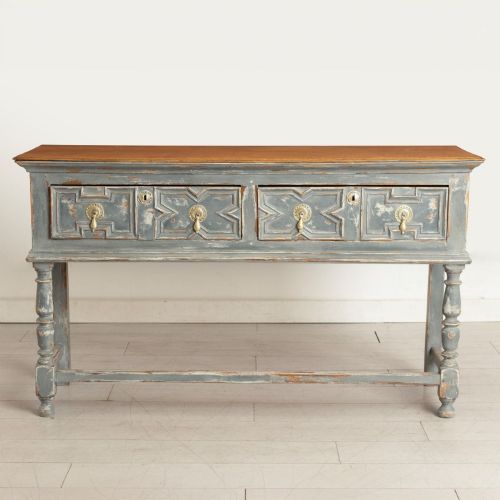
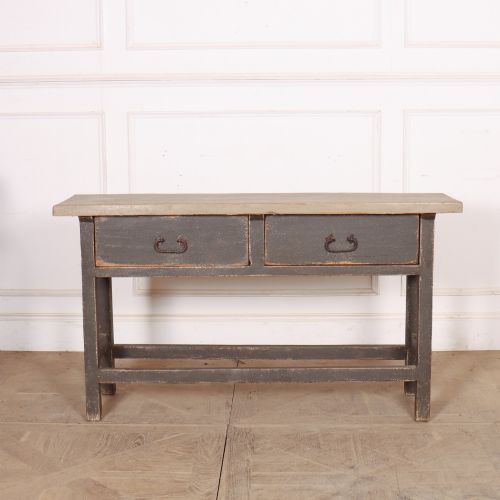
Surface treatments vary from polished golden oak and dark mahogany to painted finishes on pine and servers. Unpretentious country pieces utilise local timbers, while revival styles adhere to formal Georgian proportions.
Listings span multiple centuries, uniting 18th-century Georgian servers, Victorian mahogany tables, and Edwardian golden oak hall stands.
Design and Material Integrity
Quality separates pieces through the selection of timber and the restraint of proportion. Superior examples utilise well-figured mahogany or quarter-sawn oak with harmonious grain patterns across the top surface.
Construction details differentiate standard utility tables from finer works. The crispness of carved mouldings, the neatness of drawer dovetailing, and the retention of original brass hardware elevate a piece above simpler alternatives.
Proportion remains vital in narrow furniture. The most successful examples balance length with a shallow depth, maintaining stability without encroaching upon the floor space of a narrow passage.
The Traditional Hallway Console Glossary
- Dresser base
- A low wooden sideboard fitted with drawers, cupboards, or an open pot board beneath. They provide substantial surface area and storage for hallways.
- Lowboy
- A small oak or walnut table with drawers, standing on four tall legs. Originating in the 18th century, they serve well as compact console tables.
- Demi-lune
- A half-moon shape used for tables designed to stand flat against a wall. This profile minimises the footprint in restricted spaces.
- Pot board
- An open lower shelf built into the base of a dresser or serving table. Originally intended for storing ceramic pots and dishes.
- Altar table
- A traditional Chinese form characterised by slender proportions and recessed legs. They function effectively as narrow console tables in contemporary interiors.
Traditional Hallway Console: Frequently Asked Questions
What is a traditional hallway console?
A traditional hallway console is a narrow table designed specifically to occupy entrance halls and passages. These pieces provide a convenient surface for dropped items while maintaining clear walking space.
The category encompasses side tables, lowboys, dresser bases, and altar tables sourced from various historical periods. Their defining characteristic is a shallow depth relative to their length.
How do I choose the right size?
Measure the available wall space and the width of your walkway carefully before selecting a table. A shallow depth is crucial to ensure the piece does not obstruct the flow of movement through the entrance.
Consider the height of existing skirting boards and nearby doorways. Selecting a narrow profile prevents the piece from dominating a compact hallway.
Can I use a dresser base as a console?
Dresser bases function exceptionally well in larger hallways and dining spaces. Their built-in drawers and lower shelves offer practical concealed storage for everyday household items.
Check the depth measurements, as older dresser bases can occasionally be deeper than standard console tables. Ensure your hallway has sufficient clearance for the cabinet drawers to open fully.
How do I care for antique wood surfaces?
Maintain wooden surfaces by dusting regularly with a soft, dry cloth. Avoid placing untreated timber tables in direct sunlight or near heat sources to prevent warping.
Apply traditional beeswax periodically to nourish polished mahogany and oak surfaces. Protect the top from moisture by using coasters beneath keys, mail, or vases.