
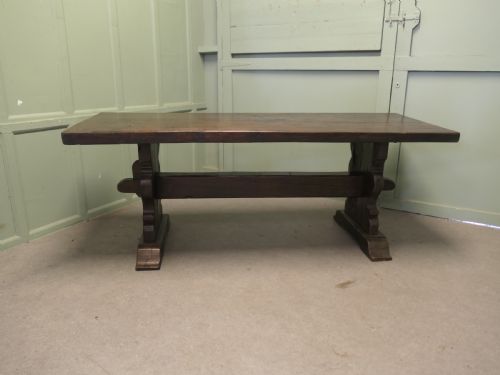
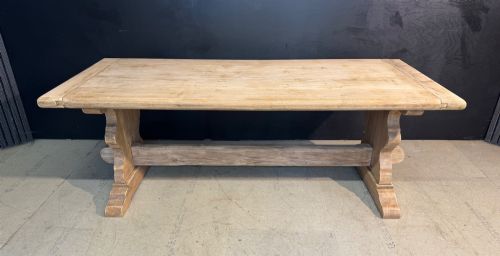
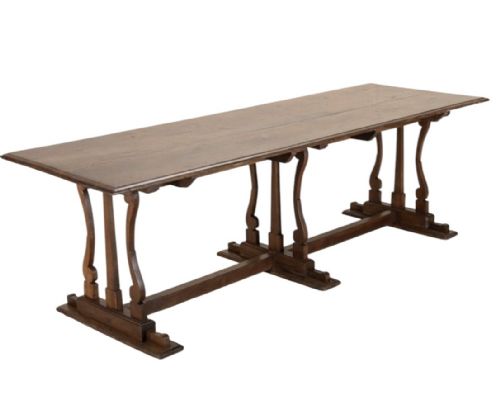
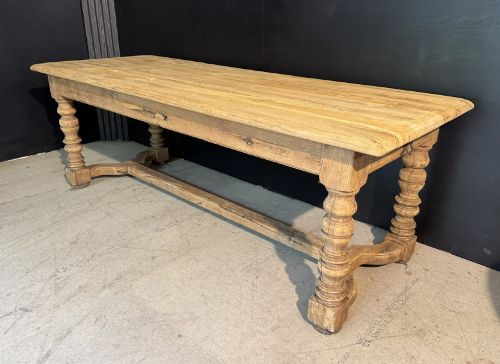
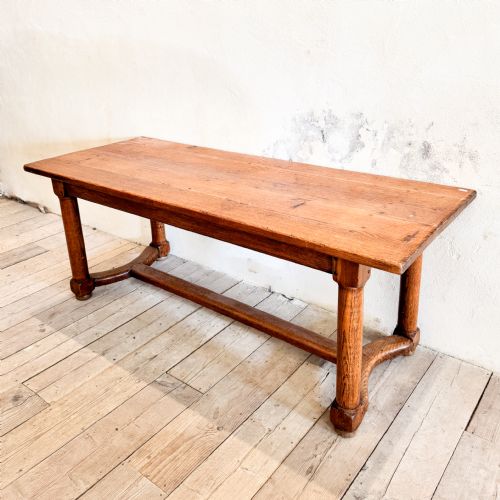
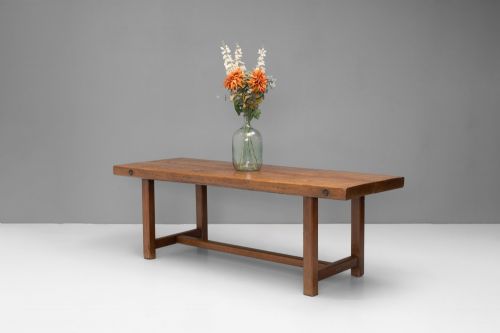
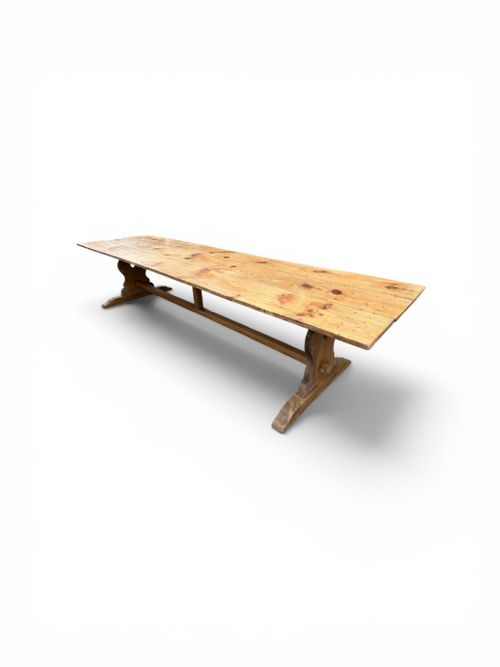
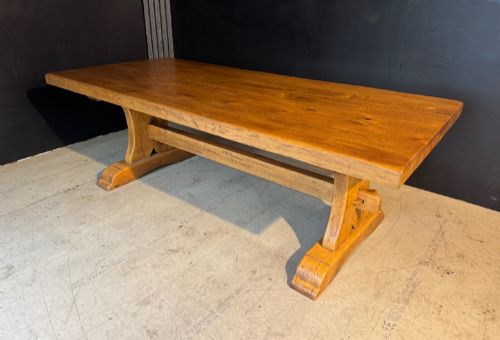


Traditional French Trestle Table
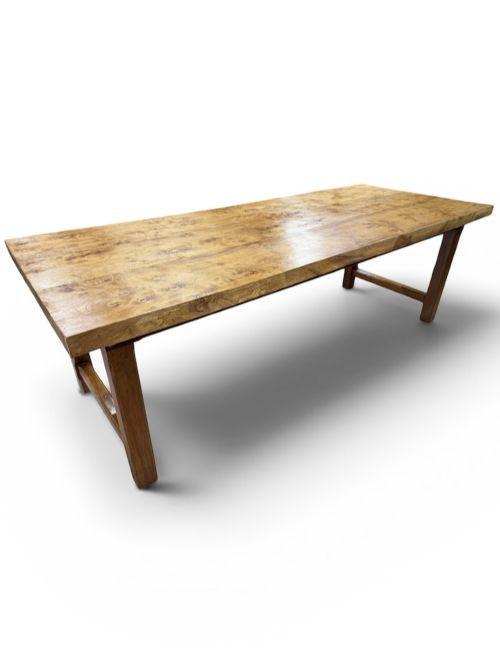
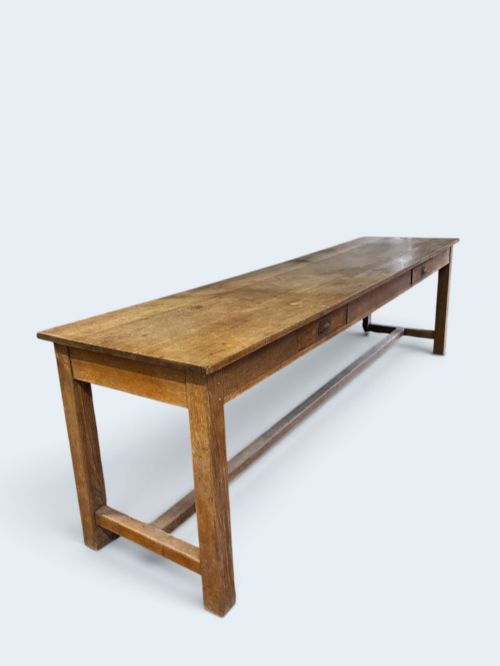
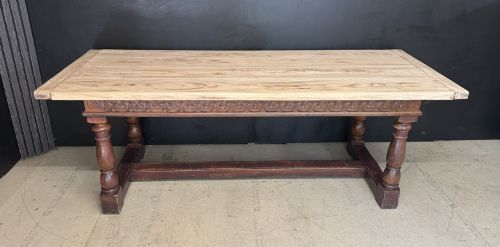
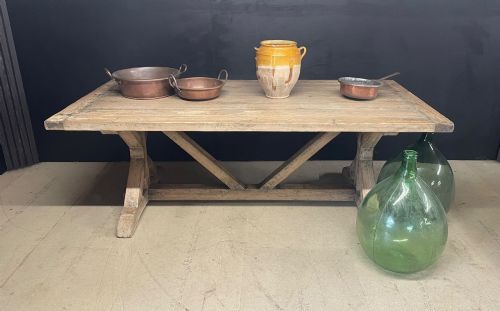
A traditional french trestle table anchors a room with solid oak timbers and sturdy plank tops built for daily gatherings.
Traditional French Trestle Table
When searching for a traditional french trestle table, buyers encounter sturdy dining surfaces rooted in nineteenth-century and early twentieth-century rustic farmhouse traditions. These pieces predominantly take the form of spacious dining tables, refectory tables, and serving tables designed for communal meals.
What Varies in Quality
The character of the timber dictates much of the distinction between pieces, particularly the depth and figuring of the grain in solid oak and walnut. Tables featuring older plank tops and substantial framing demonstrate superior substance compared to lighter utility builds.
Proportion and stability define the architecture of these tables, where well-balanced stretchers and solid leg construction ensure long-term reliability. The integrity of the original wood surfaces, whether naturally aged or intentionally bleached, preserves the authenticity of each period.
The documented periods span from the 1860s through the 1930s, encompassing nineteenth-century rustic styles.
The Traditional French Trestle Table Glossary
- Trestle table
- A table consisting of two or more supports connected by a longitudinal beam that holds a wide plank top. This design provides maximum legroom along the length of the seating area.
- Refectory table
- A long, narrow dining table traditionally used for communal meals in monastic or large domestic settings. These tables often feature substantial stretcher bases for added stability.
- Plank top
- A tabletop constructed from several wide boards of solid timber joined edge to edge. This construction method allows wood to expand and contract naturally with changes in humidity.
- H-stretcher
- A horizontal wooden brace shaped like the letter H that connects the legs of a table near the floor. This reinforcement prevents the legs from wobbling under heavy loads.
Traditional French Trestle Table: Frequently Asked Questions
What is a french trestle table?
A french trestle table is a heavy dining surface supported by vertical ends joined by a central beam or stretcher. These pieces originate primarily from nineteenth and early twentieth-century rural contexts.
They were designed for practical domestic use in farmhouses and large kitchens, accommodating many diners comfortably.
How do I date a wooden table?
Dating relies on examining the specific timber species, construction techniques, and hardware visible in the frame. Listings show periods ranging from the mid-nineteenth century through the 1930s.
Tool marks, timber shrinkage, and fastener types help establish the approximate decade of manufacture.
Are these tables suitable for daily dining?
These tables are built from solid woods like oak, walnut, and pine, making them exceptionally sturdy for everyday meals. Their robust construction withstands heavy family use over generations.
Routine care involves simple cleaning that respects the aged patina of the timber top.
What woods were commonly used?
Oak is the predominant material, frequently noted as French oak, solid oak, or bleached oak across various listings. Walnut, pine, and cherrywood also appear in specific regional refectory and bench formats.
Each wood species ages differently, developing distinct surface characteristics over decades of exposure.