


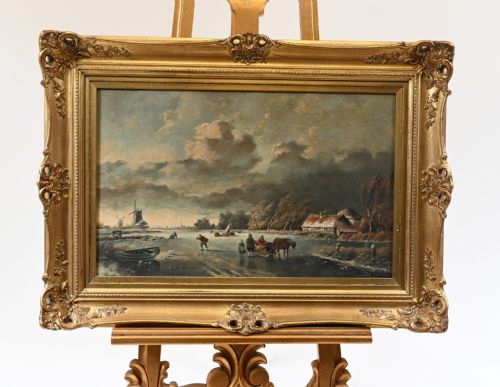


Traditional Dutch Landscape Art
Traditional dutch landscape art brings quiet canals, frozen lakes and working windmills into a room through centuries of oil paint and canvas.
Traditional Dutch Landscape Art
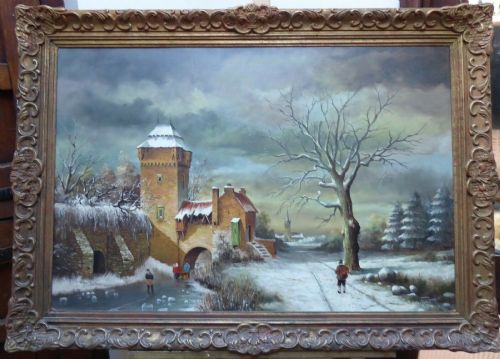
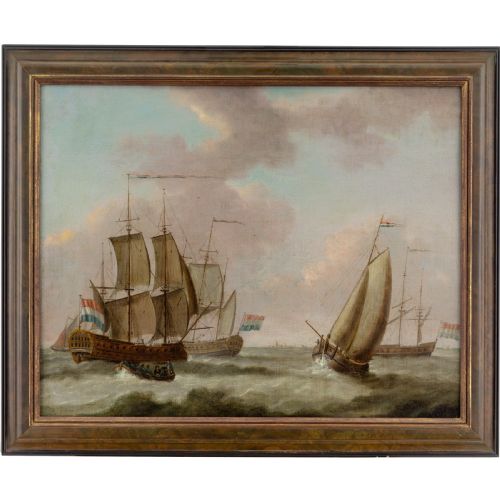
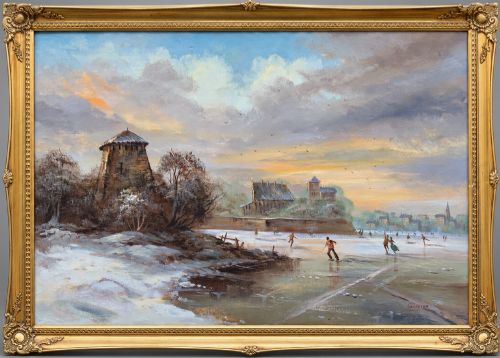
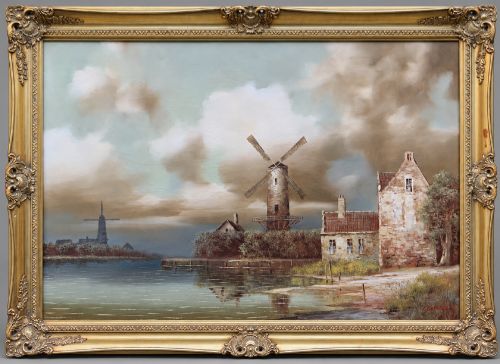
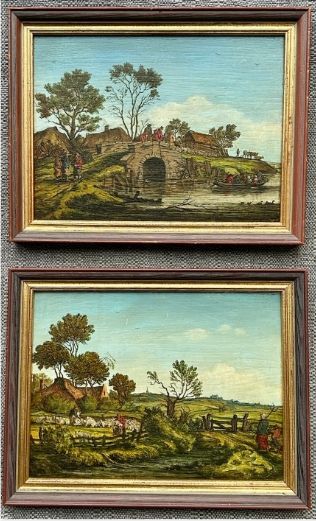
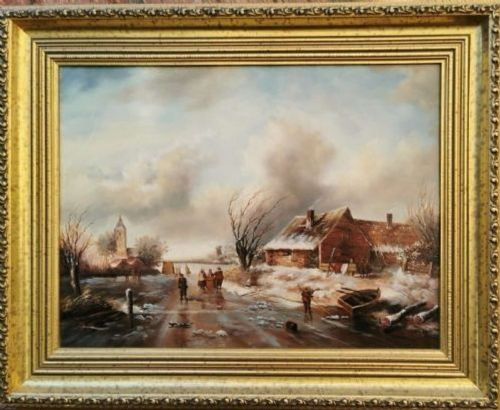
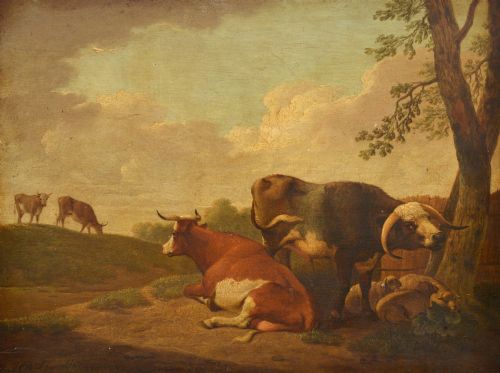
Traditional dutch landscape art captures open skies, flat plains, coastal waters and frozen winter scenes populated by skaters, cattle or shipping vessels. The pieces on this page span several centuries, reaching from the seventeenth century through to the mid-twentieth century.
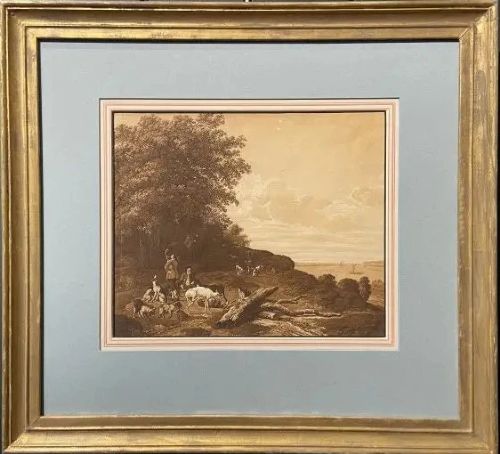
Buyers encounter oil paintings on canvas and wood panels alongside occasional watercolours framed under glass. Formats range from intimate nineteenth-century winter views to large twentieth-century windmill scenes.
The aesthetic is rooted in the Dutch School and nineteenth-century realism, often portraying rural life, village architecture and maritime activity. Many works carry signatures or attributions to named European artists, while others remain unsigned examples of the period.
Materials and construction
Artists painted primarily with oil paint on stretched canvas or prepared wood panels, building rich textures and atmospheric light. Watercolours on paper appear in framed works from the nineteenth century.
Traditional Dutch Landscape Art Retail Price Guide 2026
Typical asking prices for traditional dutch landscape art among the pieces listed under this phrase on Sellingantiques today, from the lower quarter to the upper quarter. They describe what is for sale here now, not the wider market.
Ducklings paddle across river banks alongside the majestic windmills and stormy seas.
Variations in quality
Quality rests in the handling of light, shadow and atmospheric perspective, which separates atmospheric depth from flat composition. Skilled brushwork brings movement to water, clouds and ice skaters.
The preservation of the original paint layer and the condition of the wood panel or canvas determine the integrity of the piece. Period frames finished with gold leaf or gesso also contribute to the completeness of the work.
Pieter Cornelis Steenhouwer·Hendrik Willem Schweickhardt·Johannes Lingelbach·Thomas Bush Hardy·Jan Evert Morel·Gudrun Sibbons·Constant Ludovic Artz·Alexis De Leeuw·Louis Smets·Pieter Cornelis Dommersen·William Dommersen·Charles Martin Powell·Hermanus van Brussel·Christiaan Pieter Snyders
The Traditional Dutch Landscape Art Glossary
- Dutch School
- A broad term describing artists working in the Netherlands or following the distinct stylistic traditions of Dutch painting. This tradition emphasises naturalistic light, low horizons and detailed topography.
- Giltwood
- Wood carved and coated with gold leaf or a gold-coloured finish for framing paintings. This material frames many nineteenth-century oil paintings.
- Gesso
- A plaster-like mixture applied to wood panels or frames to create a smooth surface for painting or gilding. It provides a stable base for gold leaf application.
- Oil on Canvas
- Pigment mixed with drying oil applied to a woven fabric support stretched over a wooden frame. This medium dominates the paintings listed here.
- Panel
- A flat piece of wood used as a rigid support for oil painting. Several nineteenth-century works on this page utilise wood panels.
Traditional Dutch Landscape Art: Frequently Asked Questions
What periods do these paintings cover?
The works span from the seventeenth century through the eighteenth and nineteenth centuries into the mid-twentieth century.
Most items originate from the nineteenth and twentieth centuries, reflecting changing interpretations of traditional Dutch scenery.
Are these works painted on canvas or wood?
Artists used both canvas and wood panels as supports for their oil paintings across different periods.
Watercolours on paper also appear among the framed works listed.
How should I hang an oil painting?
Select a wall away from direct sunlight and steady heat sources to protect the canvas and paint layers.
Ensure the wall fixings safely support the weight of the frame and the wooden stretcher bars.
What subjects appear in these scenes?
Common subjects include frozen canals with ice skaters, working windmills, coastal shipping, rural tracks and cattle.
Artists frequently depicted everyday Dutch life alongside expansive skies and flat landscapes.