
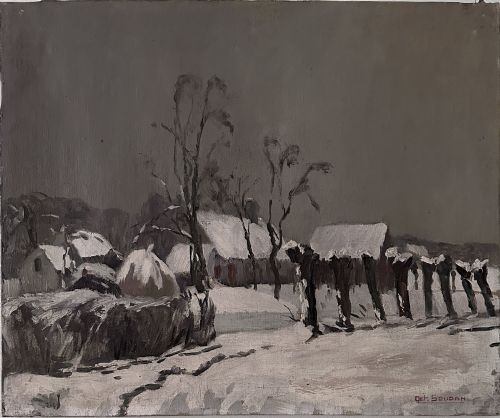


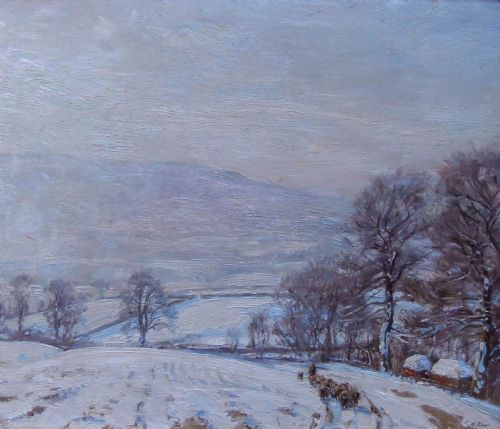


Winter Landscape Wall Art
Winter landscape wall art brings the quiet chill of snow and frost indoors through centuries of painted snow scenes.
Winter Landscape Wall Art
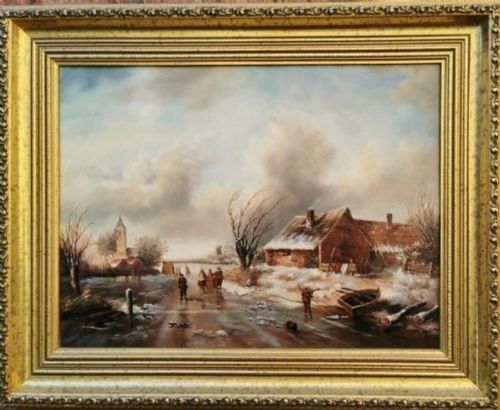
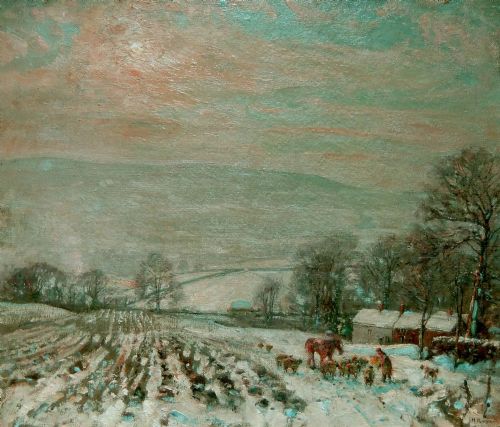
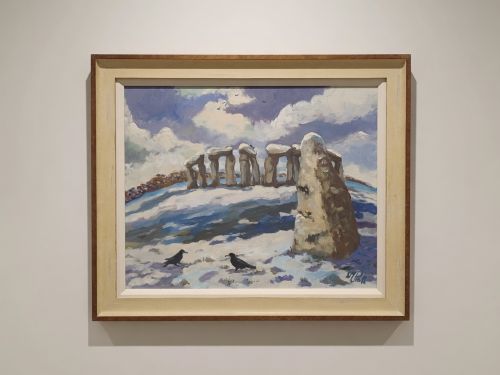
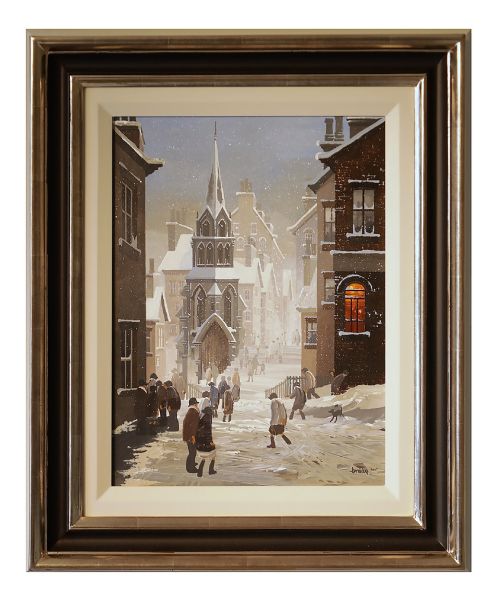
Winter landscape wall art captures snowy scenes, frozen rivers, and cold rural days through various painting traditions. Collectors searching for winter landscape wall art find works ranging from nineteenth-century village views to mid-century townscapes and pastoral scenes.
The pieces on this page appear in forms such as oil paintings, watercolours, pastels, and framed artwork. Subjects stretch from Dutch frozen lakes and French harbours to British sheep-droving pastures and local village streets.
Dated examples span the nineteenth century, Edwardian period, and decades up to nineteen-sixty and beyond. These works record how artists across different generations translated cold light and bare branches onto canvas and paper.
Gradations of Quality
Quality in winter landscape wall art rests on the artist's handling of atmospheric light, shadow on snow, and compositional depth. Finer pieces convey the biting cold and spatial recession convincingly, whereas lesser works rely on repetitive formulas for trees and cottages.
The skill evident in brushwork or watercolour washes distinguishes accomplished hands from standard decorative production. Material preservation, original framing choices, and the distinct touch of named artists further elevate the standing of a piece.
Listings feature works created across the nineteenth and twentieth centuries, utilising canvas, paper, wood, glass, and oil paint.
Herbert Royle·Lucy Pratt·Brian Shields Braaq·John Hobson Nicholson·Arthur Winter Shaw·W. Tatton Winter·Sydney Kendrick·John Ritchie·Ludwig Hermann·Louis Smets·Anthonij Anton Mauve·Eveline Lance·Matthew Hale·James Pollard
The Winter Landscape Wall Art Glossary
- Oil on Canvas
- Pigments bound in drying oil applied to a stretched fabric support. This combination allows for rich textures and deep colour layering.
- Watercolour Painting
- Pigments suspended in a water-soluble vehicle applied to paper. It offers luminous, translucent effects suitable for misty winter air.
- Pastel
- A dry medium of powdered pigment and a binder formed into a stick. Artists use it to achieve soft, velvety textures and subtle colour blending.
- Dutch School
- A grouping associated with seventeenth-century artistic traditions and later revivals. It frequently emphasises frozen waterways, skaters, and low horizons.
- Impressionism
- A style prioritising visible brushstrokes and accurate depiction of light. In winter scenes, it captures fleeting winter sunlight and coloured shadows on snow.
Winter Landscape Wall Art: Frequently Asked Questions
What periods do these winter scenes cover?
The selection spans from the nineteenth century through the Edwardian era into the mid-twentieth century and beyond. Works reflect changing artistic movements across these decades.
Creators utilised varied techniques from traditional oil painting to post-impressionist pastels and watercolours.
How were these watercolours and oils framed?
Many pieces retain period frames, often including gilt wood mouldings that suit the traditional aesthetic of the artwork. Original frames help preserve the edges and overall integrity of the paper or canvas.
Buyers should examine framing details as part of the physical history of each individual piece.
Where do these winter landscape subjects originate?
Subjects originate from diverse locations including British pastoral scenes, Dutch frozen lakes, French harbours, and German townscapes. Artists recorded local topography as well as imaginative winter settings.
This geographical spread illustrates how different regional schools interpreted cold weather and snow.
How do I care for antique paper art?
Watercolours and pastels on paper require protection from direct sunlight and high humidity to prevent fading and paper degradation. Acid-free mounting and glass framing shield the delicate mediums from environmental damage.
Display these works in stable indoor conditions away from direct heat sources.