





Moulded Gold Frame Picture
A moulded gold frame picture brings centuries of British craftsmanship and rich metallic warmth into any room.
Moulded Gold Frame Picture
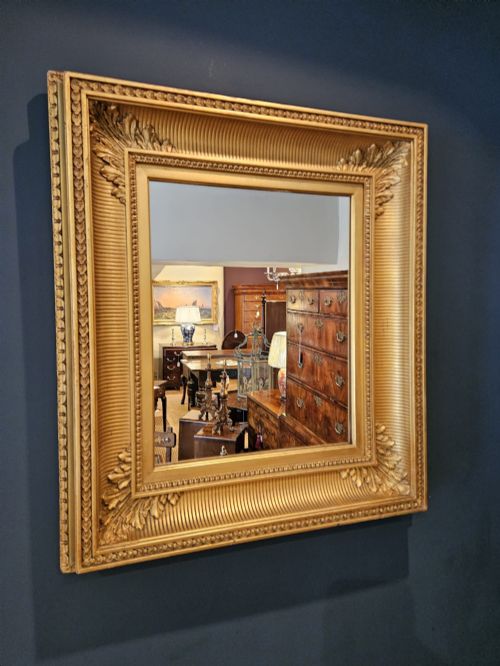
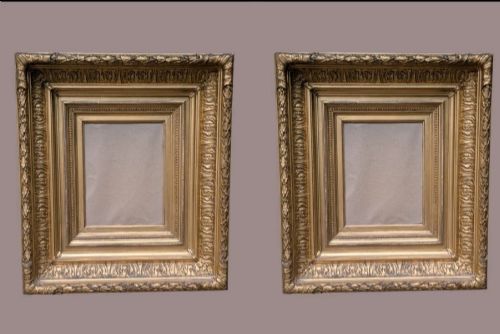
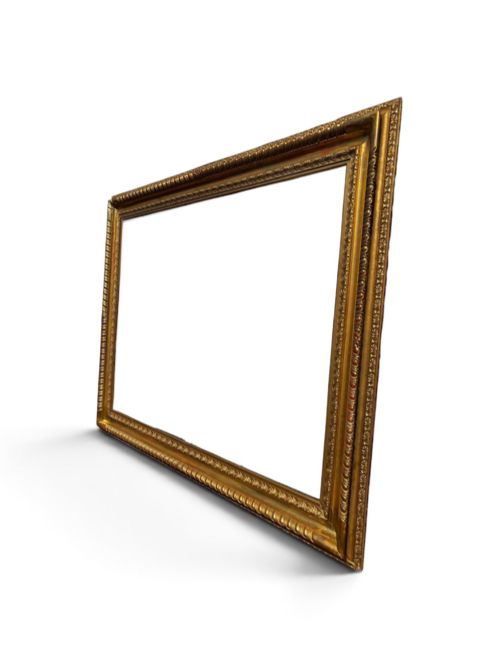
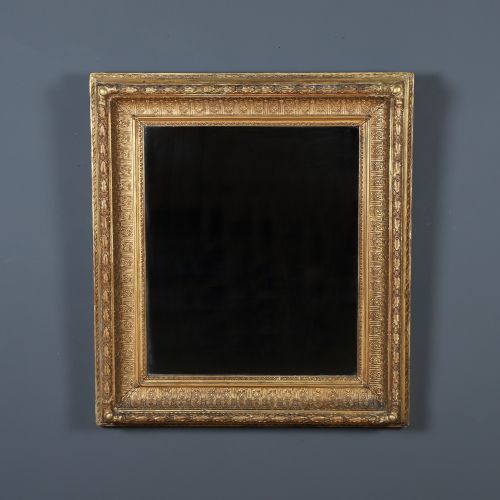
When you search for a moulded gold frame picture, you are looking at substantial surrounds designed to hold and elevate artwork or mirrors. The pieces on this page span several eras, with Victorian examples forming the core of the selection alongside Edwardian and earlier items.
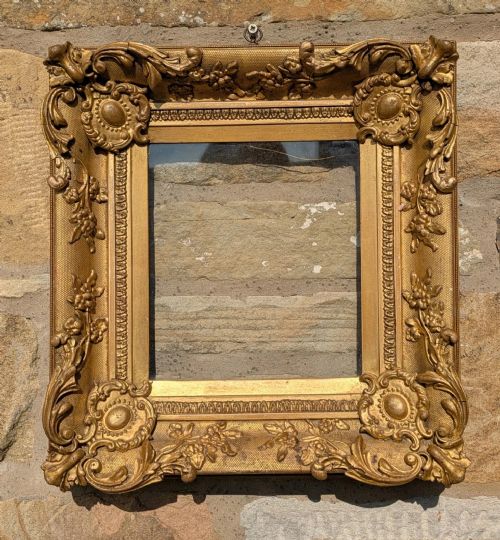
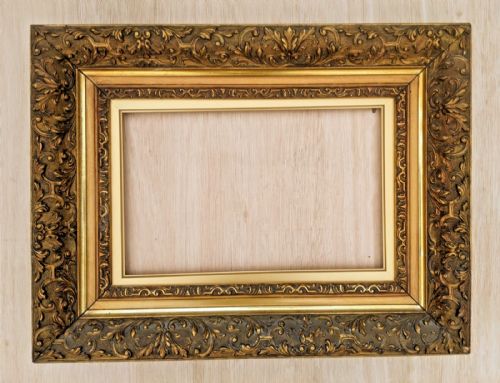
The objects take the form of deep picture frames, wall mirrors, and framed artwork. Stylistically, they range from ornate Victorian Rococo Revival and French Baroque to cleaner Neoclassical and Art Nouveau designs.
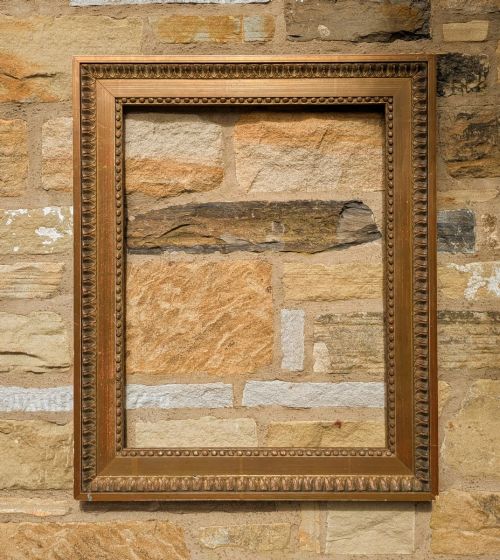
You are most likely to encounter Victorian pieces featuring elaborate surface ornament. These heavy frames use classic decorative motifs like acanthus leaves and egg and dart beaded moulding to create a strong visual impact.
How they were made
Makers built the foundational structure from wood before applying layers of gesso and composition material to build up high relief ornament. This prepared surface received a finish of gold leaf to achieve a brilliant metallic lustre.
Artisans carved intricate details directly into the wood or moulded composition elements onto the base frame. Glaziers and framers then fitted the glass, mirrors, and artworks securely within the gilded surrounds.
Listings feature items from the seventeenth, nineteenth, and early twentieth centuries, constructed using wood, gesso, glass, and gold leaf.
What varies in quality
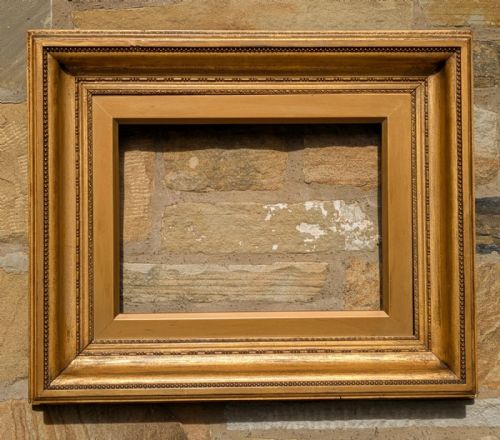
The weight and depth of the frame indicate the substance of the materials used in its construction. Deeper profiles and heavier wooden foundations separate substantial architectural pieces from lighter decorative surrounds.
The crispness of the moulded ornament dictates the visual success of the piece. Sharp, well-defined acanthus leaves and precise beaded moulding demonstrate superior craftsmanship compared to soft or worn surface details.
John Hobson Nicholson
The Moulded Gold Frame Picture Glossary
- Gesso
- A plaster mixture applied to a wooden frame as a smooth base for gilding. It allows craftsmen to achieve crisp surface details before applying gold leaf.
- Giltwood
- Timber covered with a thin layer of gold leaf. This material provides the rich metallic finish seen across nineteenth-century frames.
- Composition
- A pliable mixture of whiting, resin, and oil pressed into moulds to create ornaments. It was widely used on Victorian frames to form repeating decorative motifs.
- Acanthus
- A classical leaf ornamentation carved or moulded onto frames. This popular Victorian motif draws on ancient architectural decoration.
- Egg and dart
- An ornamental moulding band consisting of alternating egg-shaped forms and pointed arrows. It frequently borders the inner edges of refined nineteenth-century frames.
Moulded Gold Frame Picture: Frequently Asked Questions
What is a moulded gold frame picture?
A moulded gold frame picture is a decorative wooden surround finished in gold leaf or composition, housing paintings, pastels, or mirrors. These pieces often feature prominent relief decoration such as acanthus leaves.
They serve as focal points on walls, combining structural woodwork with ornate metallic surfaces. The category includes standalone antique frames as well as complete framed artworks.
How do I clean a gilded frame?
Dust the surface gently using a soft, dry brush to remove accumulated particles without disturbing the delicate gold leaf. Avoid liquid cleaners and chemical sprays, which can strip or damage the historic finish.
If stubborn grime requires attention, consult a professional conservator rather than attempting wet cleaning. Preserving the original gilding is essential for maintaining the integrity of the piece.
How can I tell Victorian frames apart?
Victorian frames often display deep profiles, heavy wooden foundations, and robust ornamentation like French Baroque or Rococo Revival styling. Makers of this period frequently utilised composition mouldings alongside carved wood. Nineteeth-century pieces also show distinct variations in colour and wear across the gold leaf. Examining the corner joints and the composition backing provides further clues to the manufacturing decade.