

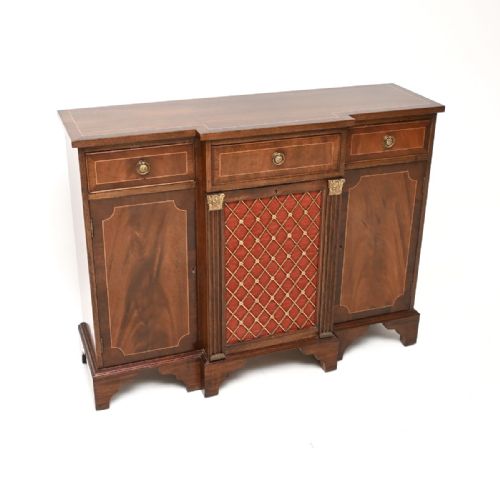
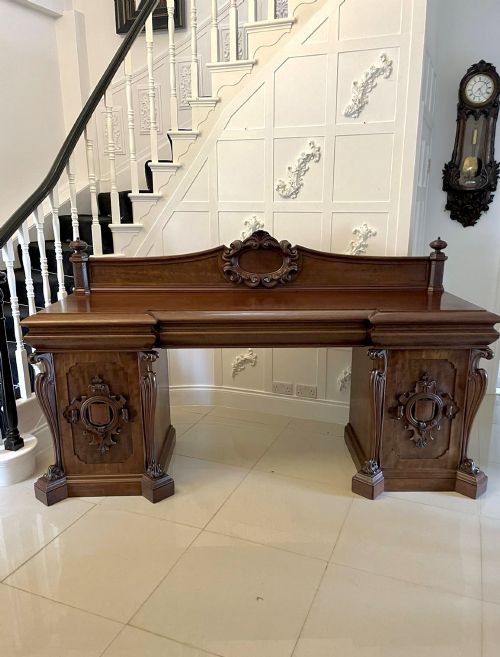
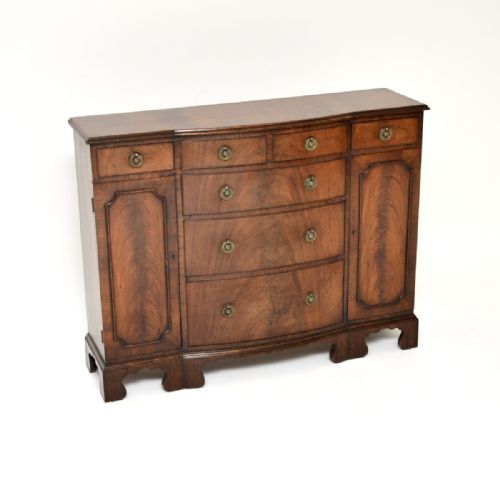
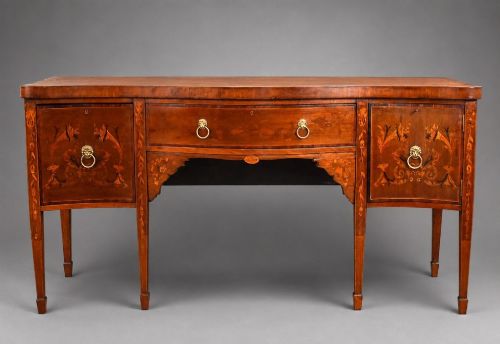
Traditional Dining Sideboard
A traditional dining sideboard grounds a room with timber and scale, holding silver, linen, and glassware ready for the table.
Traditional Dining Sideboard
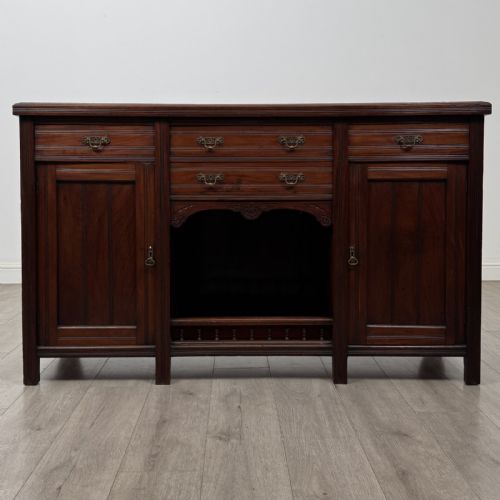
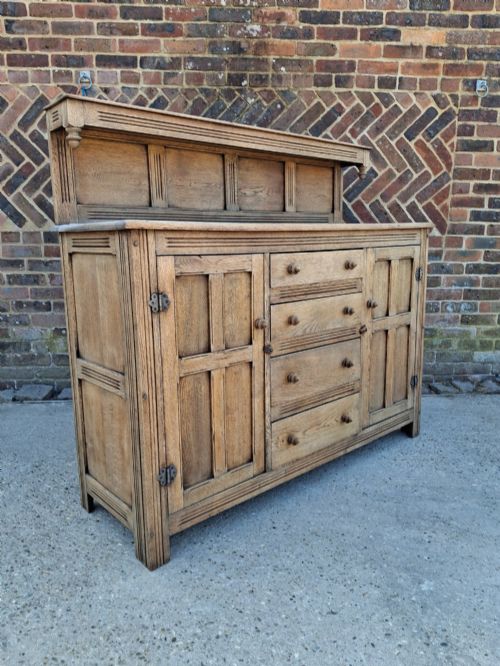
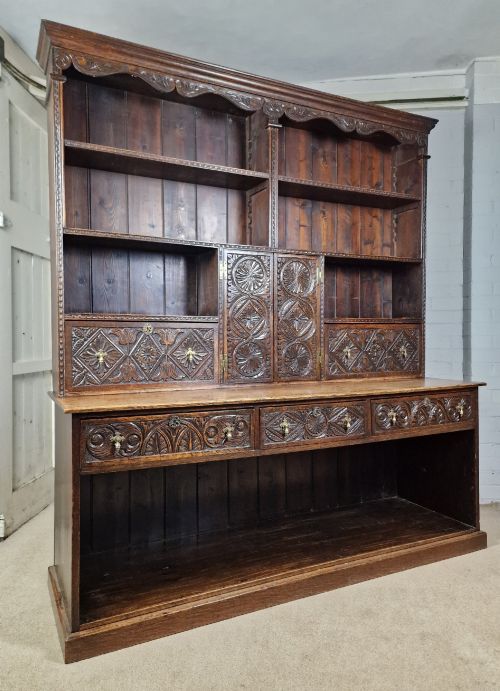
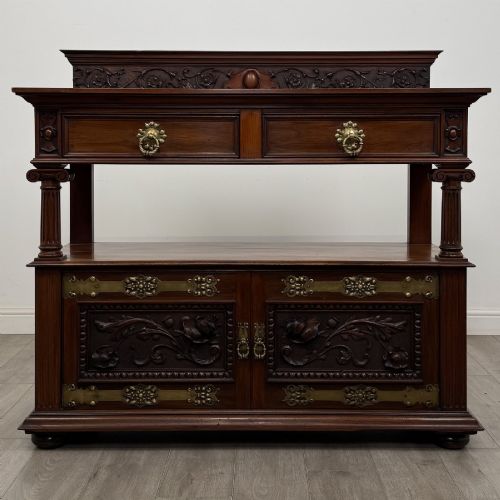
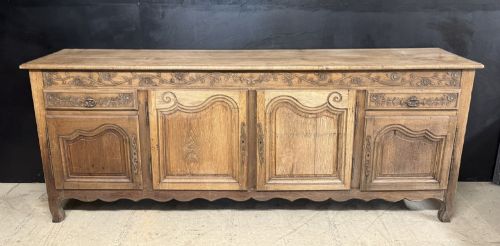
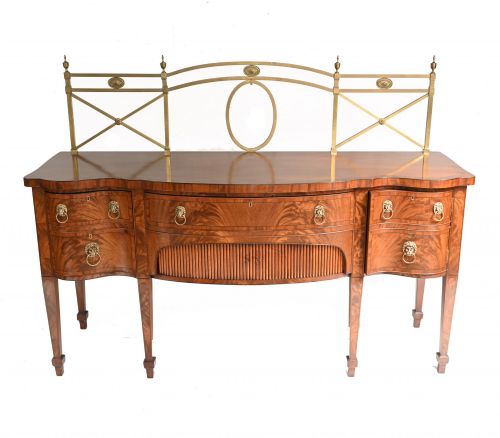
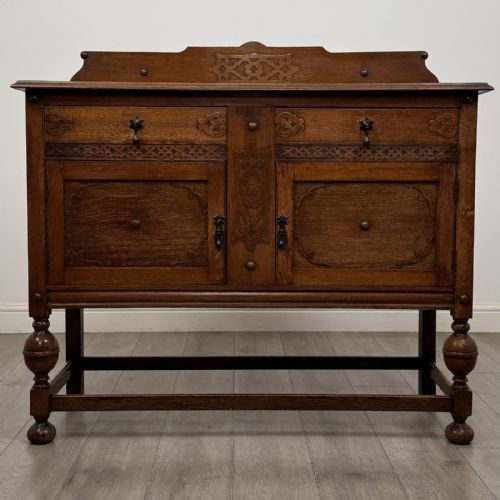
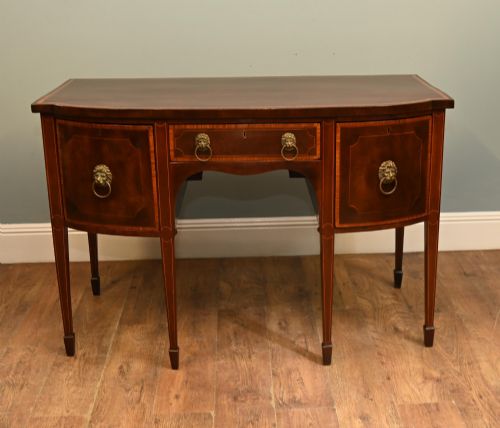
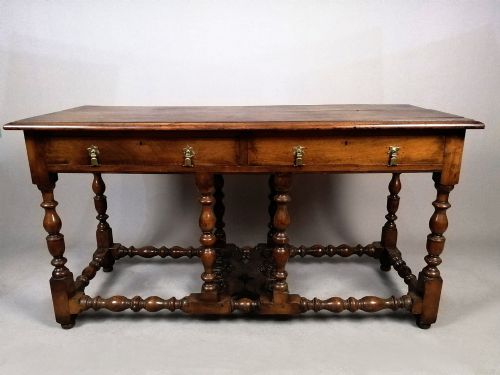
A traditional dining sideboard encompasses substantial timber furniture built to serve the dining room across the eighteenth, nineteenth, and early twentieth centuries. These pieces appear as formal breakfronts, bow-fronts, and servers, alongside country oak dresser bases and Welsh dressers.
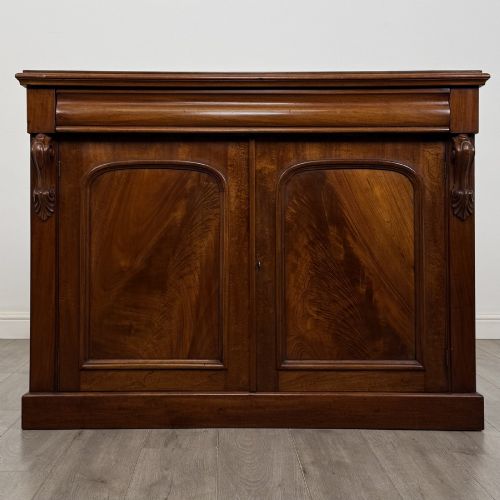
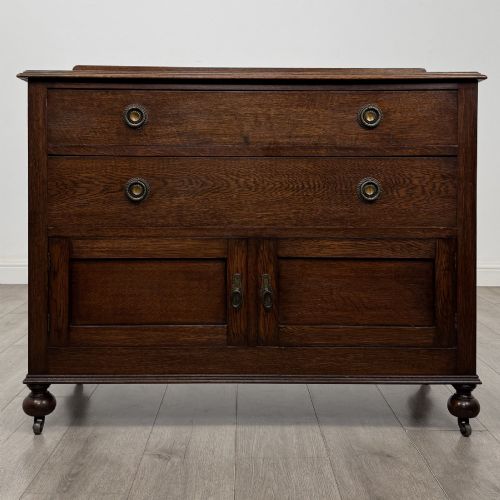
The most common examples on this page are mahogany pieces from the Georgian and Victorian eras, frequently featuring cupboards, drawers, and flame veneers. Oak examples span from eighteenth-century country pieces to later revival styles with carved detail.
Materials and Construction
Makers utilised solid timbers alongside matched veneers, selecting mahogany, oak, and walnut for their durability and grain. Flame mahogany veneer creates striking patterned surfaces across drawer fronts and doors, supported by solid mahogany or secondary framing timbers.
Hardware and decorative elements incorporate brass handles, iron fittings, mirror glass, and carved ornamentation. Construction techniques join sturdy carcases with panelled doors and fitted interior shelving or cellarette drawers.
Traditional Dining Sideboard Retail Price Guide 2026
Typical asking prices for traditional dining sideboard among the pieces listed under this phrase on Sellingantiques today, from the lower quarter to the upper quarter. They describe what is for sale here now, not the wider market.
Primary materials recorded across the inventory include mahogany, oak, walnut, flame mahogany veneer, brass, iron, and mirror glass.
Craftsmanship and Proportion
Quality rests in timber selection and the precision of the cabinetwork, visible in continuous grain patterns across multiple doors and drawers. Finer pieces display crisp hand-carving, well-fitted joinery, and thick mahogany rather than thin laminates.
Proportion and decorative restraint dictate the standing of a piece within its period. Superior examples maintain balanced serpentine or breakfront lines complemented by original brass hardware and well-figured veneers.
The Traditional Dining Sideboard Glossary
- Breakfront
- A piece of furniture where the central section projects forward from the outer flanking cabinets. This configuration creates architectural depth and allows for varied internal storage.
- Serpentine
- A front profile shaped with a convex curve flanked by two concave curves, resembling the undulating movement of a snake. This sophisticated shaping requires precise woodworking.
- Dresser Base
- A low rectangular cabinet fitted with drawers and often lower cupboards, historically used in kitchens and dining rooms for food preparation and storage.
- Flame Mahogany
- Timber cut from the fork of the mahogany tree where the branch meets the trunk, producing a flickering flame-like grain pattern. Cabinetmakers prized this veneer for principal display surfaces.
- Chiffonier
- A compact sideboard or low cabinet developed in the nineteenth century, frequently equipped with small shelves or a mirror back. It served smaller dining spaces and drawing rooms.
Traditional Dining Sideboard: Frequently Asked Questions
What is a traditional dining sideboard used for?
These pieces function as storage and serving surfaces in dining spaces, holding tableware, serving dishes, and linens behind cabinet doors and within drawers.
The top surface provides space to set out food and drinks during meals or display decorative objects when the room is empty.
How do I tell a Georgian sideboard from a Victorian one?
Georgian pieces generally display cleaner architectural lines, restrained inlay, and lighter proportions, reflecting eighteenth-century neoclassical or Chippendale design principles.
Victorian sideboards tend to be heavier in scale, incorporating deeper mouldings, carved details, mirror backs, and highly figured flame mahogany veneers.
Will a large mahogany sideboard fit in a modern dining room?
Many traditional sideboards possess considerable length and depth, requiring careful measurement of wall space and clearance for opening doors and drawers.
Compact bow-front or server variants offer smaller footprints while retaining the storage capacity and timber presence of larger pieces.
What is the difference between a sideboard and a dresser base?
A sideboard is typically a formal dining room cabinet designed with cellarette drawers and cupboards, often featuring serpentine or breakfront styling.
A dresser base stems from country traditions, offering sturdy oak construction with deep drawers suited for daily utility rather than formal presentation.