



Traditional Dining Room Buffet
A traditional dining room buffet brings sturdy presence and generous surface space to a formal interior, offering a practical stage for serving food and displaying silver.
Traditional Dining Room Buffet
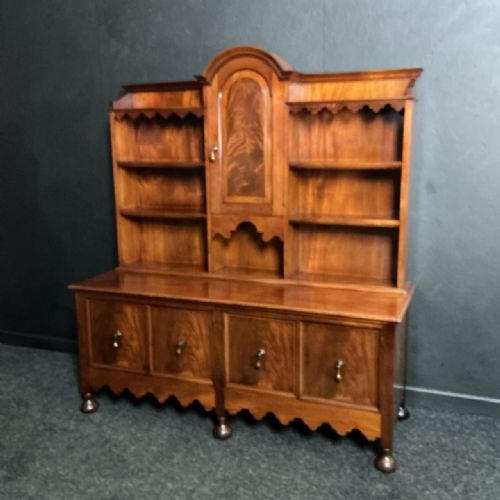
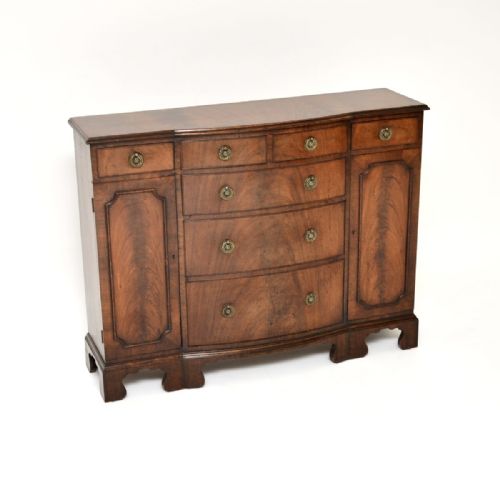
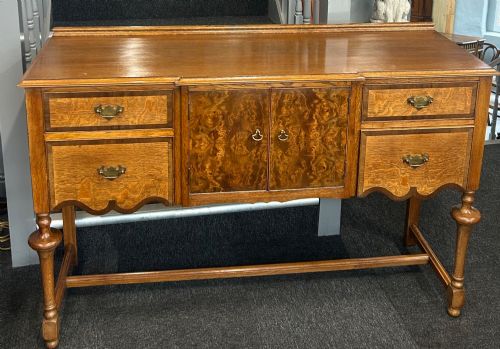
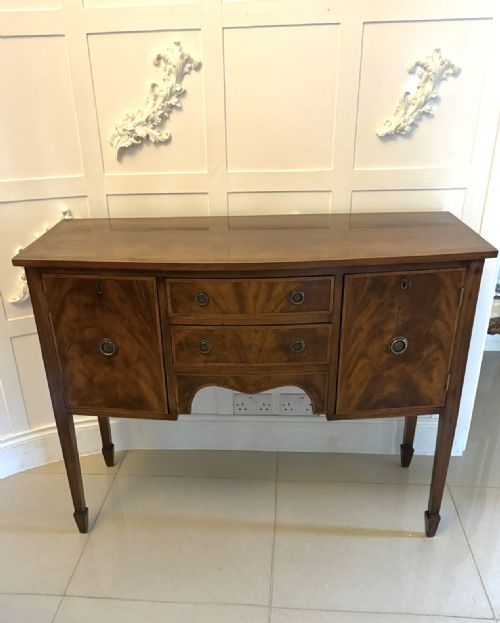
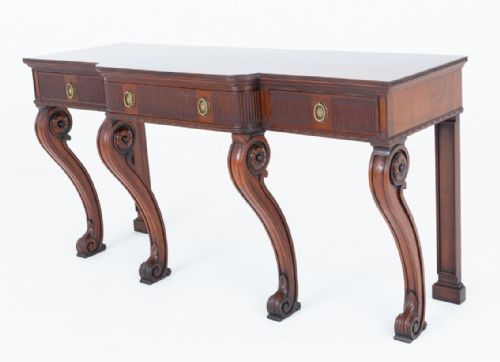
A traditional dining room buffet encompasses large storage furniture designed for service and display, appearing here primarily as nineteenth-century sideboards, chiffoniers, and servers. These pieces span from the eighteenth century through the Edwardian era, reflecting shifting domestic habits in dining rooms across Britain.
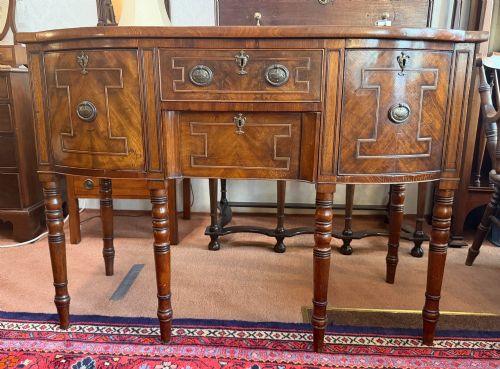
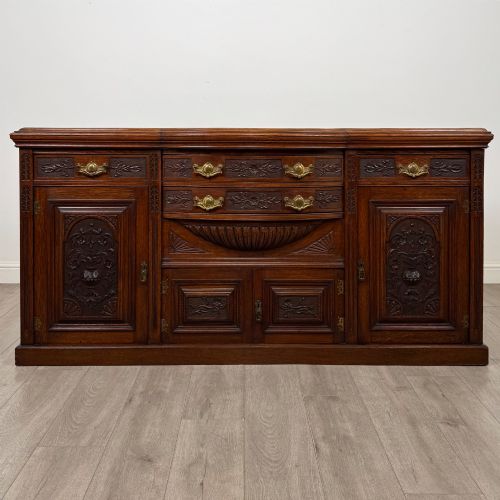
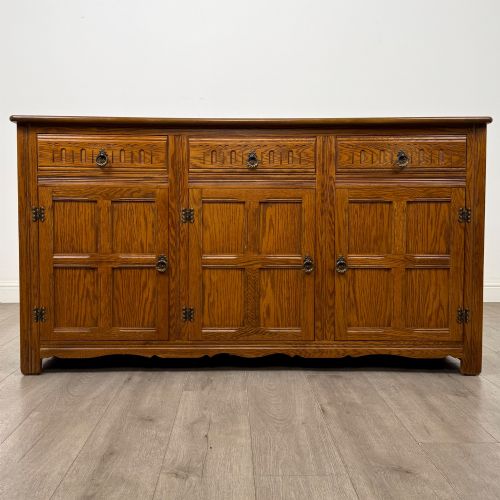
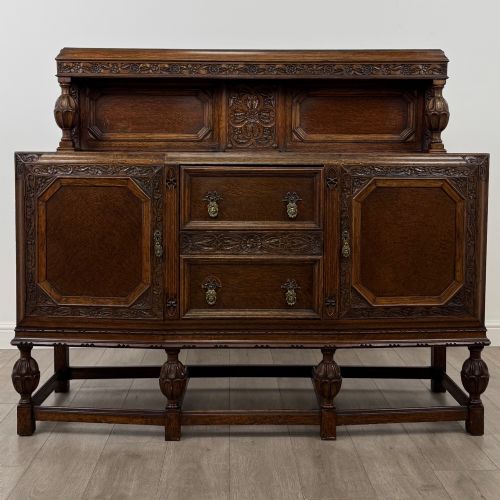
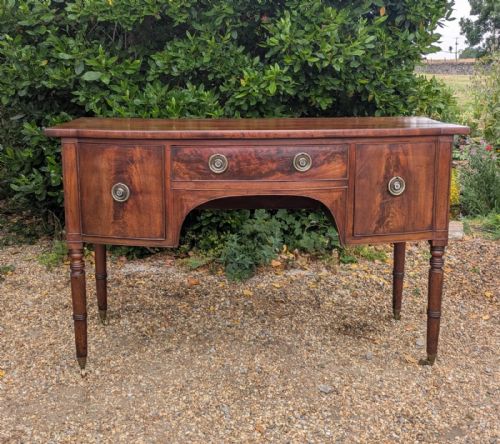
The most common formats you encounter are mahogany bow-front sideboards, pedestal designs, and oak cabinets fitted with multiple doors. Pieces range from straightforward utilitarian serving tables to elaborate mirror-back chiffoniers and carved court cupboards.
Origins stretch across Georgian, Regency, Victorian, and Edwardian periods, bringing distinct proportions and timber choices to each item. Buyers select these works to anchor a dining space with period character and functional storage.
Materials and construction
Construction relies heavily on solid mahogany and oak, often enhanced with figured veneers, flame mahogany, and satinwood accents. Cabinetmakers utilised brass for hardware, handles, and gallery rails, while glass appears in specific display cabinets and mirror plates.
Carving technique defines the decorative language, ranging from restrained linear mouldings on Georgian and Regency pieces to deep relief work on Victorian and Jacobean revival examples. Veneering demands precise skill, particularly on bow-front and breakfront carcases where grain patterns must align smoothly across curved surfaces.
Listings feature mahogany, oak, and walnut timbers across Georgian, Victorian, and Edwardian periods.
Judging execution
Quality separates through timber selection and the precision of cabinet joinery, notably in drawer construction and door alignment. Superior examples utilise well-figured mahogany or burr walnut with consistent grain matching, whereas lesser pieces rely on plain timber and simpler secondary woods.
Carved details reveal the artisan's hand, where crisp, deep undercutting distinguishes fine workshop production from shallow, mechanical pressing. Structural integrity in the carcase, original brasses, and well-preserved drawer runners further mark the upper tier of surviving examples.
Maple & Co
The Traditional Dining Room Buffet Glossary
- Bow-front
- A cabinet front that curves outward in a convex sweep. This shape requires advanced woodworking skill to shape the drawers and carcase accurately.
- Breakfront
- A piece of furniture whose central section projects forward from the flanking outer sections. It creates architectural depth and divides the storage facade into distinct bays.
- Chiffonier
- A low sideboard or cabinet, frequently featuring a raised shelf or mirror back. Originating in the Regency period, it served smaller dining rooms or drawing rooms.
- Pedestal sideboard
- A form comprising two heavy pedestals connected by a central counter or serving table. The pedestals often house cupboards or drawers for plate storage.
- Flame mahogany
- Mahogany veneer cut diagonally across the bough to produce a rippling, flame-like pattern. Makers prized this figure for prominent drawer fronts and central panels.
Traditional Dining Room Buffet: Frequently Asked Questions
How do I use a buffet today?
A traditional dining room buffet functions efficiently as a sideboard for serving meals or as a display surface for glassware and ceramics. The cupboards and drawers provide ample storage for table linens, cutlery, and serving platters.
Position the piece against a primary dining room wall to establish a focal point. It pairs naturally with matching dining tables and chairs from corresponding periods.
How do I distinguish Regency from Victorian pieces?
Regency sideboards favour clean architectural lines, brass inlay, reeded legs, and restrained classical restraint. Mahogany timber dominates, often kept smooth and polished to highlight natural grain without heavy carving.
Victorian examples generally feature heavier proportions, darker finishes, and deep relief carving. They frequently incorporate mirror backs, panelled doors, and pedestal bases with robust mouldings.
How do I care for antique mahogany?
Maintain antique mahogany by dusting regularly with a soft, dry cloth and avoiding placement near direct heat sources or strong sunlight. These precautions prevent timber warping and preserve the richness of the polish.
Apply a traditional beeswax polish sparingly to nourish the wood surface when it appears dry. Avoid modern silicone sprays, which can penetrate old finishes and damage the patina.