


Traditional Countryside Art
Traditional countryside art captures the quiet dignity of rural life, offering a lasting connection to pastoral landscapes and agricultural heritage.
Traditional Countryside Art
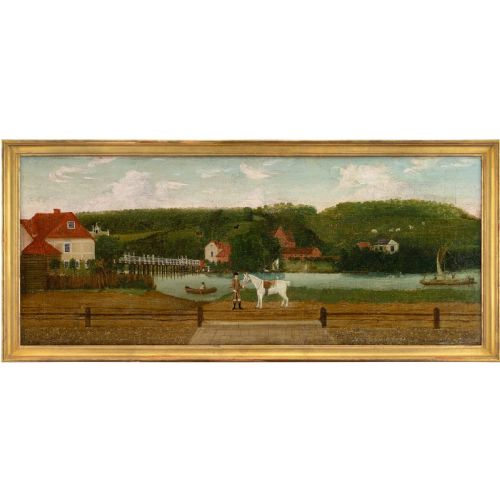
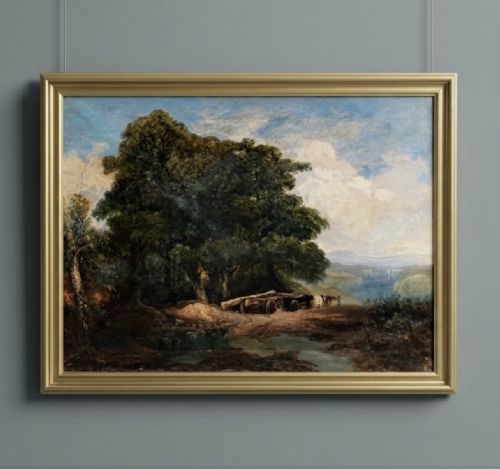
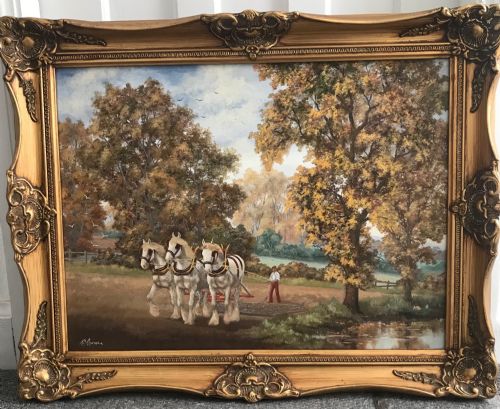
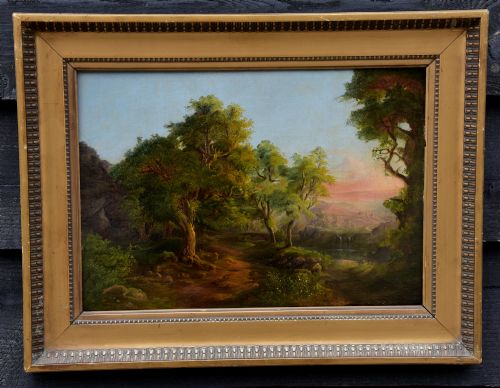
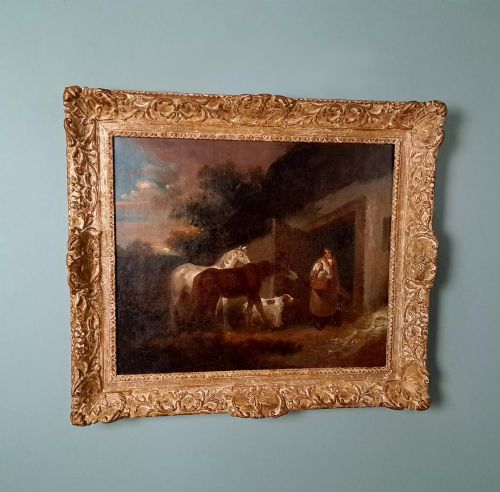
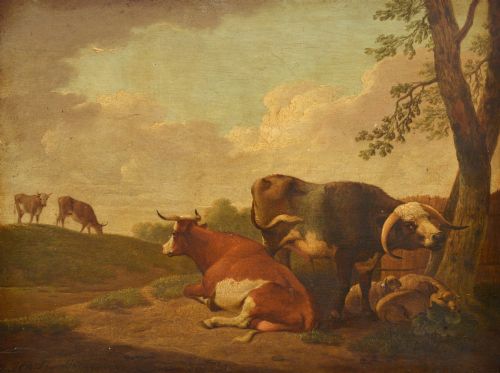
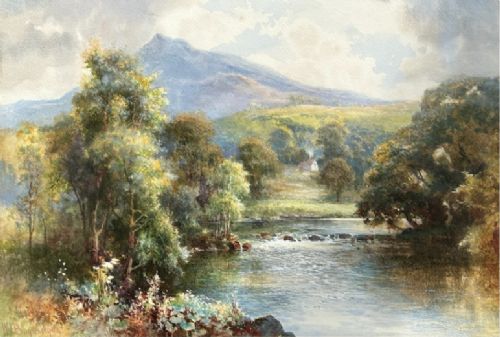
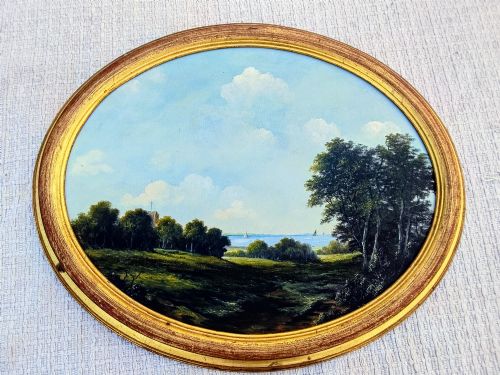
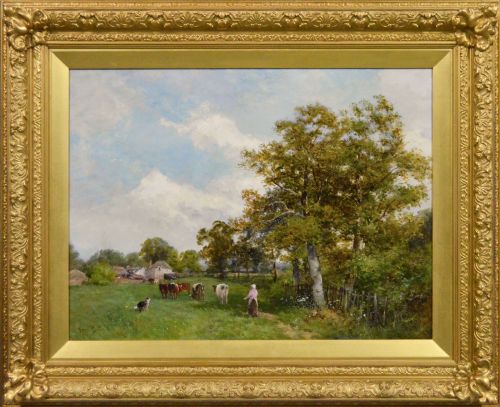
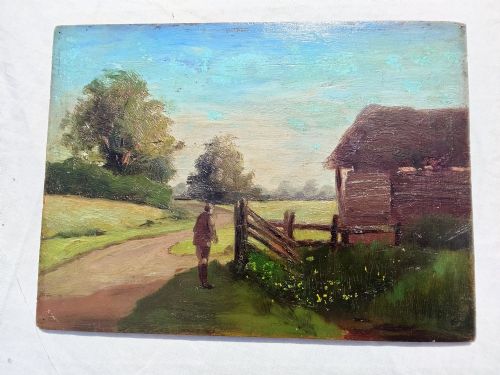
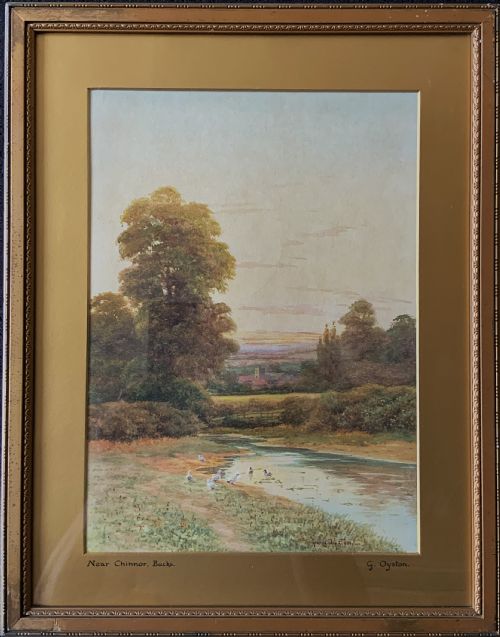
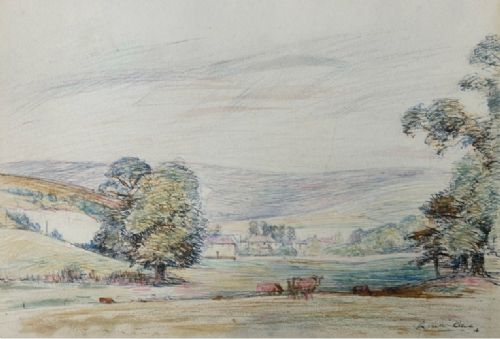
Traditional countryside art embraces pastoral landscapes, agricultural scenes, and river views rendered in paint or watercolour. These works depict rural life through horses ploughing fields, cottages nestled in valleys, and cattle grazing by rivers.
The pieces encountered most frequently on this page originate from the nineteenth and early twentieth centuries. Painters working within British pastoral and impressionist traditions dominate the selection, bringing rural scenes onto canvas and paper.
Subjects range from expansive Welsh landscapes to intimate woodland ponds with figures. The common thread across these works is a focus on the English and British countryside during periods of changing agricultural practice.
Materials and Methods
Artists relied primarily on oil paint applied to canvas or wooden board, as well as watercolour on paper. Canvas allowed for rich texture in depictions of heavy shire horses and turbulent skies, while watercolour suited delicate river views.
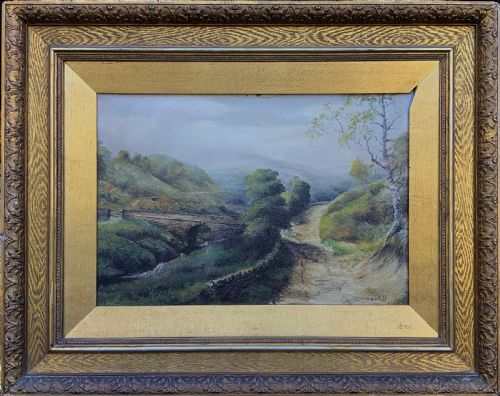
Many surviving pieces retain their original frames, often fashioned from wood with gilded elements. The combination of oil paint, canvas, and traditional wooden framing defines the physical structure of these works.
Listings feature works created across the nineteenth and twentieth centuries, using oil on canvas, wood panel, and watercolour on paper.
Distinctions in Quality
Quality rests upon the artist's command of light, atmospheric perspective, and proportion. Stronger compositions handle natural illumination effectively, creating depth in woodland or river settings without relying on formulaic brushwork.
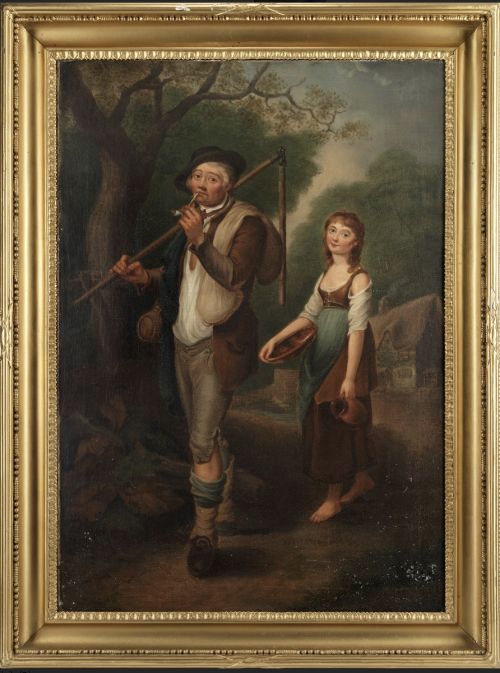
The handling of animal and human figures separates accomplished works from routine topographical records. Painters who captured the weight of shire horses or the natural posture of figures at work achieved a more convincing sense of rural life.
Richard Sebastian Bond·William H Myers·George Graham·William Joseph Shayer Senior·Hendrik Willem Schweickhardt·Thomas Barker of Bath·William Joseph Boyes·David Bates·George Oyston·Russell Sidney Reeves·Vernon DeBeauvoir Ward·Alexander Wellwood Rattray·John Horace Hooper·Hubert Wellington·Owen Bowen·Charles Walter Simpson·Henry Charles Fox·William Henry Mander·Herbert Royle·John Sanderson Wells·Reginald Grange Brundrit·Fred Lawson·William Hoggatt·Alfred Augustus Glendening Jnr
The Traditional Countryside Art Glossary
- Canvas
- A heavy woven fabric stretched across a wooden frame to serve as a support for oil painting. It provides a textured surface that holds thick applications of pigment.
- Watercolour
- A painting method where fine pigments are suspended in a water-based solution on paper. This technique often produces translucent washes of colour.
- Gilded Wood
- Timber frames or panels coated with a thin layer of gold leaf or gold paint. This finish enhances the visual boundary of the painting.
- Pastoral Landscape
- A genre of art depicting rural life, shepherds, farm animals, and open countryside. These scenes celebrate the tranquility and labour of the rural sphere.
Traditional Countryside Art: Frequently Asked Questions
What periods do these artworks cover?
The works span from the late eighteenth century through the Victorian era and into the mid-twentieth century. Most pieces reflect nineteenth-century romanticism and early twentieth-century British impressionism.
This broad timeline shows how rural painters adapted their techniques across generations while maintaining traditional landscape subjects.
How should I care for oil paintings on canvas?
Keep paintings away from direct sunlight and dramatic temperature shifts to protect the canvas and oil pigments. Dust the surface gently with a soft, dry brush without using water or cleaning agents.
Stable indoor humidity prevents the wooden stretcher bars and canvas from warping over time.
What subjects appear most often in these paintings?
Common subjects include rivers, woodland paths, thatched cottages, and agricultural fields with horses or cattle. Artists frequently portrayed daily rural activities such as ploughing, fishing, and driving sheep.
These scenes document British and Welsh landscapes as they appeared before modern industrial expansion.
How do I distinguish watercolour from oil paintings?
Watercolours are painted on paper, typically displayed under glass, and show translucent washes of colour where the paper grain remains visible. Oil paintings use thicker pigments applied to canvas or board with a heavier texture.
Oils have a distinct sheen and opaque quality, whereas watercolours rely on the reflective quality of the paper underneath.