
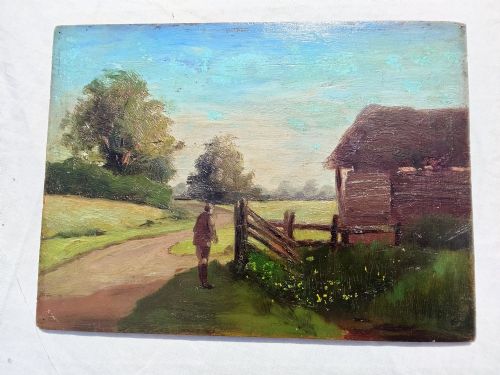
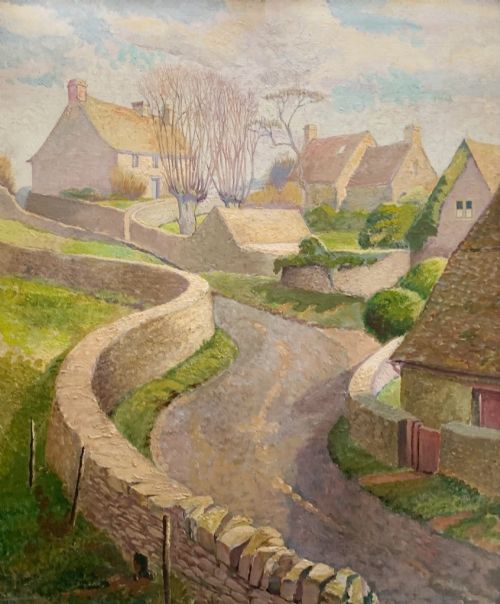
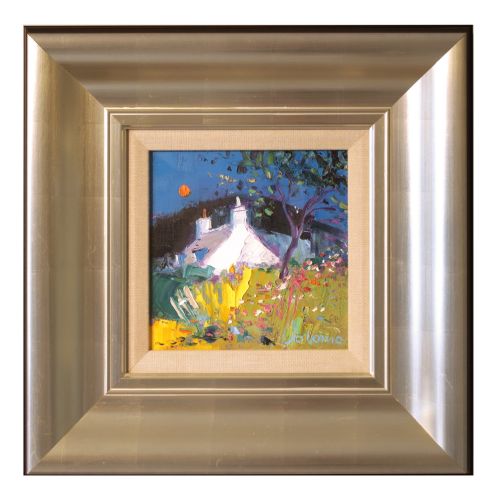
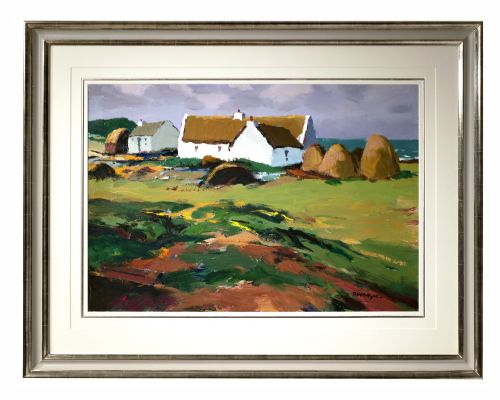


Original Oil Painting Cottage
An original oil painting cottage brings the quiet character of rural domesticity onto the wall through textured brushwork and rich pigment.
Original Oil Painting Cottage
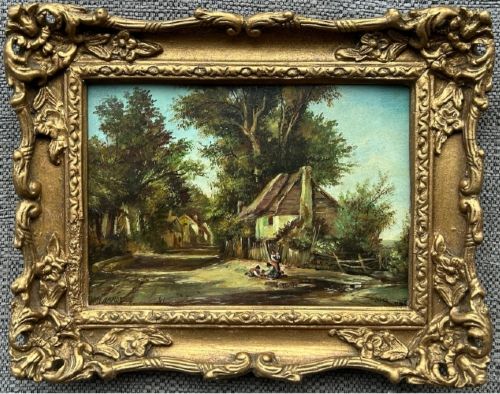
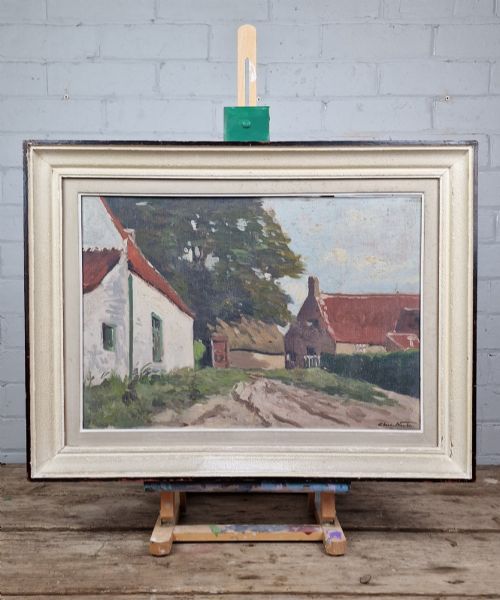
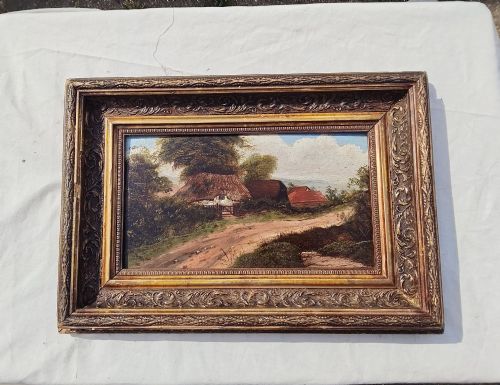
An original oil painting cottage captures traditional rural dwellings, often set among gardens, rivers, or rolling fields in English, Scottish, and European landscapes. These works range from humble timber-framed and thatched buildings to substantial farmsteads rendered with distinct regional character.
The selections span the nineteenth century through the mid-twentieth century, including Victorian works, Edwardian scenes, and mid-century interpretations. Buyers frequently encounter pieces associated with the English School, the British Impressionists, and various continental traditions.
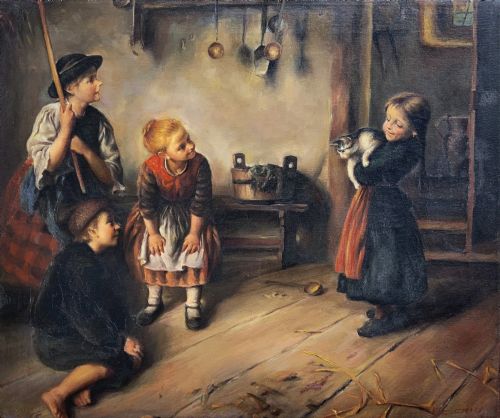
Many of these rural scenes depict daily life with figures, animals, and rustic pathways surrounding the central home structure. Such paintings document changing countryside aesthetics across different decades and artistic movements.
How They Were Made
Artists painted primarily with oil paint applied to stretched canvas, wooden panels, board, card, or metal supports. The oil medium allowed for slow drying times, enabling painters to blend tones and build thick, textured layers known as impasto.
Canvases and panels were frequently housed in period frames made of gilt wood or ornate carved wood, which complemented the warm palette of the landscape scenes.
Regional depictions include English, Scottish, Welsh, French, and Belgian rural landscapes.
What Varies in Quality
Quality rests upon the artist's handling of light, shadow, and atmospheric depth within the rural setting. A stronger piece demonstrates confident brushwork and balanced composition that draws the viewer into the domestic landscape.
The condition of the pigment layer and the originality of the mounting frame also influence the overall character of the work. Retaining a period frame appropriate to the canvas adds context to the historical piece.
William Howard Hardy·Charles Houben·John Lowrie Morrison·Donald McIntyre·John Horace Hooper·Mario Pinetti·Reginald Grange Brundrit·William Greaves·Ernest Higgins Rigg·Kershaw Schofield·Lorenzo Headley·Helmut Reuter·John Falconar Slater·Robert Gemmell Hutchinson·Abraham Hulk Junior·Pierre Emmanuel Eugene Damoye·Harry Pennell·Ernest Cox·Herbert Royle·T.B. Garvie·Singleton Jowett·Georgina Lara·Henry Cooper·Amédée Degreef·Fred Cecil Jones
The Original Oil Painting Cottage Glossary
- Impasto
- Paint applied thickly to a canvas or panel so that it stands out from the surface. This technique lets the physical mark of the brush remain visible.
- Giltwood
- Wood carved and coated with gold leaf or a gold-coloured finish. This material was widely used for traditional picture frames.
- Panel
- A flat piece of wood or other rigid material used as a support for painting instead of stretched fabric. Wooden panels were common in earlier centuries.
- Provenance
- The documented history of a painting's ownership and origin. Clear provenance helps verify the authenticity and background of a work.
Original Oil Painting Cottage: Frequently Asked Questions
What periods do these cottage paintings come from?
The available works span from the nineteenth century through the Victorian, Edwardian, and mid-twentieth-century periods. Many date from the peak of nineteenth-century landscape painting and the subsequent British Impressionist movement.
Later examples extend into the nineteen-fifties and nineteen-sixties, showing how modern artists continued to interpret rural domestic scenes.
What surfaces were these paintings created on?
Artists used several different supports depending on the period and the artist's preference. Oil on canvas remains the most common format.
Other works appear on wooden panels, boards, cards, and occasionally metal supports for still-life or landscape compositions.
Are these paintings signed by the artists?
Many pieces feature visible signatures, monograms, or attribution notes left by the original painter. Some works are signed clearly by known regional or international artists.
Others remain indistinctly signed or are attributed to specific regional schools such as the English School or the Dutch School.
How should I frame and display an oil painting?
Many antique oil paintings are presented in their original gilt wood or carved wooden frames. These frames protect the edges of the canvas and complement the aesthetic of the period.
When hanging the artwork, avoid direct sunlight and excessive moisture fluctuations to preserve the oil paint and canvas over time.