



Impressionist Style Landscape Painting
Impressionist style landscape painting captures light and atmosphere through loose brushwork, appealing to collectors seeking vibrant outdoor scenes from the nineteenth and twentieth centuries.
Impressionist Style Landscape Painting
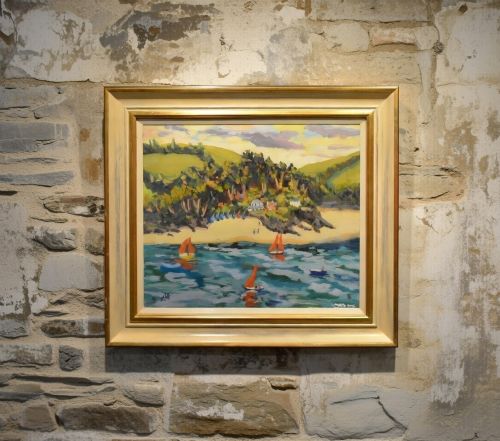
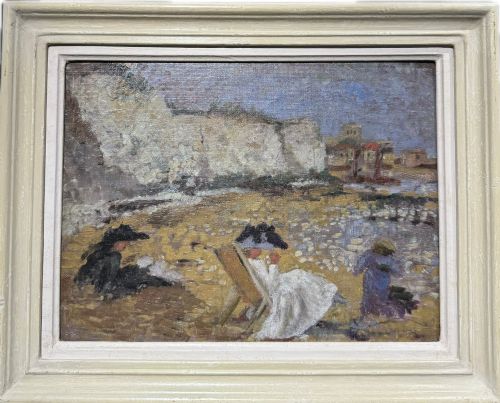
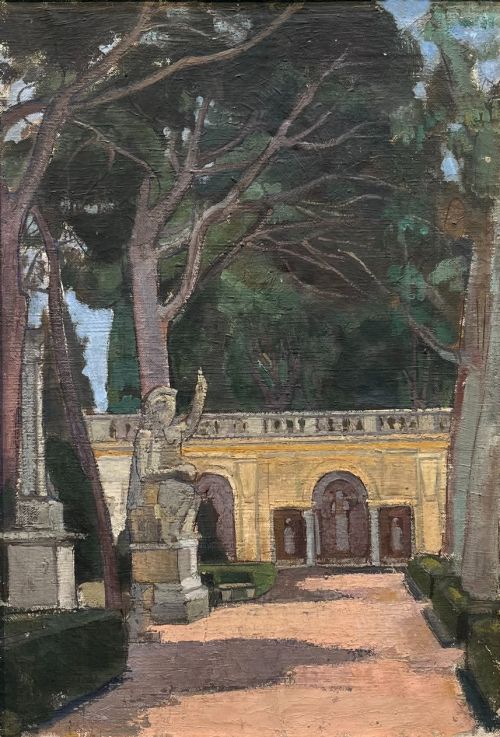
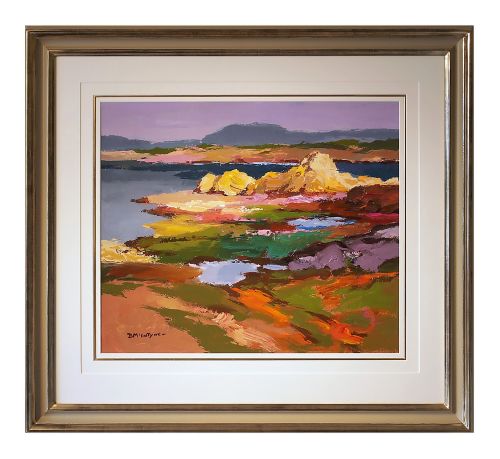
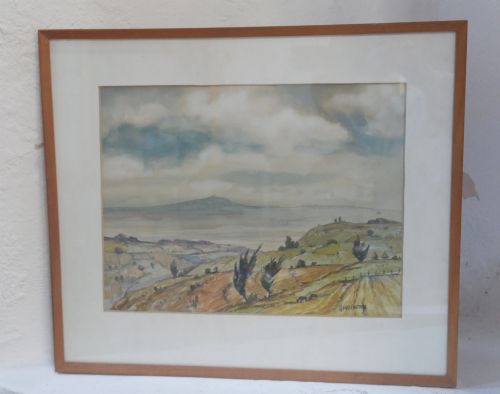
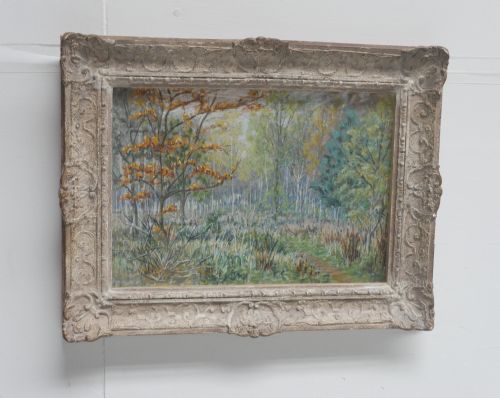
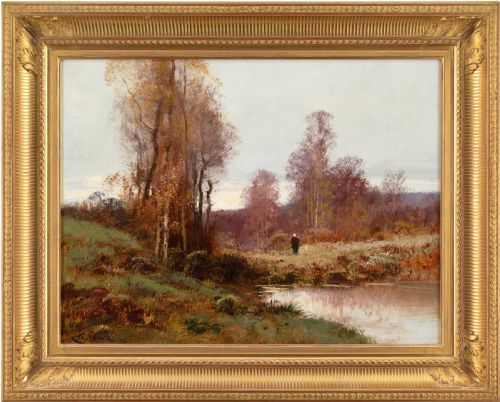
When searching for an impressionist style landscape painting, buyers encounter works executed primarily on canvas, wood, or paper spanning the late nineteenth century through to the mid-twentieth century. The selection ranges from British coastal views and river scenes to French provincial settings and Mediterranean vistas.
The most common examples on this page are mid-twentieth-century oil paintings and works on board, alongside earlier French and British pieces reflecting post-impressionist and Barbizon traditions. These artworks typically depict rural countryside, farmyards, gardens, and coastal estuaries.
Subjects stretch from English meadows and Yorkshire farmyards to Venetian canals and French seaside gatherings. Many pieces utilise visible, expressive brushstrokes to record changing natural light and open-air subjects.
Materials and technique
Artists built these compositions primarily using oil paint applied to canvas, wood panels, or artist boards, occasionally incorporating gesso preparation. Some works rely on pastel or mixed media on paper to capture softer atmospheric effects.
Techniques centre on rapid, visible brushwork designed to seize a transient moment of light rather than render meticulous detail. Frames often consist of gilt wood that complements the painted surface.
Several artists captured the exact moment a gardener looked at water lilies, proving that even canvas flowers require sunshine.
Assessing quality
Quality rests upon the sureness of the brushwork and the artist's command of light and tonal harmony across the canvas. Stronger examples display a confident balance between colour and composition that brings depth to open-air scenes.
Weaker pieces can rely on formulaic repetition without genuine observation of atmosphere. The handling of paint, the rhythm of the brushstrokes, and the cohesion of the palette separate standard decorative works from accomplished artistic interpretations.
Donald McIntyre·Charles Clair·William JB Jenkins·Helmut Reuter·Jeffrey Pratt·Edward M. Elliott·Charles Edmond Rene His·Fred Merriman·Christiaan Pieter Snyders·Amédée Degreef
The Impressionist Style Landscape Painting Glossary
- Canvas
- A heavy woven fabric stretched across a wooden frame to provide the primary support for oil painting.
- Barbizon School
- A mid-nineteenth-century French art movement focusing on realistic landscape painting inspired by direct observation of nature.
- Post-Impressionism
- An artistic development following impressionism that explored expressive colours and distinct forms beyond naturalistic representation.
- Gesso
- A white paint mixture consisting of a binder mixed with chalk, gypsum, or pigment used to prepare rigid surfaces for painting.
- Gilt wood
- Wood carved and treated with a thin layer of gold leaf, commonly found on traditional picture frames.
Impressionist Style Landscape Painting: Frequently Asked Questions
What subjects appear in these paintings?
The works depict rural fields, rivers, coastal estuaries, gardens, and urban outskirts. Scenes range from English farmyards and canals to French beaches and Mediterranean vistas.
Many compositions focus on natural light playing across trees, water, and architecture during different times of day.
How do I care for an oil painting?
Keep paintings away from direct sunlight, extreme temperature fluctuations, and high humidity to protect the canvas and paint layers. Dust the surface gently with a soft, dry brush without applying pressure.
Avoid using liquid cleaners or hanging pieces above active heat sources.
How do I date a landscape painting?
Dating relies on stylistic markers, framing methods, artist signatures, and inscriptions recorded on the reverse of the canvas or board. Pigment choices and canvas preparation techniques also offer clues to the period.
Examine exhibition labels or gallery stamps when present for further historical context.
Where were these landscape works created?
The pieces originate primarily from British and French studios, reflecting local rural and coastal environments. Artists frequently travelled to paint outdoors in locations ranging from Yorkshire and the Thames to Normandy and the Mediterranean.
Some works record foreign travels, including scenes from Italy and Kenya.