


Traditional Country Desk Chair
A traditional country desk chair brings tactile warmth and sturdy vernacular character directly to a workspace.
Traditional Country Desk Chair
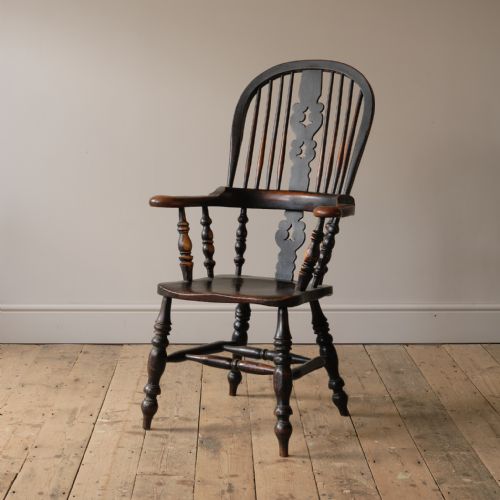
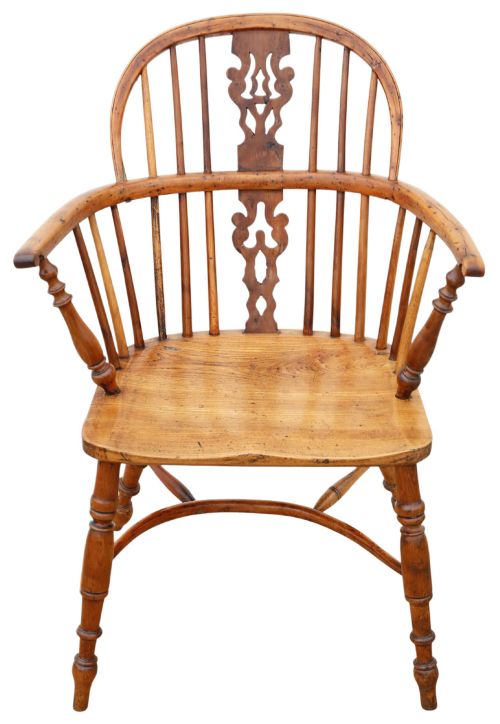
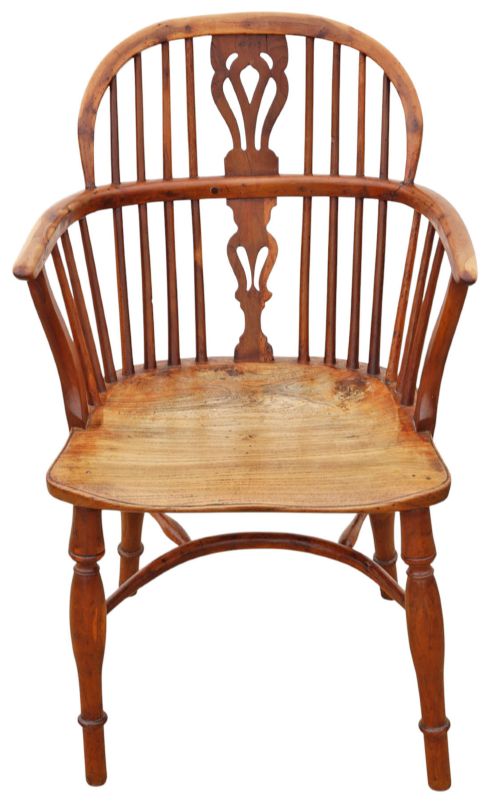
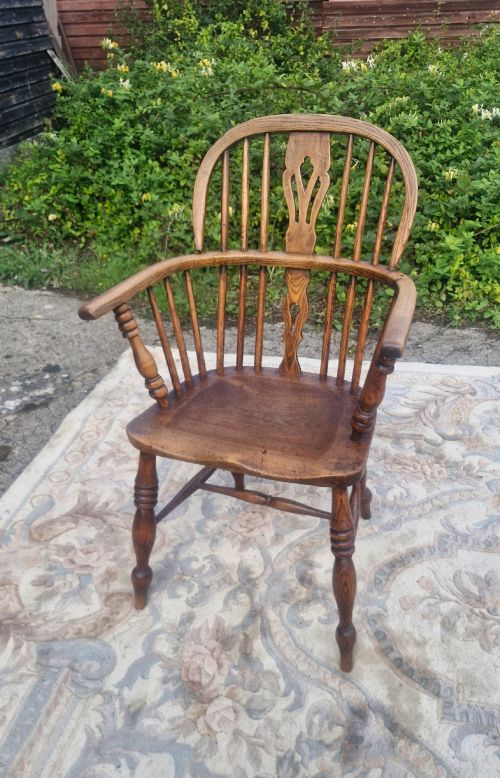
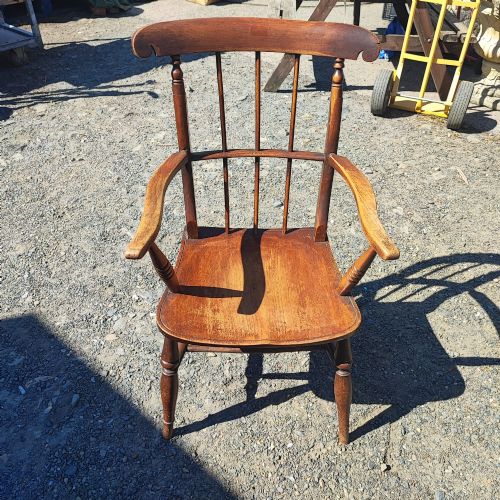
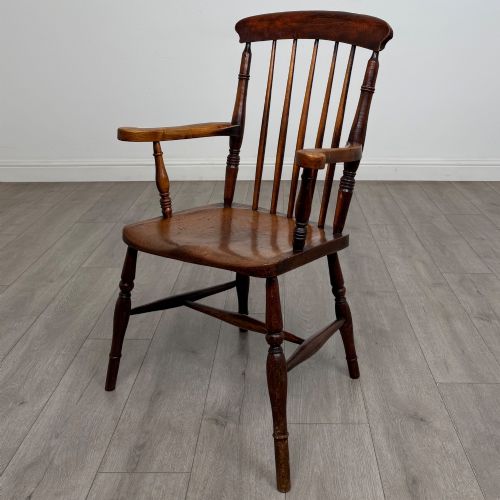
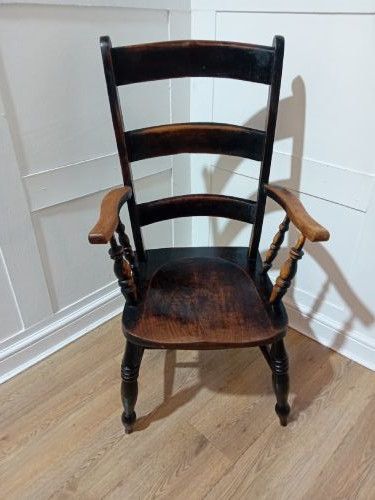
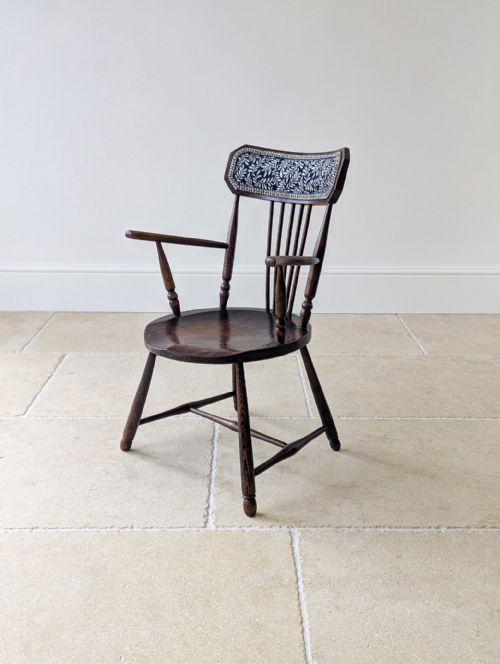
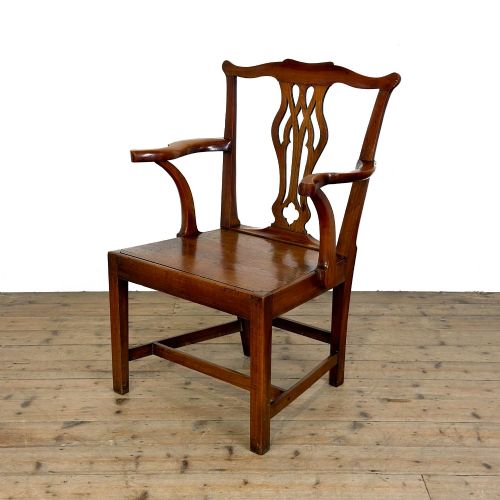
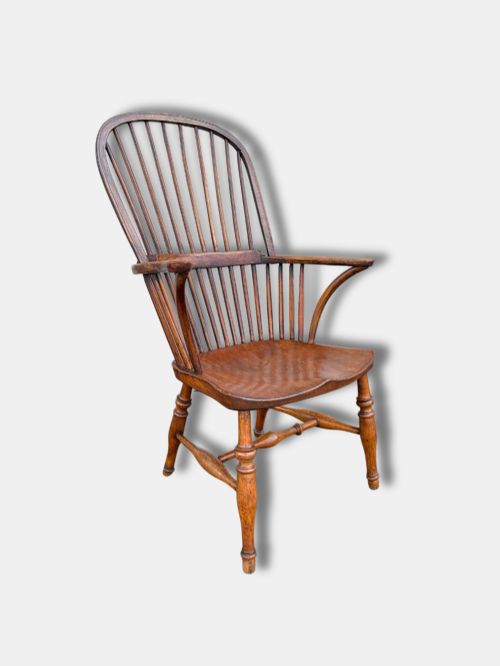
A traditional country desk chair is fundamentally a Windsor or vernacular farmhouse seat designed for comfort and sustained writing tasks at a table. These pieces emerge primarily from nineteenth-century English workshops, drawing on eighteenth-century Georgian traditions of regional rural craftsmanship.
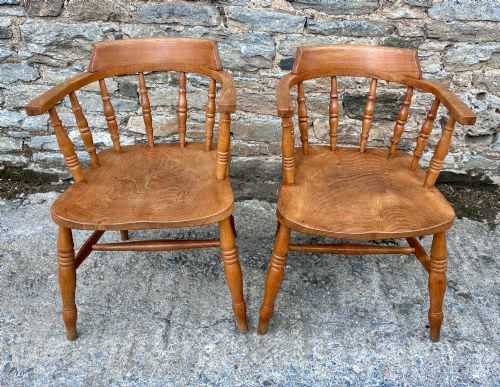
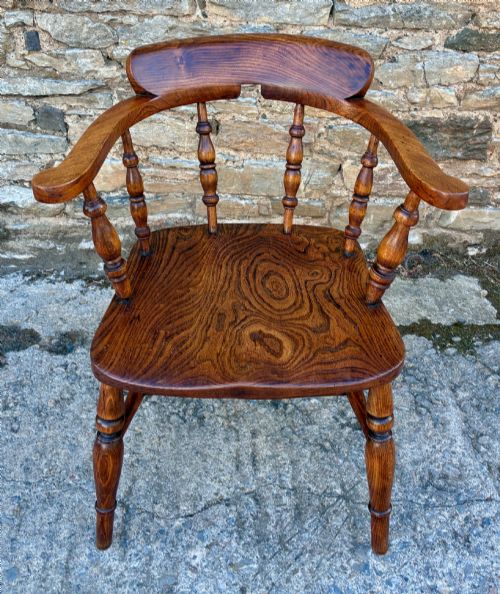
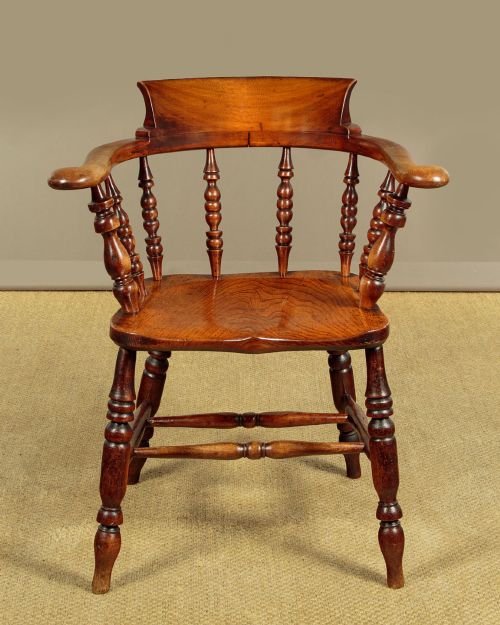
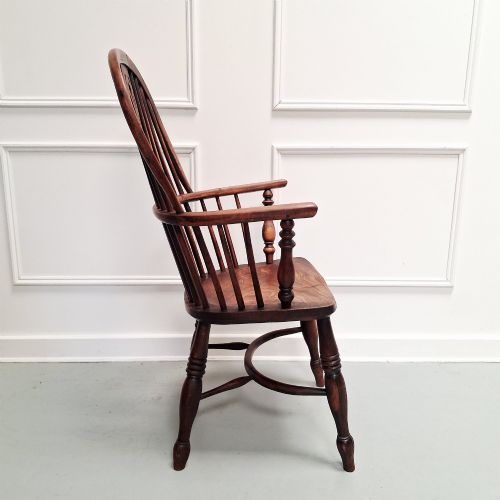
The most common versions met on this page are low-back, broad-arm, and smoker's bow Windsor configurations. Makers constructed these seating forms using regional vernacular designs that prioritised ergonomic saddle seats and sturdy spindle backs over rigid formality.
Woods and Construction
Construction relies heavily on contrasting native timbers, typically pairing elm for sculpted saddle seats with ash, beech, or oak for bentwood hoops and spindles. Cabinetmakers selected yew and fruitwood for finer examples, utilising the natural grain and flexibility of these hardwoods to shape deep bows and delicate arm supports.
Joinery methods depend on traditional green woodwork and turning techniques, employing pegged tenons and wedge-secured legs driven straight into the solid wood seat block. This method creates a rigid skeletal frame that withstands heavy daily use without modern metal fasteners.
Substance and Patina
Quality separates along the depth of the seat carving and the richness of the accumulated surface patina. Superior chairs display deeply sculpted elm seats shaped to the human form, whereas simpler items feature flatter, thinner plank bases.
The choice of timber significantly alters the standing of a piece, with figured yew and rich fruitwood commanding greater respect than standard beech or utility elm. Original finish, clear regional attribution, and slender, well-turned spindles further distinguish the finest examples from utilitarian workshop output.
J SPENCER·Gabbitass Worksop
The Traditional Country Desk Chair Glossary
- Windsor chair
- A wooden chair built with a solid plank seat into which the legs and back spindles are separately inserted. This construction method defines the majority of rural seating found in the British countryside.
- Smoker's bow
- A low-backed Windsor armchair featuring a continuous curved arm rail supported by turned spindles. These compact seats served traditionally in domestic smoking rooms and rural offices.
- Comb back
- A Windsor chair variation where the vertical back spindles rise through a horizontal headpiece to resemble the teeth of a comb. This style dates back to earlier Georgian periods.
- Saddle seat
- A wooden chair base sculpted with hollows and contours to fit the sitter. Master craftsmen carved these planks by hand to provide ergonomic comfort.
- Patina
- The deep surface sheen and mellow colour developed by aged wood through decades of handling, polishing, and exposure to light. It serves as a visual indicator of authenticity and age.
Traditional Country Desk Chair: Frequently Asked Questions
How do I identify a genuine Windsor chair?
Look for a solid plank seat where the legs and back components are wedged directly into bored holes rather than connected via a standard frame.
Examine the underside to confirm traditional wedged tenon joints and natural timber shrinkage over time.
Are these chairs comfortable for daily desk work?
The deep saddle-shaped seats and supportive bowed backs were engineered by rural makers for long hours of manual or clerical labour.
Their ergonomic wooden contours provide robust lumbar support suitable for contemporary workspaces.
What wood types should I expect to find?
Most examples combine elm seats with ash or beech spindles, taking advantage of the specific bending qualities of each native British hardwood.
Finer versions utilise highly figured yew wood or rich fruitwood to achieve a more decorative finish.
How do I date an antique country chair?
Dating relies on examining tool marks, timber shrinkage patterns, turning styles, and structural wear consistent with eighteenth and nineteenth-century cabinetmaking methods.
Regional variations and specific back types, such as comb backs or stick backs, also point towards particular manufacturing decades.