

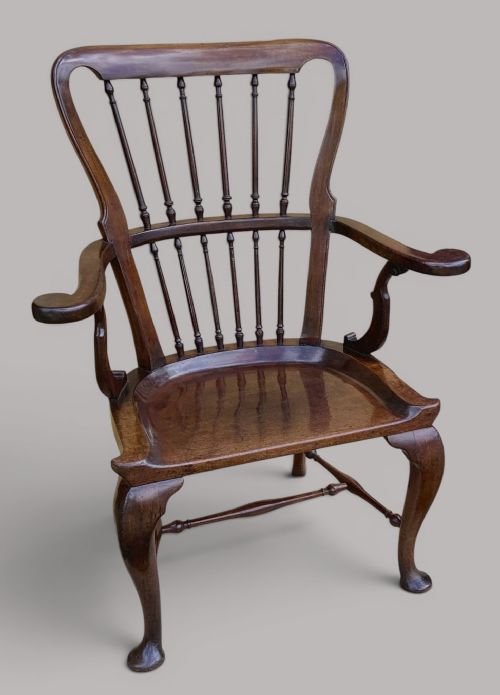


Cabriole Leg Windsor Chair
A cabriole leg windsor chair is a sturdy country seat defined by its curved front supports, built for everyday use and sought after for its organic timber character.
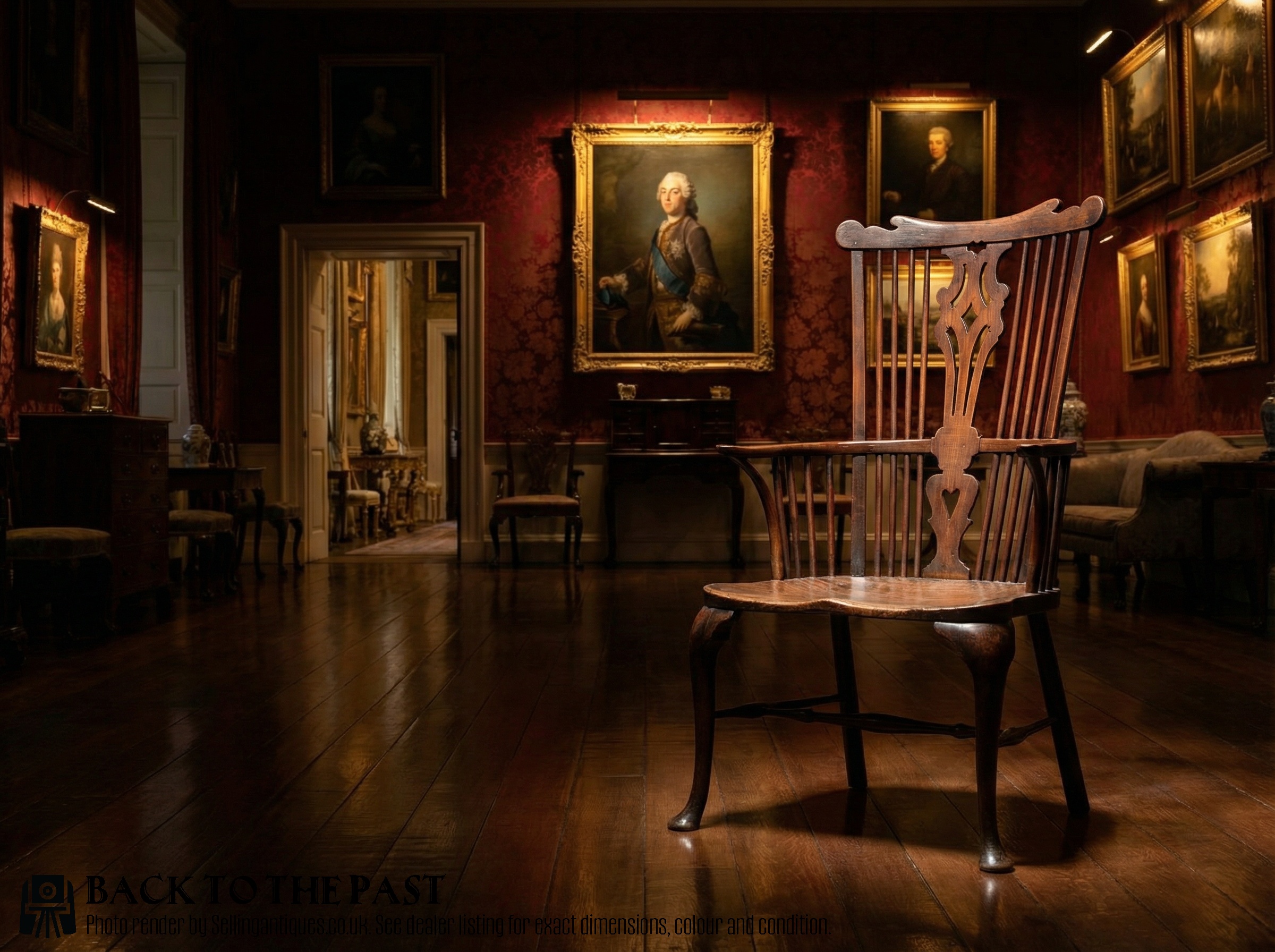
Identifying a cabriole leg windsor chair
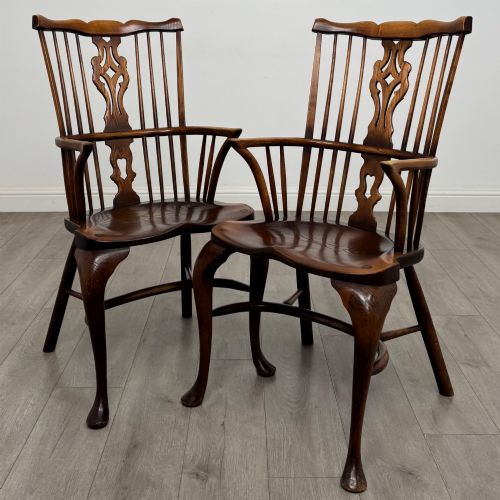
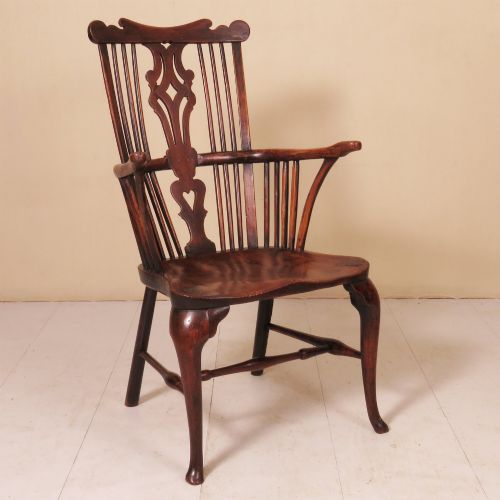
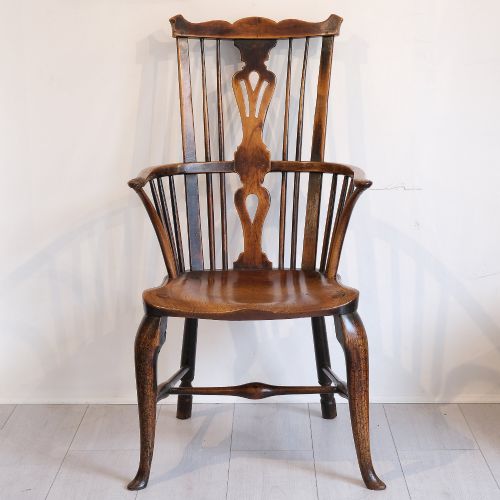
A cabriole leg windsor chair combines traditional stick or comb back construction with outward-curving front legs, typically ending in a pad foot. These seating pieces appear across the eighteenth and nineteenth centuries, alongside Edwardian examples, reflecting regional English country craftsmanship.
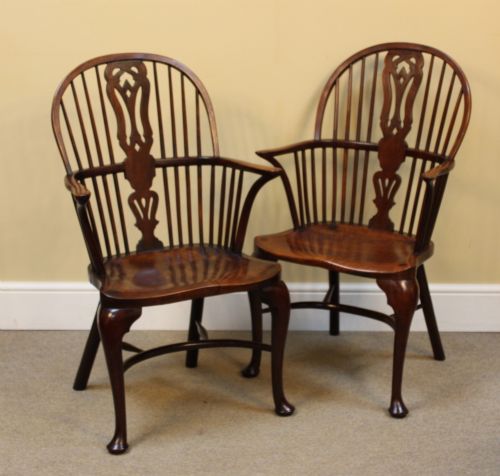
The evidence shows these armchairs emerge in forms such as comb backs, spindle backs with bulls-eye motifs, wheel backs, and stick chairs. Regional styles like Thames Valley feature prominently among surviving examples, often built with distinct timber combinations.
Buyers meet these pieces in configurations ranging from single armchairs to pairs and matching sets. The forms draw on Georgian vernacular traditions, blending rustic utility with refined leg shapes.
Materials and construction methods
Maker workshops utilised mixed timbers such as elm, yew, ash, oak, cherrywood, and beech to construct these seats. Hardwoods provided structural strength for spindles, arms, and legs, while softer or flexible woods suited the sculpted seats.
Construction relied on traditional green woodworking techniques, turning uprights and boring legs directly into solid wooden seats. Details like crinoline stretchers and heart motifs added rigidity and decorative flair to the frame.
Retail Price Guide 2026
Typical UK retail prices for cabriole leg windsor chair, calculated from the Sellingantiques database of over a million retail prices indexed since 2003. This retail price guide relies exclusively on Sellingantiques data; no external sources or auction records are used, so the figures do not describe the wider market.
Makers occasionally carved small heart details into the woodwork to charm the room.
Assessing quality in the range
Quality separates through timber selection and the fluency of the turning work. Pieces pairing yew wood with elm show greater stylistic ambition than simpler utilitarian ash and beech versions.
The proportion of the cabriole curve and the crispness of the pad foot define the visual success of the base. Finer examples display harmonious integration between the shaped seat, the bentwood back, and the sculptural legs.
The Cabriole Leg Windsor Chair Glossary
- Cabriole leg
- An outward-curving vertical support inspired by animal legs, finishing at the foot. This shape lifts the rustic chair into a more formal aesthetic.
- Comb back
- A Windsor chair variation where the vertical spindles extend up to a top rail resembling the teeth of a comb. This back style offers distinct back support.
- Wheel back
- A chair back featuring a pierced splat shaped like a cartwheel. It represents a later development in vernacular seating design.
- Crinoline stretcher
- A curved under-framing wire or wooden brace connecting the legs of a chair for stability. It forms a horseshoe shape beneath the seat.
- Thames Valley
- A regional English style of Windsor chair production known for using yew wood and refined turning. These pieces originate from workshops along the river basin.
Frequently Asked Questions
What is a cabriole leg windsor chair?
A cabriole leg windsor chair is a traditional wooden armchair featuring a stick or wheel back joined to a solid seat, elevated on curved front legs. These pieces bridge the gap between rustic country utility and refined eighteenth-century design.
Makers built them using regional timbers like yew, elm, and ash. They appear in single forms, pairs, and sets across Georgian and later periods.
How were these chairs used historically?
These armchairs served as principal seating in parlours, farmhouses, and dining spaces. Their robust construction handled daily domestic life while providing comfortable support through sculpted seats and bentwood backs.
The combination of sturdy spindles and braced legs ensured longevity. They functioned as reliable household furniture rather than purely decorative items.
How do I live with a wooden windsor chair?
Living with a wooden windsor chair involves placing it away from direct heat sources and extreme humidity fluctuations. Natural timbers respond to environmental changes, so steady indoor conditions preserve the wood and joints.
Routine dusting and occasional waxing help maintain the finish of antique elm, yew, or oak surfaces. These chairs suit everyday seating when handled with standard care for antique timber.
How can I tell the period of a chair?
Dating relies on observing construction traits, timber choices, and back styles. Eighteenth-century examples often feature comb backs or Thames Valley yew construction, while nineteenth-century versions frequently utilise wheel back designs.
Leg forms like pad feet on cabriole supports point towards Georgian vernacular traditions. Comparing back variations helps narrow down the era of production.