
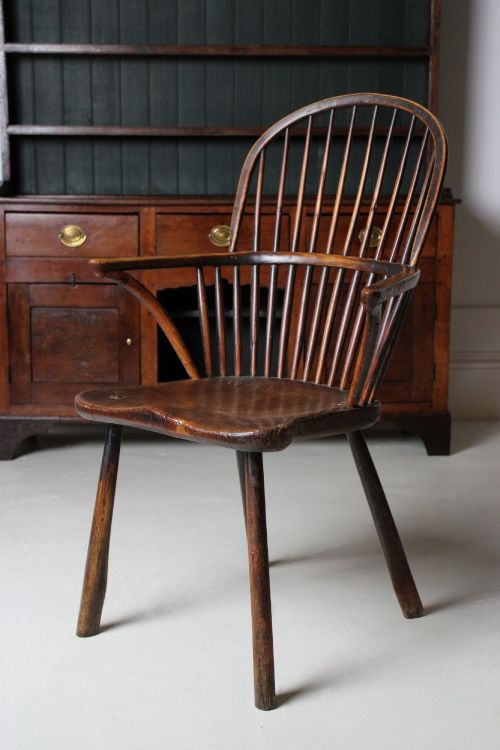


Dark Yew Elbow Chair
A dark yew elbow chair brings rich timber and vernacular character into a room, offering sturdy seating rooted in English country tradition.
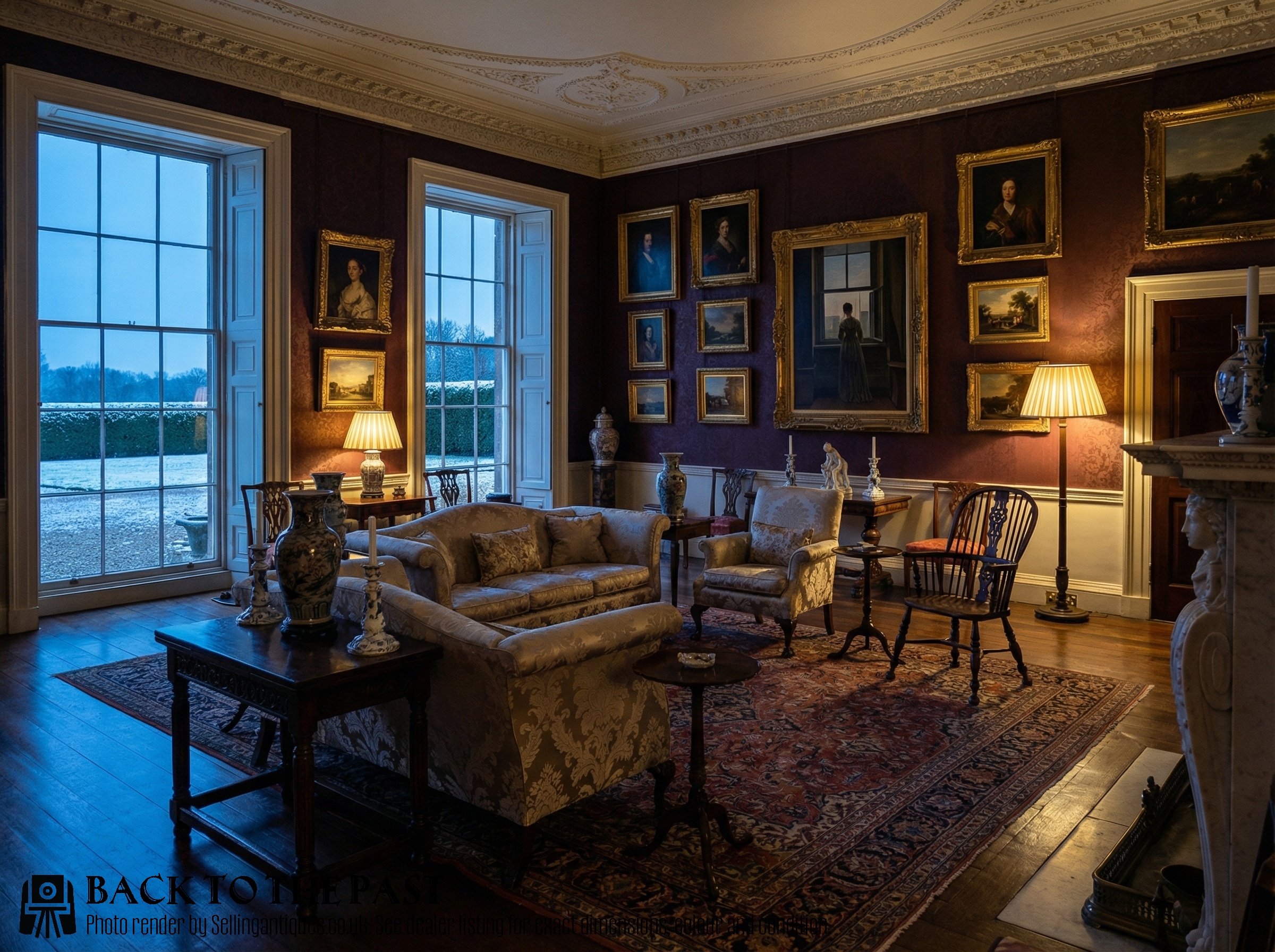
Dark Yew Elbow Chair
A dark yew elbow chair represents the pinnacle of English country craftsmanship, combining shaped seats with spindle backs. When you search for a dark yew elbow chair, you encounter sturdy armchairs designed for daily use in farmhouses and vernacular settings.
The examples gathered here span several centuries, reaching back to the seventeenth century and moving through the Georgian and Victorian periods. Most pieces you meet on this page utilise regional English designs such as Windsor armchairs.
Makers shaped these armchairs using local timber, frequently pairing yew with elm, ash, or fruitwood. The resulting seats display deep patination and varied grain patterns developed over generations of use.
How they were made
The construction relies on traditional bodger techniques, where turned spindles and legs fit firmly into a solid carved wooden seat. Craftsmen selected timber for its specific properties, using robust hardwoods like ash and beech for structural parts.
Makers integrated distinctive yew wood panels and burr yew sections into the upper portions of the chair to highlight the dramatic grain. They shaped the arms and comb backs using drawknives and spokeshaves to ensure comfortable support.
Lobster pot comb backs offered seventeenth-century sitters a secure place to doze off after a heavy harvest meal.
What varies in quality
The distinction between standard examples and superior pieces rests on the complexity of the timber selection and the retention of original surface patination. Chairs featuring high backs, comb backs, or multiple contrasting woods command greater attention.
Proportional balance and the crispness of the spindle turnings also separate ordinary regional furniture from exceptional vernacular work. Maker attribution further elevates an example when documented through branded stamps or regional characteristics.
John Moss Worksop·Rockley Maker
The Dark Yew Elbow Chair Glossary
- Windsor chair
- A wooden armchair constructed with a solid shaped seat into which the legs and back spindles are separately socketed. This form dominates the vernacular seating tradition.
- Comb back
- A Windsor chair design where the central vertical spindles extend upward to support a horizontal top rail resembling a comb. This feature appears on provincial country armchairs.
- Vernacular furniture
- Domestic objects made by regional craftsmen following local traditions rather than metropolitan academic styles. These pieces emphasise utilitarian strength and regional materials.
- Yew wood
- A dense, resilient softwood with a highly decorative grain pattern ranging from deep amber to dark brown. Makers utilised this timber for prominent components of country armchairs.
- Broad arm
- An armchair featuring widened wooden armrests designed to provide a writing surface or extra comfort. This regional variation frequently occurs in Yorkshire seating.
Dark Yew Elbow Chair: Frequently Asked Questions
How were these armchairs used historically?
Historically, these armchairs served as principal seating in farmhouses, cottages, and country homes for daily domestic tasks.
Their robust construction made them suitable for placement beside hearths or at tables, providing sturdy arm support for the occupant.
How do I date a dark yew elbow chair?
Dating relies on examining construction methods, tool marks, timber combinations, and regional design evolution across the seventeenth, eighteenth, and nineteenth centuries.
Earlier examples often display simpler plank or panel constructions, whereas later Victorian pieces exhibit refined spindle turnings and varied comb backs.
Where were these chairs made?
These chairs originated in various English regions, including Yorkshire, Mendlesham, and Welsh border workshops.
Local craftsmen utilised accessible regional timber stocks, resulting in distinct stylistic variations depending on the workshop location.
How do I care for dark yew wood?
Caring for yew wood involves maintaining stable indoor humidity and applying occasional natural wax to nourish the antique surface.
Avoid placing the chair near direct heat sources or strong sunlight to protect the deep patination of the timber.