


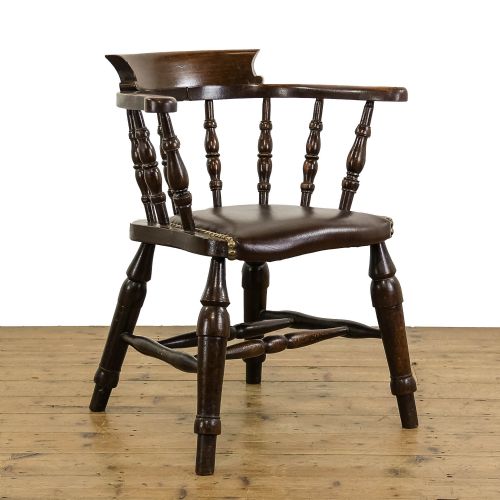

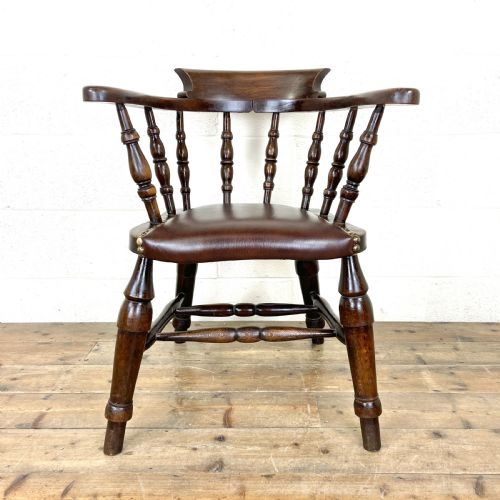

Vintage Pub Armchair
A vintage pub armchair brings sturdy nineteenth-century tavern character and deep-seated comfort straight into a modern room.
Vintage Pub Armchair
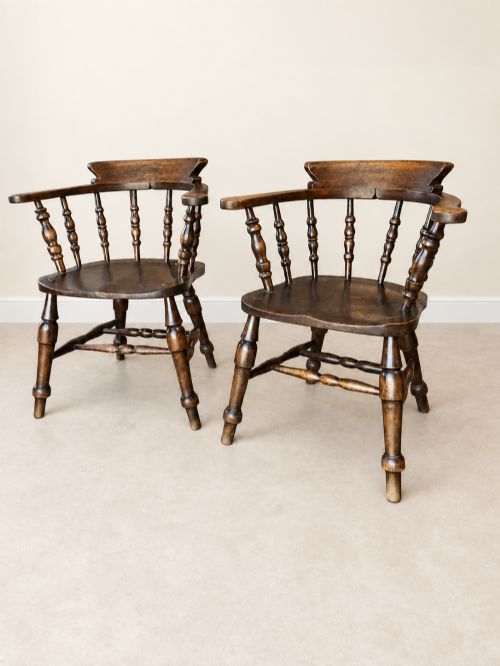
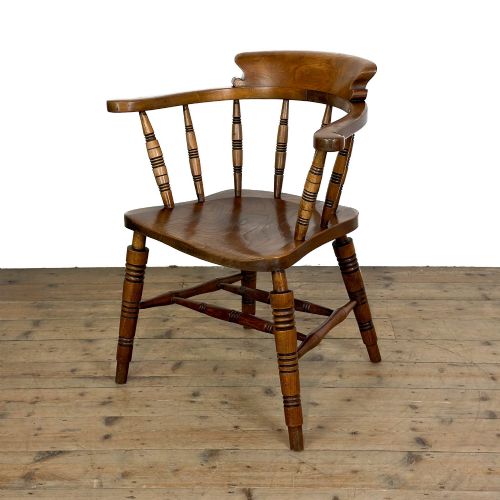
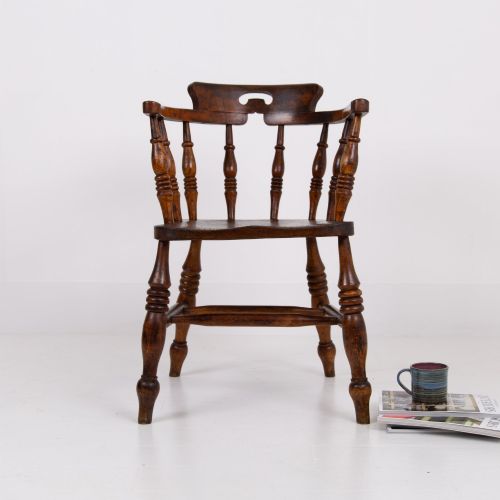
A vintage pub armchair typically refers to the sturdy smokers bow, captain, or tavern chair found across the nineteenth century. These robust seats span the Victorian and Edwardian periods, including examples dated specifically to 1870, 1880, and around 1850.
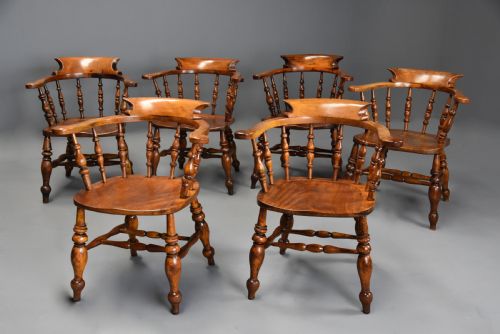
The dominant forms on this page are smokers bow armchairs, captain's chairs, and clerk's chairs, often offered as single statement pieces or matched sets of six. They emerge from Victorian country and English country traditions, built primarily for communal houses, commercial spaces, and domestic studies.
How they were made
Constructed from resilient native hardwoods, these chairs combine elm seats with beech, ash, or oak frames and spindles. Selected timbers are turned and bent to form the characteristic low curved backrest and supportive arm bow.
Details such as brass fittings and occasional leather seat inserts appear among the timber framing, anchoring the practical seating design typical of tavern and desk chairs.
What varies in quality
The distinction between ordinary utility seating and finer examples rests in the depth of the timber grain, the sculptural grace of the turned spindles, and the harmonious integration of multiple woods like elm and beech. Matching sets naturally command greater consistency in scale and proportion than individual survivors.
Original surface patination and structural integrity define the remaining merit, separating chairs that retain their honest working character from those that have lost their historical coherence.
The Vintage Pub Armchair Glossary
- Smokers bow
- A low-backed Windsor-style armchair featuring a continuous curved arm rail and turned spindles, commonly found in nineteenth-century pubs. This form offers robust seating with a low profile.
- Captain's chair
- A sturdy wooden armchair designed with a rounded backrest supported by short spindles above the seat. These chairs originated in domestic and commercial settings for functional desk use.
- Tavern chair
- A utilitarian seating form designed for heavy commercial use in nineteenth-century public houses and inns. They rely on heavy timber construction for daily resilience.
- Elm
- A dense, tough native hardwood prized for solid, split-resistant chair seats that accommodate heavy use. Cabinet makers selected it for its interlocking grain.
Vintage Pub Armchair: Frequently Asked Questions
What is a smokers bow chair?
A smokers bow is a low-backed wooden armchair derived from the traditional Windsor design, featuring a continuous curved arm bow and turned spindles.
These pieces served as reliable seating in nineteenth-century public houses, domestic rooms, and commercial offices.
How do I identify a Victorian pub armchair?
Look for honest nineteenth-century construction methods, typically employing native timbers like elm, beech, and ash with traditional turned components.
They often display the darker patination and heavier proportions characteristic of Victorian country workshop production.
Can I use these in a modern dining room?
Yes, their compact footprints and supportive curved armrests make them practical for dining tables or desk use.
Single pieces or matched sets bring substantial historical texture and organic timber tones to contemporary interiors.
What woods were used for these chairs?
Maker workshops utilised robust domestic hardwoods suited to daily commercial wear, combining elm for solid seats with ash, beech, or oak for frames.
Brass elements and leather seat inserts also appear on selected examples across the period.