
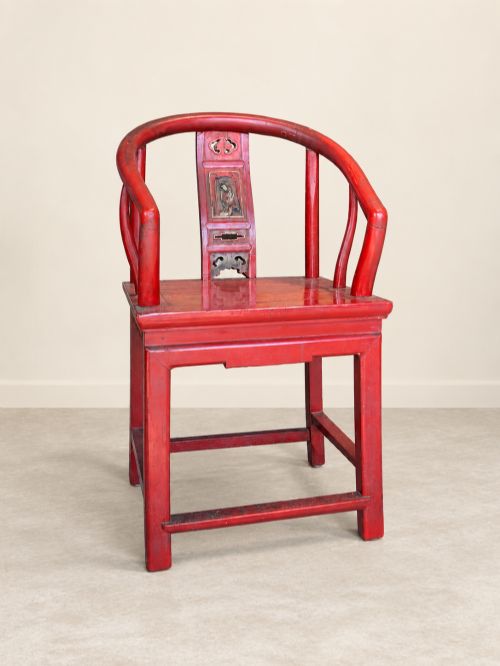
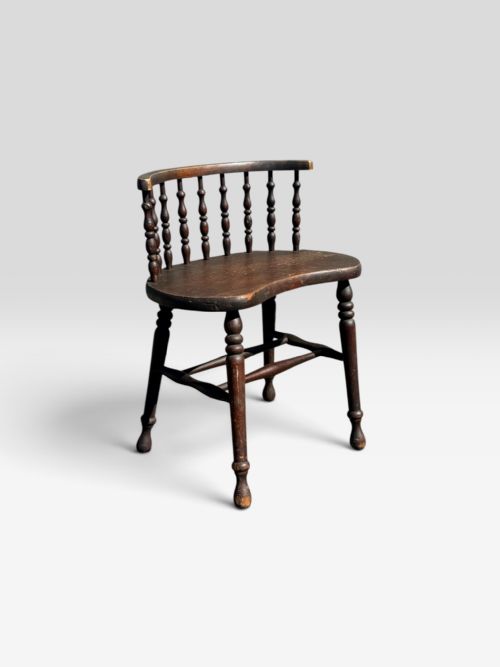
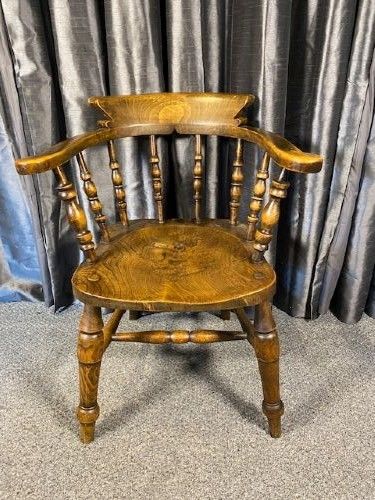
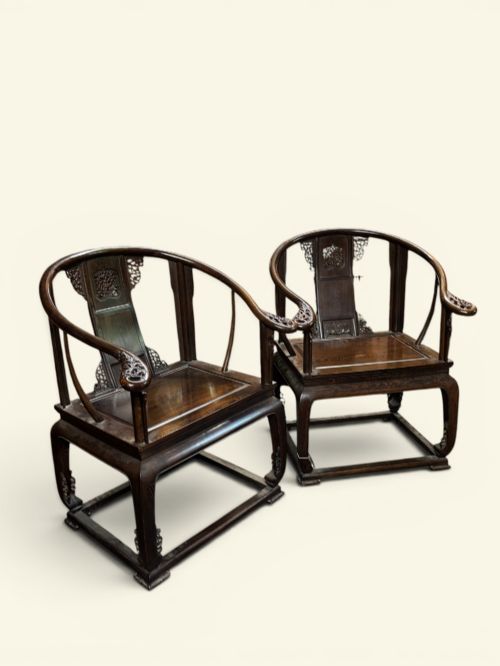





Horseshoe Back Armchair
A horseshoe back armchair offers a sweeping, continuous rail that cradles the sitter, making it a sculptural addition to any room.
Horseshoe Back Armchair
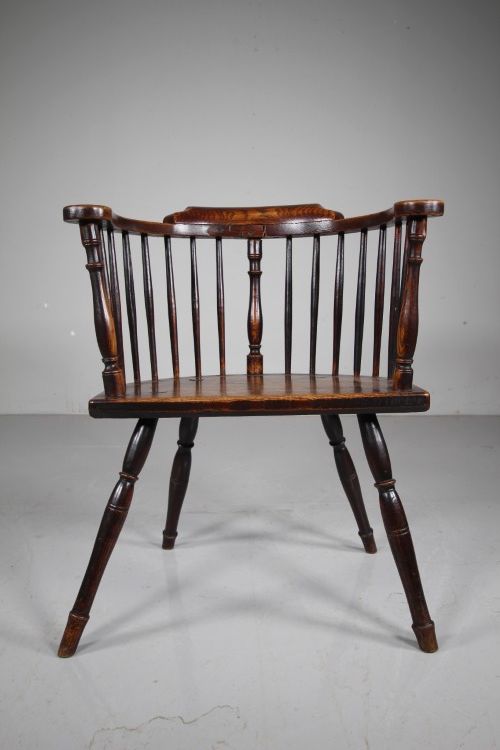
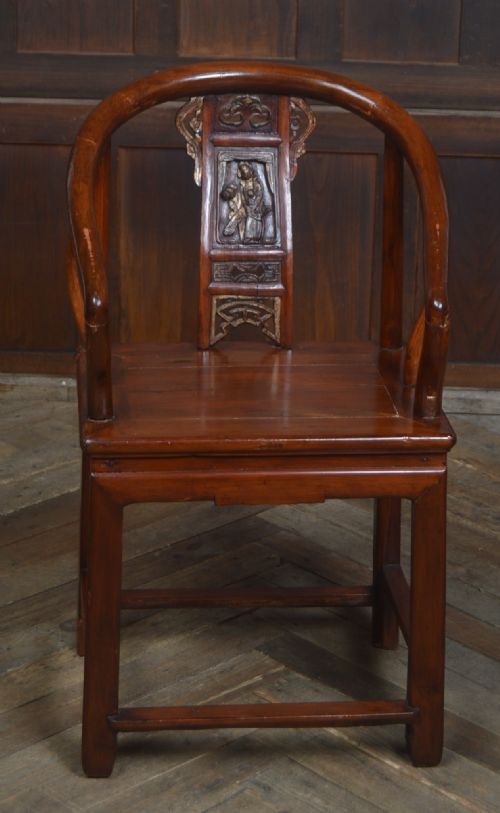
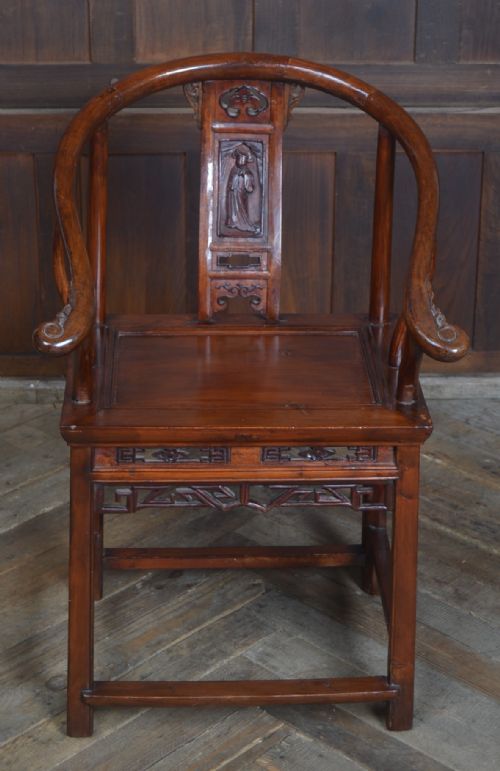
When you search for a horseshoe back armchair, you encounter seating distinguished by a curved top rail that flows into integrated armrests. The pieces on this page span both traditional Chinese forms and English country interpretations, crossing eras from the eighteenth century to the twentieth century.
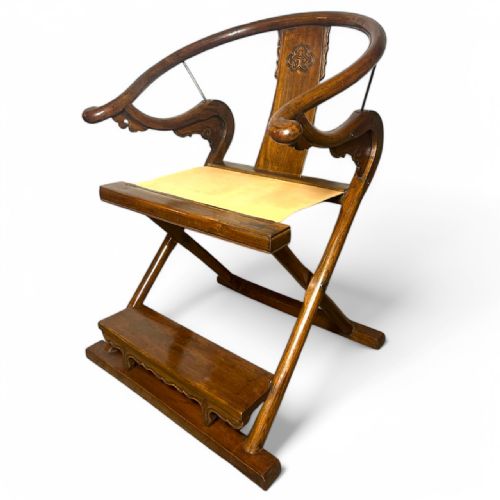
You are most likely to meet Chinese examples in elm or hardwood, often featuring folding frames or brass inlays, alongside occasional English country armchairs in elm and oak. These chairs function as striking accent pieces or desk chairs, combining functional support with clean, sweeping lines.
How They Were Made
Joinery forms the backbone of these chairs, particularly in Chinese hardwood and elm examples where complex interlocking joints maintain the tension of the curved horseshoe rail. Cabinetmakers utilised dense timbers like elm and walnut, sometimes incorporating brass inlay or lacquered finishes to enhance the surface.
English country versions rely on traditional turning and steam-bending techniques to shape local timbers like oak and beech into sturdy frames. Upholstered variants integrate leather panels or buttoned seats, secured with traditional tacks to wooden foundations.
Some nineteenth-century versions fold completely flat, proving that ancient furniture makers anticipated modern flat-pack convenience.
What Varies in Quality
The refinement of the joinery on the curved rail distinguishes standard production from superior craftsmanship. Grain selection in the elm or hardwood dictates the visual depth of the frame.
Surface preservation, whether original lacquer, polished oak, or patinated leather, determines the integrity of the piece. The precision of inlaid brass and the tension preserved in folding mechanisms separate finer examples from simpler provincial work.
The Horseshoe Back Armchair Glossary
- Horseshoe rail
- A continuous curved wooden member forming the back and arms of the chair. This distinctive shape provides ergonomic support for the upper body.
- Elm
- A resilient native timber valued for its interlocking grain and resistance to splitting. It appears frequently in both Chinese provincial seating and English country chairs.
- Hardwood
- A dense timber classification used in traditional Chinese furniture construction. It provides the structural strength necessary for slender, sweeping components.
- Lacquer
- A durable resin finish applied in multiple layers to wooden surfaces. It creates a smooth, protective coating often seen on Asian furniture.
- Cockfighting chair
- A specialised low seating form designed with a padded backrest for straddling. These pieces typically feature upholstered leather pads and compact proportions.
Horseshoe Back Armchair: Frequently Asked Questions
How do I use a horseshoe back armchair?
These chairs work effectively as statement pieces in a living room, hallway, or study. Their curved rails invite comfortable sitting while offering a strong visual silhouette.
They also function well as desk chairs or accent seating, provided the seat height matches your intended surface.
Are horseshoe back armchairs strictly Chinese?
While the iconic continuous curved rail originates deeply in traditional Chinese furniture design, such as Ming and Qing dynasty seating, the form also appears in Western vernacular traditions.
English country makers produced similar sweeping chair designs using local timbers like elm and oak, resulting in distinct regional interpretations.
What woods are typical for these chairs?
Elm is the most prevalent timber found across both provincial Chinese pieces and English country variants. Cabinetmakers also utilised walnut, oak, and various dense Asian hardwoods.
Some examples incorporate secondary materials such as brass for inlay work or leather for upholstered seating pads.
How do I date a horseshoe back armchair?
Dating relies on examining the joinery methods, tool marks, timber shrinkage, and any surviving finish or lacquer. Period styles like Qing Dynasty or Georgian Country provide broad chronological frameworks.
Comparing construction details with documented examples helps narrow the period of manufacture.