



Traditional Coastal Scene Painting
A traditional coastal scene painting captures harbours, fishing vessels and shorelines through nineteenth and twentieth-century brushwork.
Traditional Coastal Scene Painting
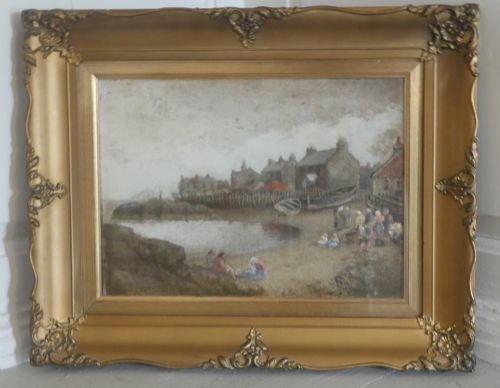
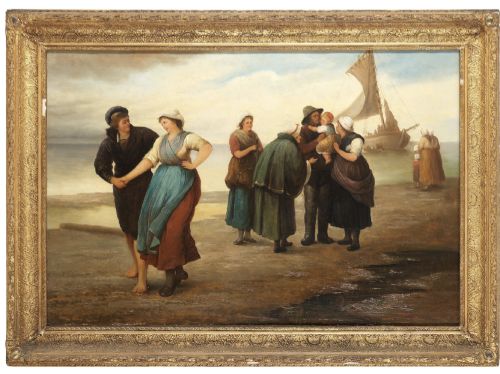
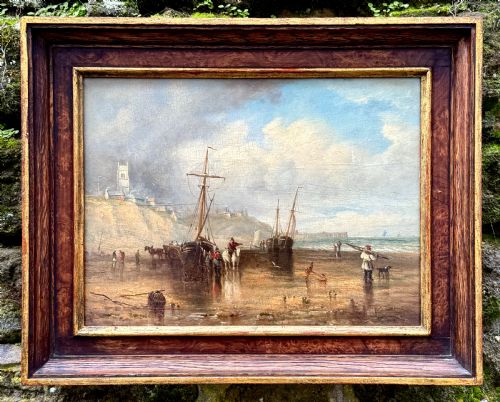
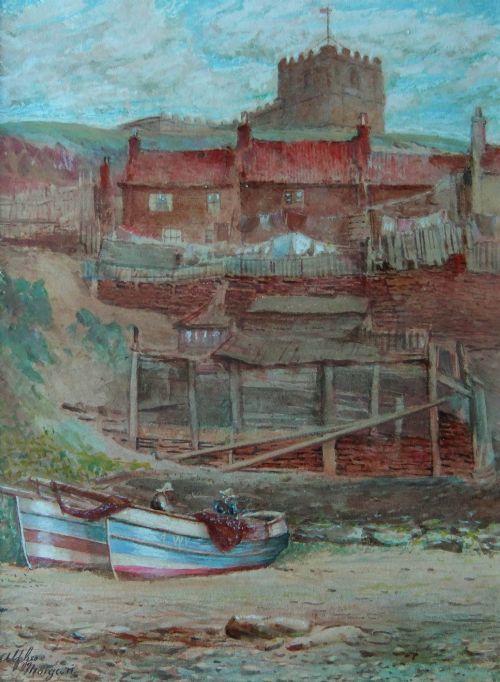
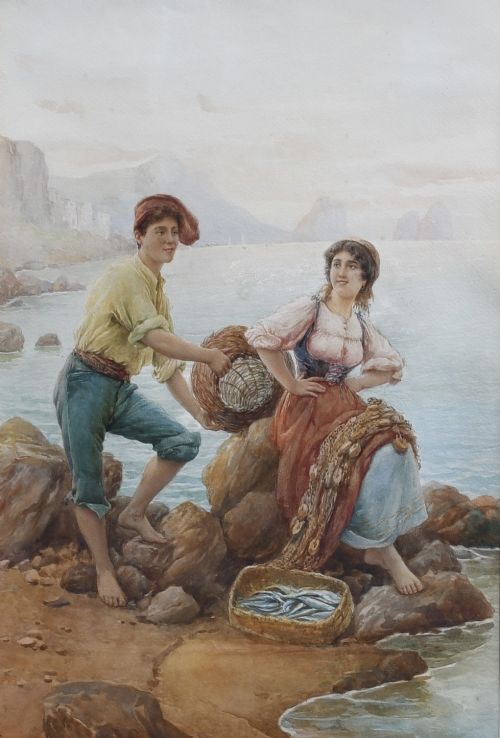
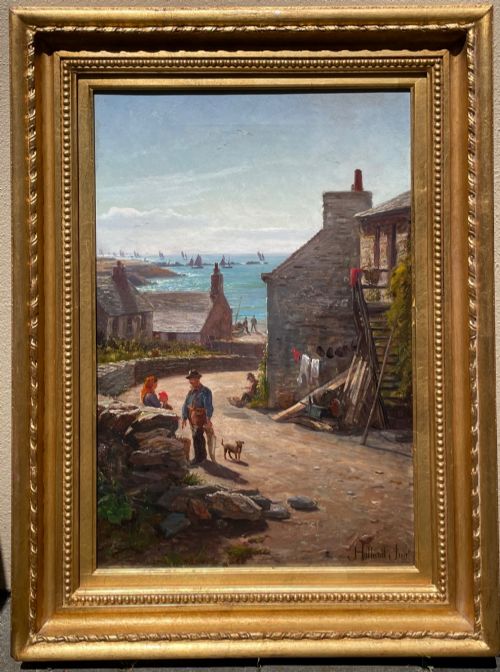
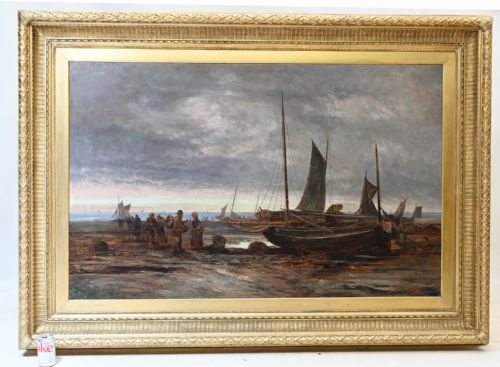
A traditional coastal scene painting depicts maritime life, fishing ports and tidal inlets across the nineteenth and twentieth centuries. These works record busy harbours, rocky shores and shipping lanes from locations such as Cornwall, Yorkshire and the Isle of Man. Buyers encounter framed watercolours on paper alongside substantial oil paintings on canvas and panel.
The material record spans Victorian productions through to mid-twentieth-century compositions. Many pieces incorporate original wood frames, occasionally finished in gilt or ebonised details. Subjects range from quiet seaside villages to choppy seas with sailing vessels and figures working the shore.
Materials and Technique
Artists worked primarily in oil paint on canvas or panel, or applied watercolour onto paper sheets. These mediums allowed painters to render atmospheric coastal light, breaking waves and the texture of stone harbour walls.
Framing often utilised wood, sometimes enhanced with glass protection for watercolours or gilt ornamentation for larger oil works. Support structures varied from stretched canvas to wooden boards and heavy paper.
Listings span the nineteenth century, the Victorian era, and twentieth-century decades up to the 1960s.
Quality and Execution
Execution rests upon the artist's handling of light, maritime atmosphere and perspective. Stronger compositions convey movement in water and detail in architecture, whereas simpler pieces rely on standard formulae.
The preservation of the paint surface and the originality of the frame contribute to the standing of an individual artwork. Works bearing clear signatures and identifiable localities tend to show more defined artistic intent.
Edward Mills·William Banks Fortescue·Thomas Creswick·Alfred G Morgan·Carlo Ferranti·John Holland·William Edward Webb·James Kyd·Arthur Tucker·Thomas Bush Hardy·C Caldwell·John Bell·William Pitt·James Webb·Gudrun Sibbons·Ralph Todd·Rowland Henry Hill·Owen Bowen·Madeline Hughes·Walter Sweet·Hubert Thornley·Charles France·George Smith
The Traditional Coastal Scene Painting Glossary
- Seascape
- A work of art depicting the sea, ships or coastal views. These pieces focus on maritime subjects rather than inland topography.
- Watercolour
- A painting method where pigment is suspended in a water-based solution on paper. It creates translucent washes of colour suited to coastal skies.
- Oil on Canvas
- Pigment bound in drying oil applied to a stretched woven fabric support. This medium permits rich impasto and layered tones.
- Gilt Wood
- Timber framing finished with a thin layer of gold leaf or metallic gilt paint. It provides traditional embellishment for nineteenth-century oils.
Traditional Coastal Scene Painting: Frequently Asked Questions
Where were these coastal scenes painted?
Painters recorded working harbours and shorelines across Britain and Europe, with particular concentrations in Cornish fishing villages, Yorkshire ports and Manx harbours. Many works identify specific locations in their titles.
Artists often travelled to established maritime communities to capture local fishing fleets, slipways and coastal architecture directly from life.
How do I hang a watercolour painting?
Watercolours require placement away from direct sunlight to prevent fading of the pigments and paper support. Glazing with glass helps shield the delicate surface from moisture and atmospheric dust.
Maintaining stable indoor humidity levels ensures the paper and historic framing materials remain preserved over time.
What is the difference between oil and watercolour works?
Oil paintings utilise pigments bound in oil applied to canvas or wooden panels, offering heavier texture and deep colour saturation. Watercolours employ water-soluble pigments on paper, producing lighter, translucent effects.
Oils generally appear in heavier wooden frames with or without glass, whereas watercolours require glass protection directly over the paper.
How are periods identified in these paintings?
Stylistic clues, artist signatures and framing methods help place a work within the nineteenth or twentieth century. Victorian marine pieces often feature detailed rigging and dramatic skies, while later twentieth-century examples show broader brushwork.
Historical records and artist biographical dates provide precise chronological context for signed compositions.