




19th Century British Seascape
These 19th century british seascape works capture coastal life, merchant shipping and stormy waters through period paintings and watercolours.
19th Century British Seascape
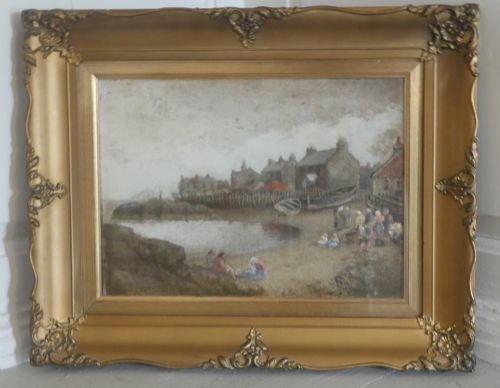
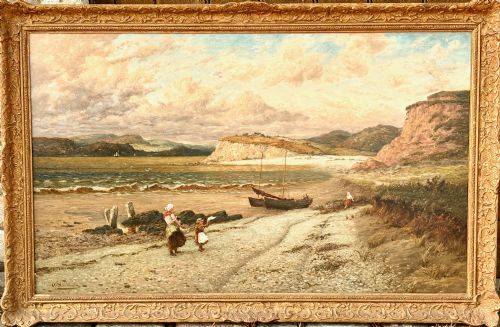
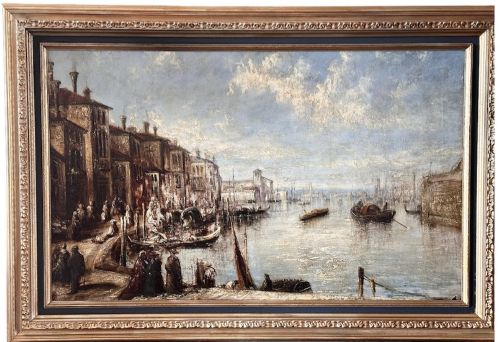
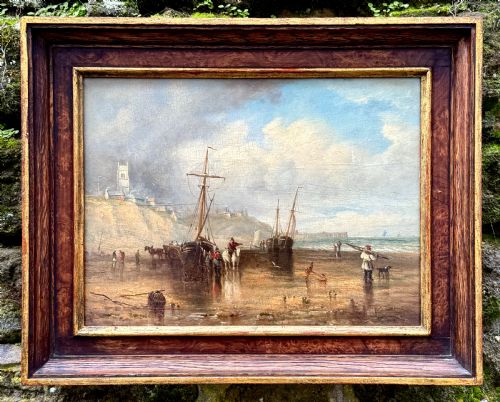
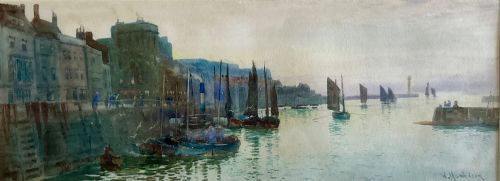
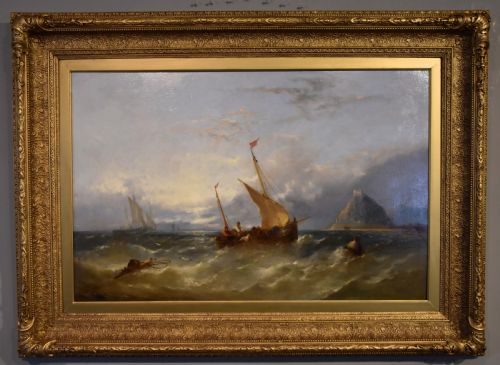
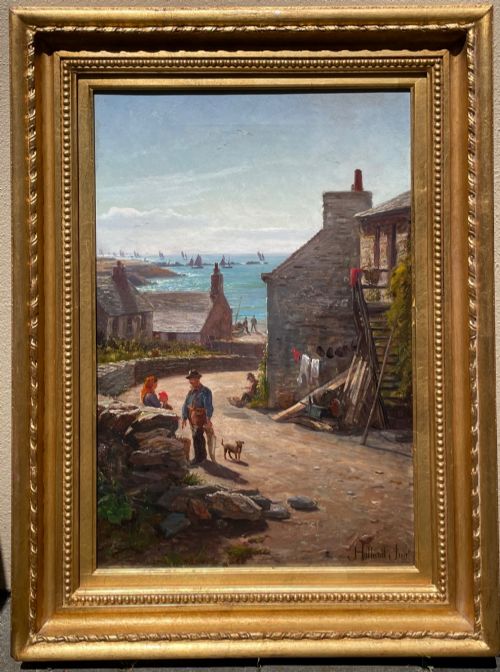
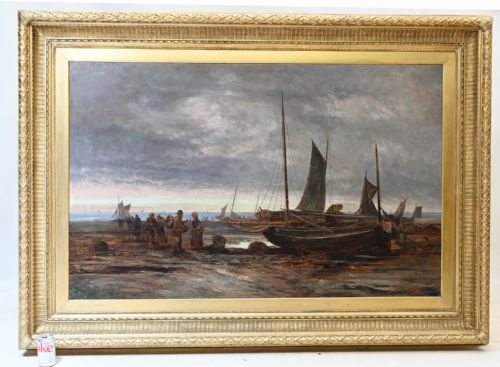
A 19th century british seascape brings together paintings and watercolours recording coastal life, harbour scenes, and shipping around Britain and beyond. The works span Victorian marine art and British Impressionism, documenting specific locations from Whitby and St Ives to the River Thames.
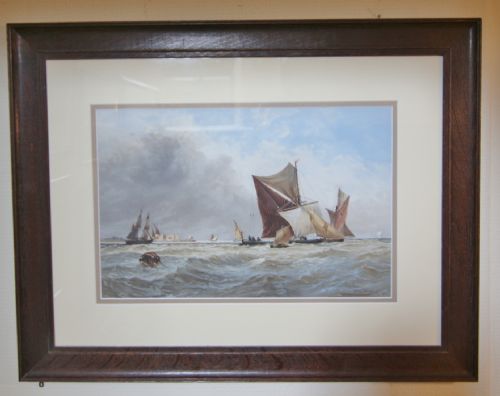
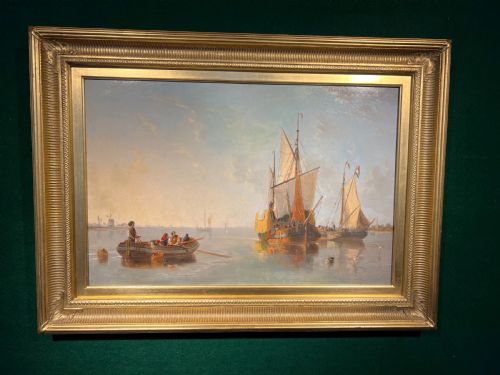
Buyers encounter oil paintings on canvas, board, and card alongside detailed watercolours on paper. Many pieces incorporate framing, often in giltwood, complementing subjects ranging from calm estuaries to rough seas and shipwrecks.
How they were made
Artists utilised oil on canvas, wood panel, or card, building layered brushwork to capture the movement of waves and atmospheric coastal light. Watercolours applied to paper relied on transparent washes and pigment opacity to render sea spray and moody skies.
Giltwood frames preserved and displayed these works, providing structural support and a traditional decorative boundary for canvas and paper alike.
Artists braved freezing British coastal gales just to sketch wet ropes.
What varies in quality
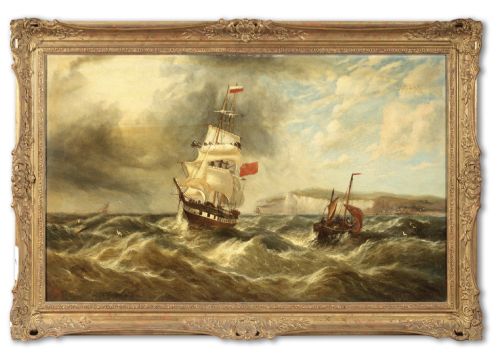
Scale and composition distinguish the works, ranging from intimate watercolours to large oil paintings spanning several feet. The clarity of maritime detail, from rigging on merchant ships to architectural landmarks on the coast, sets individual examples apart.
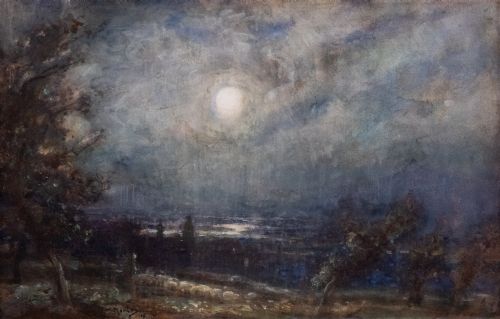
The handling of light, atmosphere, and natural elements such as storms or moonlit coastal landscapes reflects the technical skill of the artist, whether working within a named British school or as a documented individual painter.
James Orrock·Edward Mills·William Banks Fortescue·John Rose Miles·Thomas William Morley·Francis Moltino·Hector Caffieri·Bernard Benedict Hemy·Thomas Creswick·T B Hardy·John Wilson Carmichael·William Matthison·William Henry Williamson·John Holland·George Stanfield Walters·Henry Barlow Carter·William Frederick Settle·Charles William Wyllie·Charles William Adderton·Thomas Bush Hardy·John McDougal·Claude Thomas Stanfield Moore·John Mitchell·Kate E Booth·Alfred Henry Vickers
The 19th Century British Seascape Glossary
- Watercolour
- A painting method where fine pigment is suspended in a water-based solution and applied to paper. This medium allows for luminous washes particularly suited to coastal skies and sea spray.
- Oil on Canvas
- A technique involving pigment mixed with drying oil applied to stretched fabric. It provides rich colour depth and textural flexibility for marine scenes.
- Giltwood
- Timber finished with a thin layer of gold leaf. Frames of this material are frequently found surrounding Victorian paintings.
- Marine Art
- Artistic representation of the sea, ships, and coastal views. This genre encompasses both calm harbour watercolours and dramatic storm paintings.
19th Century British Seascape: Frequently Asked Questions
What subjects appear in these seascapes?
The works depict fishing boats, merchant ships, coastal towns, and harbours around Britain. Scenes range from calm river estuaries to dramatic shipwrecks in rough seas.
Specific locations include St Ives, Whitby, the River Thames, and Venice, capturing everyday maritime activity alongside coastal landscapes.
How do watercolours differ from oil paintings here?
Watercolours are painted on paper using water-soluble pigments, producing transparent washes and delicate atmospheric effects. They often feature detailed coastal scenes and local harbour views.
Oil paintings utilise canvas, card, or wood panels, allowing for thicker paint application, richer textures, and larger compositions suited to dramatic maritime weather.
Which periods are represented?
The collection spans the nineteenth century and the early twentieth century, encompassing Victorian marine art and Edwardian works. Dates range from the early eighteen hundreds through to the nineteen twenties.
Pieces reflect shifts in British art styles, moving from traditional maritime documentation towards British Impressionism.
How should these framed works be displayed?
Works typically arrive in period frames, including giltwood designs that complement the painting style. They require placement away from direct sunlight to protect watercolours on paper and oil pigments.
Wall mounting allows proper viewing of both intimate watercolours and large scale maritime oil paintings.