



Antique Ocean Cliff Painting
These antique ocean cliff painting works capture dramatic coastal heights and crashing seas, offering collectors enduring views of rugged shores.
Antique Ocean Cliff Painting
An antique ocean cliff painting depicts coastal landscapes, rocky headlands, and turbulent marine environments through historical artistic mediums. Buyers hunting for an antique ocean cliff painting will encounter works spanning the Victorian era through the mid twentieth century, featuring British and European shores.
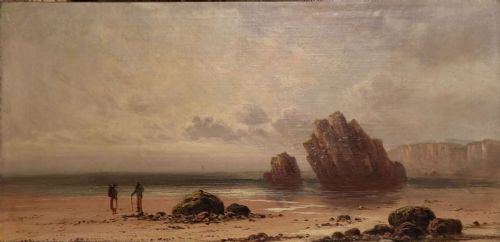
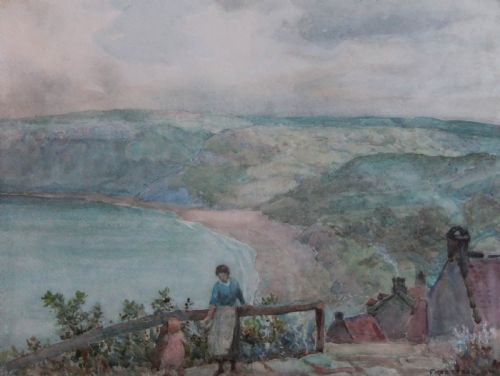
The selections on this page concentrate on oil on canvas, oil on board, and watercolour paintings. These pieces range from expansive nineteenth century realisms to impressionist studies of French and British coastlines.
Materials and techniques
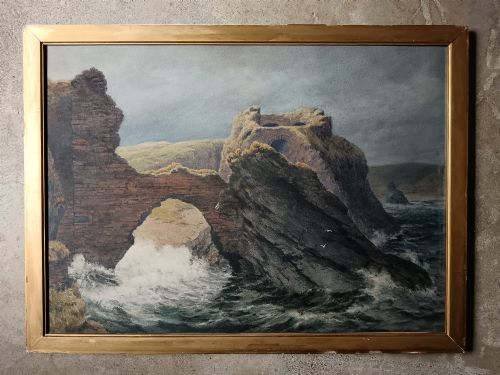
Artists painted these coastal views primarily using oil paint on canvas or board, alongside delicate watercolour applications on paper. These materials allowed painters to capture the luminosity of sea air and the heavy texture of rocky cliffs.
Many works incorporate original gilt wood framing and protective glass, particularly the watercolours, which required physical barriers to preserve the paper and pigment over decades.
Several paintings feature tiny lighthouses perched precariously on distant cliffs, reminding viewers of the lonely vigils kept along stormy shores.
Quality and execution
Superior works demonstrate a confident handling of light upon water and stone, where brushstrokes convey movement and atmosphere rather than mere description. The strongest pieces possess a distinct topographical immediacy, situating the viewer directly on the windswept shore.
Lesser examples rely on formulaic compositions and rigid lines, lacking the vitality and tonal depth found in the brushwork of accomplished marine artists.
John Moxon·Joseph Newington Carter·Herbert James·James Watson·Edward T Jones·Fred Stead
The Antique Ocean Cliff Painting Glossary
- Sea stack
- An isolated pillar of rock standing in the sea, carved by wave erosion over long periods.
- Gilt wood
- Timber treated with gold leaf or a gold-coloured finish, frequently used for traditional picture frames.
- Watercolour
- A paint consisting of pigment suspended in a water-based solution, typically applied to paper surfaces.
- Impressionism
- An art movement focusing on the visual impression of the moment, particularly shifting light and open-air conditions.
Antique Ocean Cliff Painting: Frequently Asked Questions
What periods do these paintings cover?
The available works span from the nineteenth century through the Victorian era and into the early decades of the twentieth century. This timeline covers shifting artistic movements from realism to impressionism.
Collectors will find dates ranging across the Victorian period, Edwardian era, and later twentieth century European scenes.
How are watercolours protected?
Watercolour paintings on paper require glass glazing and proper framing to protect the delicate pigments from moisture and fading light. This barrier keeps the paper stable over generations.
Original frames often feature gilt wood, adding historical context to the presentation of the painting.
Where do these coastal scenes originate?
The artworks depict various coastlines across Britain and continental Europe, including Yorkshire, Cornwall, Scotland, Normandy, and the French Riviera. Each region offered artists distinct geological formations and lighting conditions.
Specific locations often appear in the titles, noting exact bays, castles, and headlands.
What styles are represented here?
The selection includes nineteenth century realism, Victorian marine art, British impressionism, and post-impressionist approaches. Artists utilised these diverse styles to interpret the drama of cliffs and seas.
Brushwork varies from tight, detailed representation to looser, impressionistic applications of oil paint.