

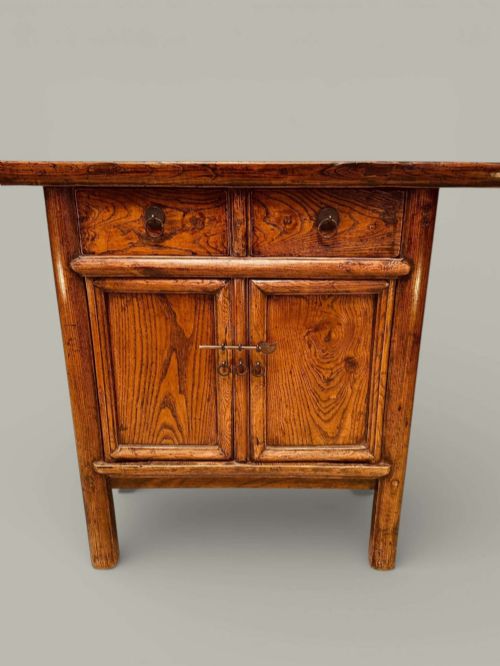


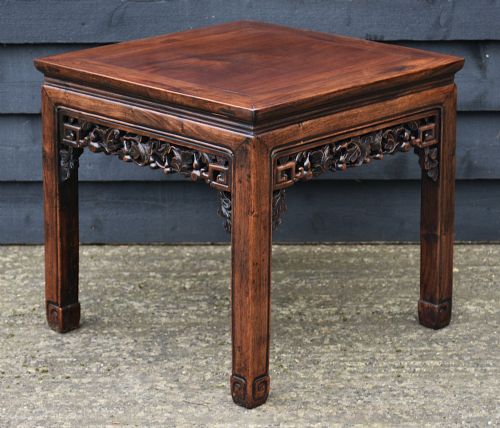
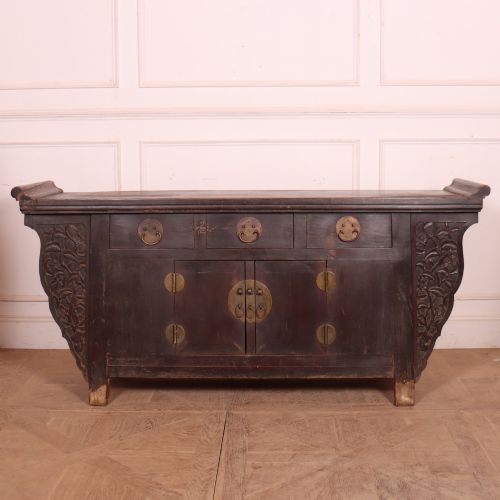
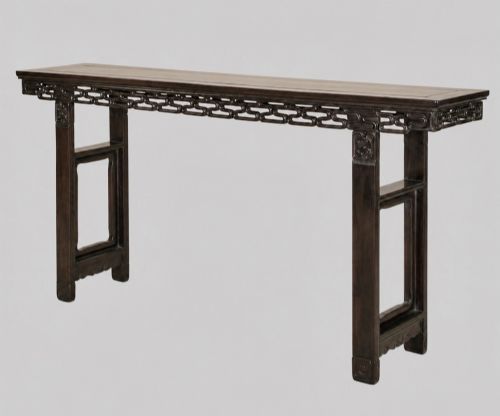
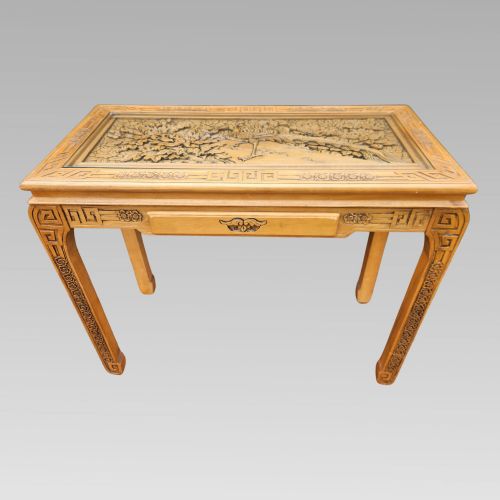
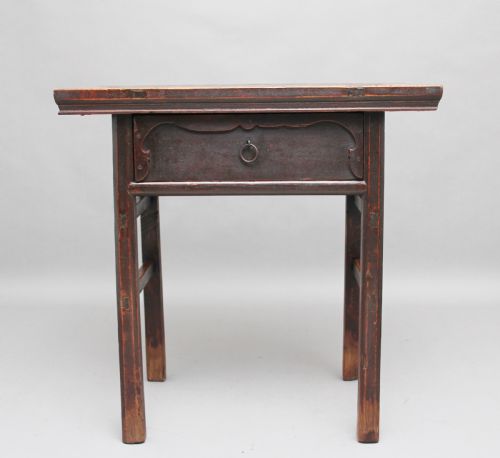


Traditional Chinese Altar Table
These traditional chinese altar table pieces bring striking architectural forms and centuries of craftsmanship into modern interiors.
Traditional Chinese Altar Table
A traditional chinese altar table serves as a prominent focal point, originating from domestic ancestral halls and temples where families honoured their forebears. These pieces feature elongated proportions, upturned flanged ends, and robust structural joinery designed to support ceremonial objects.
The versions most frequently met on this page date from the nineteenth century and the early twentieth century, spanning late Qing Dynasty production through to regional provincial workshops. While forms vary from slender plank-top trestles to low tables, each maintains the characteristic linear discipline of classical Chinese furniture.
Materials and construction methods
Cabinetmakers utilised dense native hardwoods such as rosewood, hongmu, and various selections of elm, often chosen for their durable grain and structural integrity. These timbers were joined using sophisticated interlocking mortise and tenon techniques that eliminated the need for metal nails.
Surface treatments included clear polished timber finishes alongside applied red or black lacquer, occasionally complemented by marble inserts or subtle carved relief work. This careful preparation protected the wood while highlighting its natural figure.
Traditional Chinese Altar Table Retail Price Guide 2026
Typical asking prices for traditional chinese altar table among the pieces listed under this phrase on Sellingantiques today, from the lower quarter to the upper quarter. They describe what is for sale here now, not the wider market.
Listings feature periods spanning from the eighteenth century through the nineteen thirties, encompassing Qing Dynasty and provincial styles.
Distinctions in craftsmanship and design
Quality rests in the precision of the joinery and the selection of timber, where tightly fitted joints demonstrate superior workshop capability. Examples with well-balanced proportions and crisp, restrained carving stand apart from plainer provincial pieces.
The condition of original lacquer work and the integrity of structural elements also define the tier of a piece, distinguishing refined urban commissions from utilitarian regional items.
The Traditional Chinese Altar Table Glossary
- Altar table
- A ceremonial table characterised by a rectangular top, often featuring upturned flanges at the shorter ends, designed for domestic shrines.
- Elm
- A resilient native timber utilised extensively in regional Chinese cabinetmaking for its fibrous grain and strength.
- Hardwood
- A dense timber classification including rosewood and hongmu, prized for formal furniture production.
- Lacquer
- A durable resin finish applied in multiple layers to timber surfaces, frequently found in red or black coloration.
- Qing Dynasty
- The final imperial dynasty of China, spanning from sixteen forty-four to nineteen twelve, which defined classical furniture styles.
Traditional Chinese Altar Table: Frequently Asked Questions
How were altar tables used originally?
These tables were positioned against walls in the main reception halls of homes or temples to display ancestral tablets, ritual vessels, and ceremonial offerings.
Family members gathered before them during important festivals and daily remembrances to pay respects to lineage ancestors.
Where should I place an altar table today?
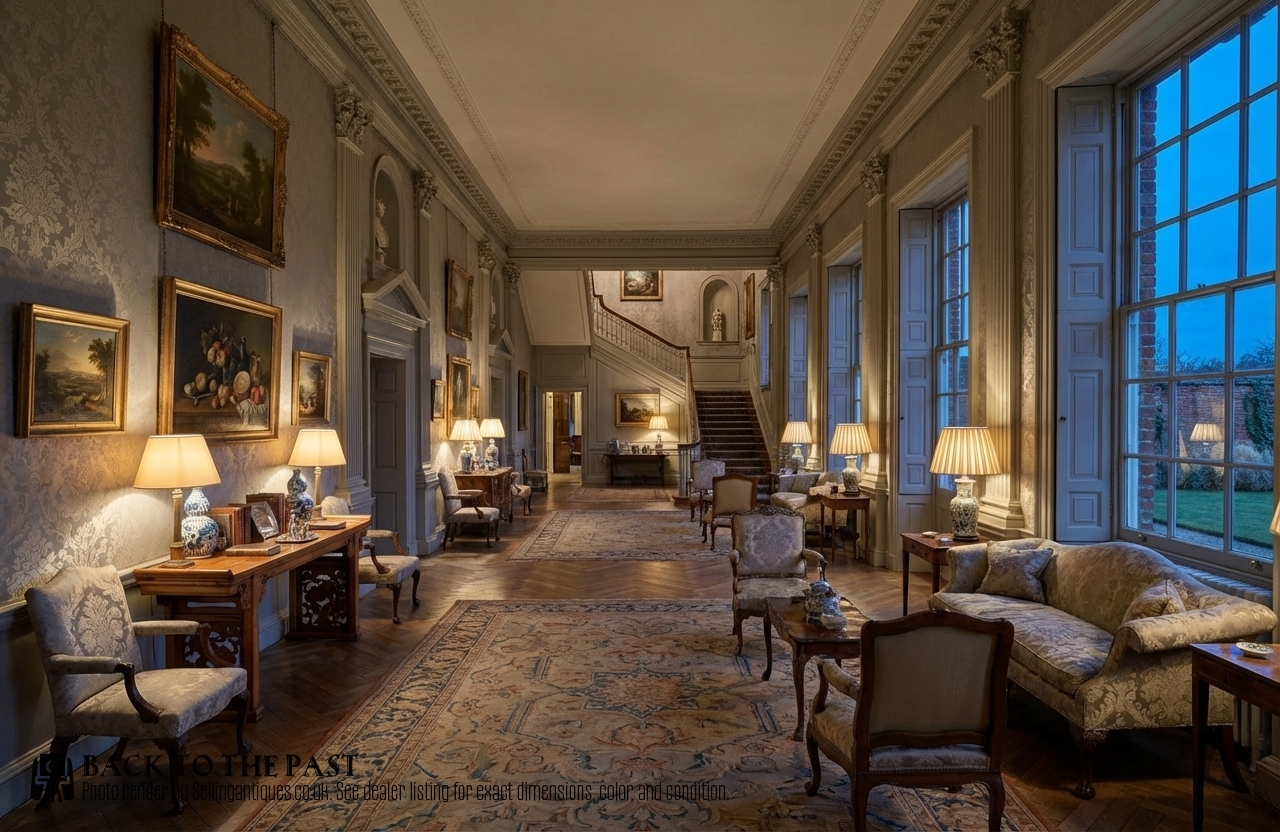
An altar table fits naturally in an entrance hall, behind a sofa, or against a dining room wall where its linear profile creates an architectural anchor.
The slender depth allows it to occupy narrow corridors without impeding movement while displaying lamps, ceramics, or books.
How do I identify a nineteenth-century piece?
Nineteenth-century examples display traditional mortise and tenon joinery alongside hand-planed timber surfaces that show subtle variations in the wood grain.
Signs of genuine age include honest wear patterns around the foot stretcher and patination developed through generations of handling.
What is the difference between elm and hardwood?
Elm provides a fibrous, highly figured grain that takes lacquer and wax finishes well, commonly found in provincial and regional domestic furniture.
Hardwoods like rosewood offer greater density, heavier weight, and darker natural tones utilised for more formal household commissions.