


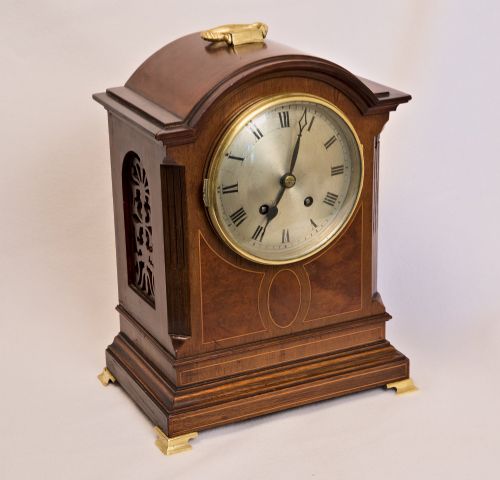


Traditional Chiming Bracket Clock
Traditional chiming bracket clock pieces are mechanical timepieces housing complex movements within timber cases, prized for their auditory melodies and shelf presence.
Traditional Chiming Bracket Clock
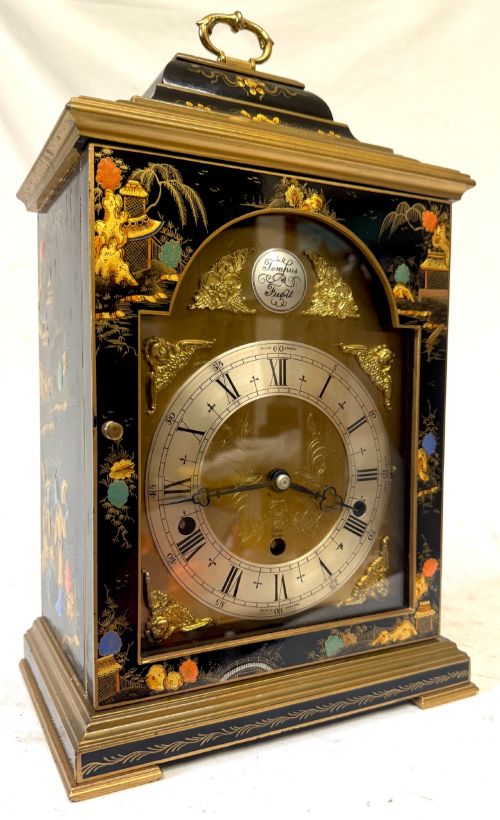
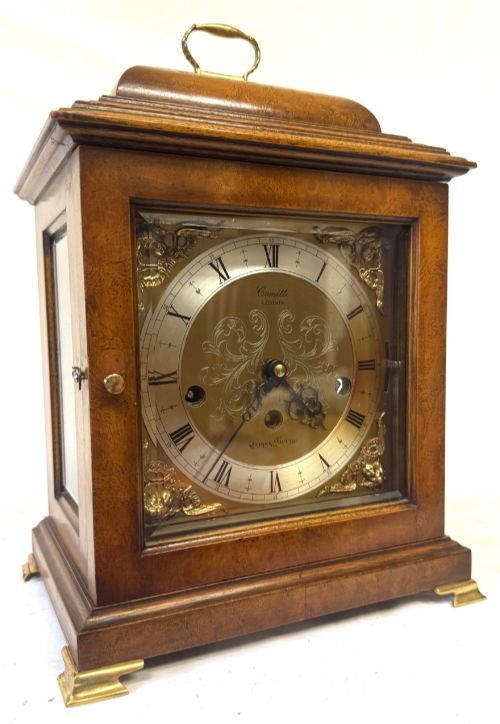
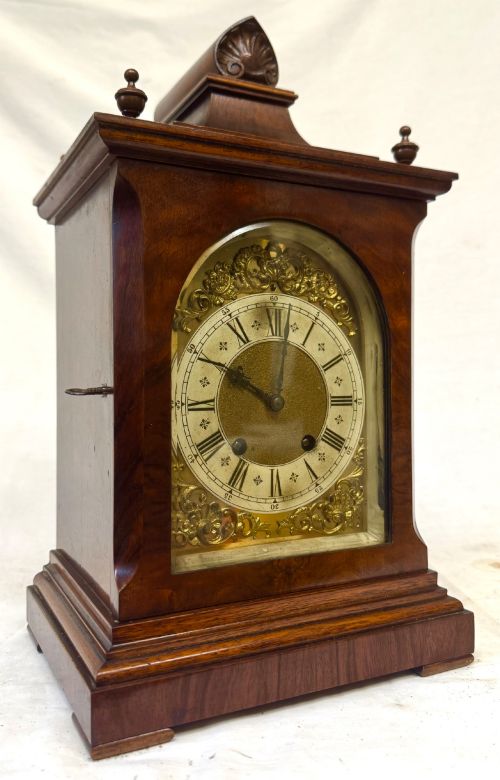
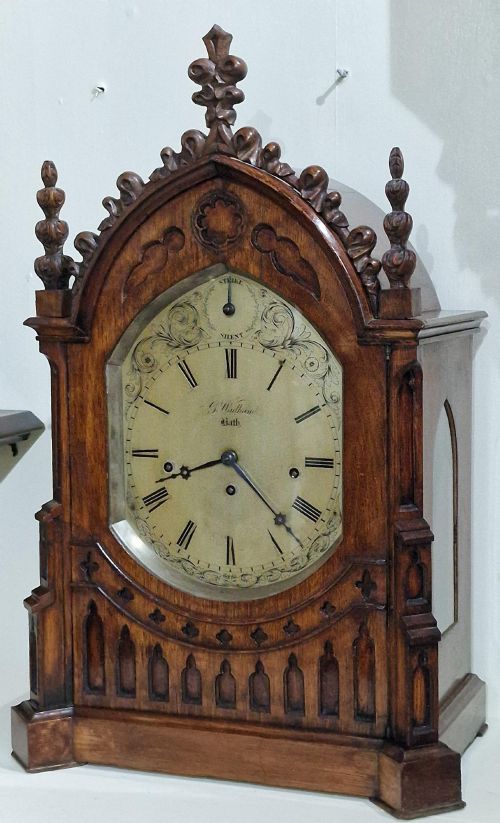
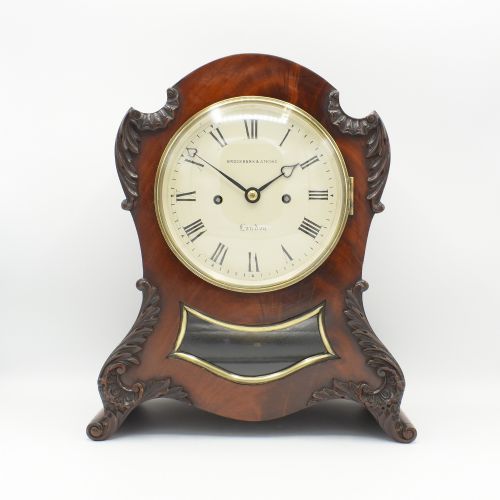
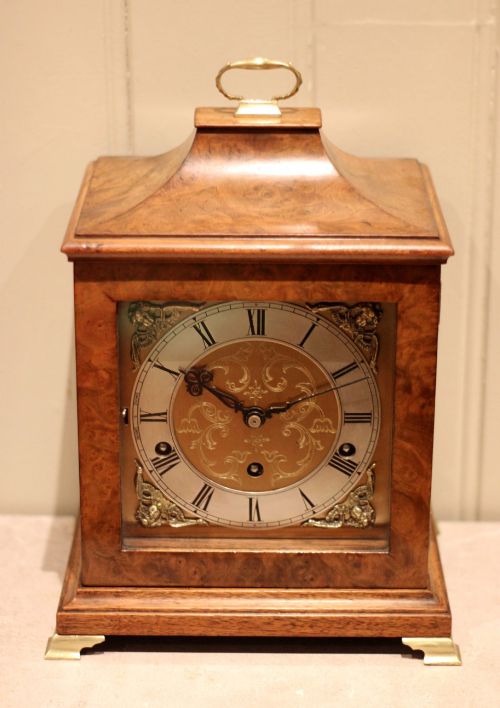
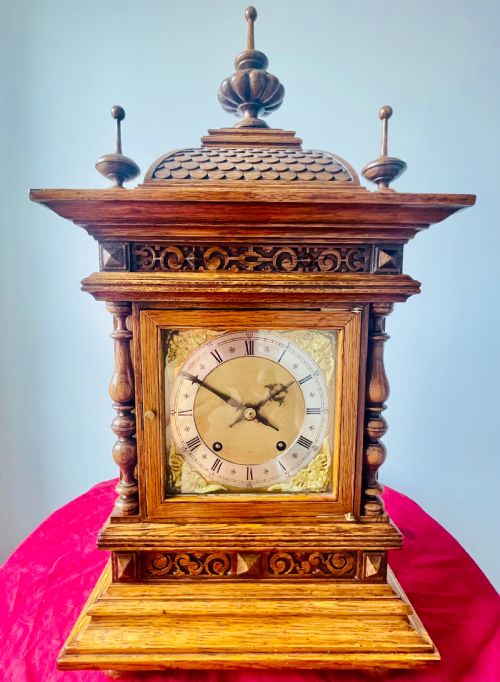
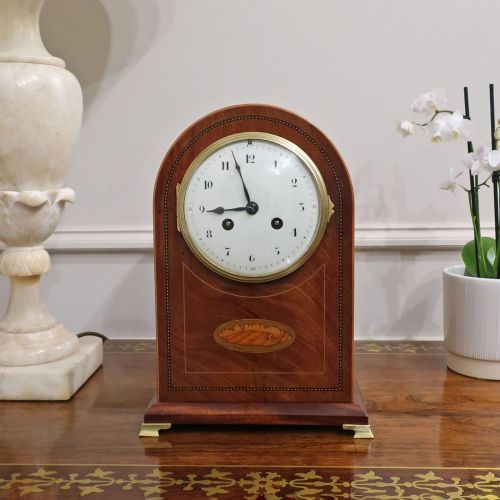
A traditional chiming bracket clock sits upon furniture surfaces, engineered to track time and sound musical sequences or hourly strikes. These horological objects manifest as mantel clocks, table clocks, and bracket clocks spanning the eighteenth to the twentieth centuries.
The nineteenth century and Victorian periods dominate the selections, alongside Edwardian iterations and later twentieth-century workshop productions. Cabinets emerge in mahogany, oak, walnut, and burr walnut, frequently housing multiple train movements that regulate the chime and strike functions.
Makers housed these intricate mechanisms in architectural timber housings featuring brass dials, enamel chapters, and glass panels. Buyers encounter regional English craft alongside continental European output, ranging from architectural Gothic revivals to lacquered Chinoiserie finishes.
How they were made
Cabinets utilise dense hardwoods such as mahogany, oak, and walnut, often veneered with burr walnut or embellished with lacquer and ormolu mounts. Joinery techniques secure the heavy internal movements while allowing acoustic resonance for the bells or gongs.
Interiors rely on brass gear trains, fusee or spring-driven power sources, and silvered or white enamel dials. Movements are pinned to plates, featuring complex levers and hammers that drop onto tuned bronze bells or wire gongs to produce Westminster or triple chime sequences.
The documented production spans from the eighteenth century through Victorian and Edwardian eras into the mid-twentieth century.
What varies in quality
The sophistication of the internal movement dictates distinction, separating simple time-only or striking pieces from complicated triple-train musical mechanisms with fusee control. Precision in gear cutting, hand-engraved backplates, and robust suspension systems elevate an example above standard production.
Cabinet construction and material selection define the exterior standard, moving from plain secondary timbers to figured burr walnut veneers, hand-carved details, and bespoke brass furniture. The harmony between architectural proportion and acoustic clarity establishes the grade of the work.
Elliott London·Comitti Of London·Lenzkirch·Brockbanks And Atkins·Mappin And Webb·Winterhalder And Hofmeier·Cording Of London·Budgen Croydon·John Taylor London·Chater And Son London
The Traditional Chiming Bracket Clock Glossary
- Fusee
- A conical pulley connected to the mainspring by a chain or cord, designed to equalise the torque as the spring unwinds. This mechanism improves timekeeping consistency throughout the running period.
- Three train
- A movement configuration utilising three separate gear trains to drive timekeeping, striking the hours, and playing musical chimes or quarter-hours on bells.
- Pad top
- A convex or dome-shaped upper section characteristic of eighteenth and nineteenth-century English bracket clock cases. It provides structural headroom for the internal bell arrangement.
- Chinoiserie
- A decorative European style reflecting Chinese artistic motifs, applied here as hand-painted lacquered finishes on timber cases. It gained popularity across various revival periods.
- Ting-tang
- A two-hammer striking system that sounds two distinct notes on two bells to announce the quarters before the hour strike. It creates a characteristic melodic double-tone.
Traditional Chiming Bracket Clock: Frequently Asked Questions
How do I wind a traditional chiming bracket clock?
Winding requires inserting a key into the dial apertures corresponding to each train, turning gently until resistance meets the stop. Care must be taken not to overwind the mainsprings.
Multi-train movements require winding each arbor separately for time, strike, and chime functions. Maintaining a regular winding schedule preserves the tension and health of the gear train.
Where should I place a bracket clock?
These timepieces require a level, stable surface such as a heavy mantelpiece, sideboard, or dedicated wall bracket. Stability ensures the pendulum or balance wheel maintains an even beat.
Avoid positioning the clock in damp areas, near direct heat sources, or in rooms subject to heavy vibrations. A stable environment protects the timber case and sensitive brass mechanics from premature wear.
What is the difference between a fusee and spring movement?
A fusee movement incorporates a conical drum and chain to maintain equal power delivery as the mainspring relaxes. This mechanical refinement ensures consistent force reaches the escapement.
Standard spring-driven movements rely solely on the direct power of the mainspring barrel. While simpler, they exhibit slight variations in force delivery as the spring unwinds.
How do I identify the period of the case?
Dating relies on stylistic clues within the woodwork, dial materials, and architectural hardware. Georgian and Regency pieces favour clean mahogany lines, while Victorian examples often embrace heavier carved oak or walnut.
Epigraphic evidence on the dial or engraved backplates often reveals the maker or retailer. Comparing the case silhouette against documented historical styles confirms the manufacturing era.