
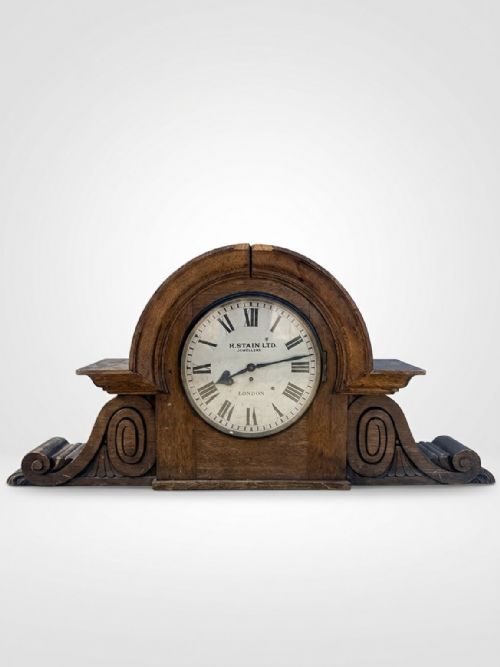
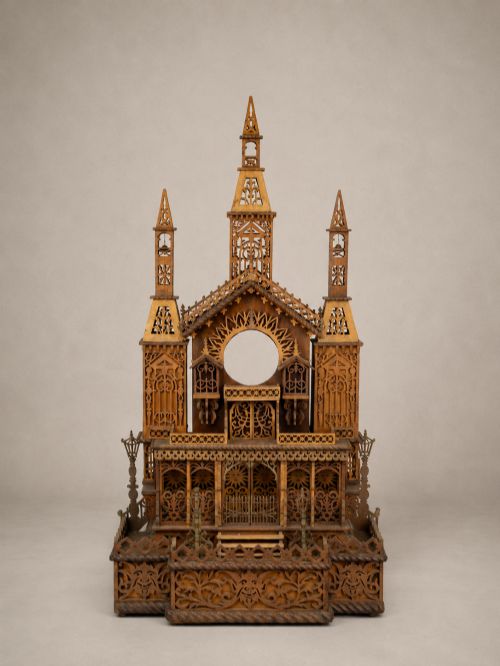
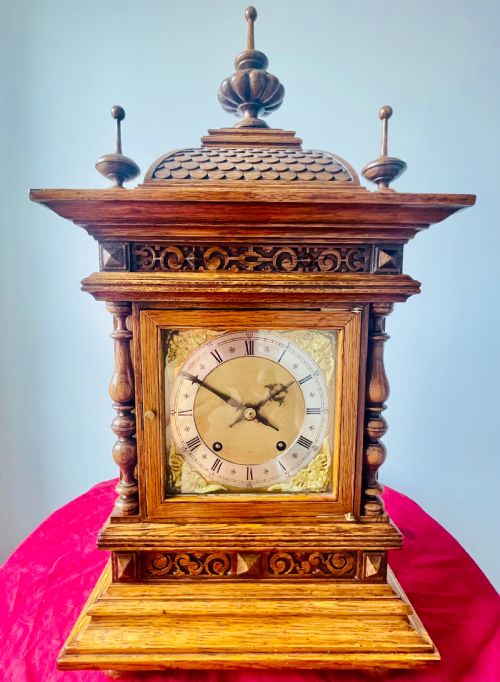


Carved Wooden Clock Case
These carved wooden clock case examples house timepieces across centuries of domestic life, offering warmth and structure to interiors.
Carved Wooden Clock Case
A carved wooden clock case takes several distinct architectural forms, ranging from imposing floor-standing longcase and grandfather clocks to wall-mounted regulators and compact mantel or bracket clocks. You will frequently encounter longcase and grandfather clocks alongside architectural wall clocks on this page.
The periods represented span from the seventeenth century through to the Edwardian era and the nineteen thirties. Pieces emerge from styles such as Georgian, Victorian, Regency, Gothic Revival, and William and Mary.
Wood remains the defining structural medium, housing mechanical movements, brass dials, glass panels, enamel faces, and steel components. Formats vary from restrained architectural fretwork to elaborate carved flourishes on walnut, oak, and mahogany.
Materials and construction methods
Cabinetmakers utilised sturdy hardwoods including oak, mahogany, walnut, and burr walnut to construct these housings. These timbers were selected for their stability and grain pattern, providing a durable shell for delicate internal movements.
Carpenters and carvers applied hand-tool techniques to create architectural fretwork, arched hoods, and surface relief carvings. Glass glazing protects the dial, while brass and enamel are incorporated into the face and bezel assemblies.
Listings feature oak, mahogany, and walnut woods across periods from the seventeenth century to the nineteen thirties.
Determining quality in wooden clock housings
Quality rests upon the choice of timber and the precision of the cabinetmaker's joinery. Superior examples display carefully selected grain, such as burr walnut or figured mahogany, integrated smoothly into architectural proportions.
The crispness and depth of the carved wood elements distinguish finer housings from simpler production pieces. Well-executed fretwork, balanced architectural massing, and harmonious integration of brass dials and glass panels elevate a piece.
Edward East·Samuel Young·John Harrington·Joseph Windmills·Winterhalder and Hofmeier·Gustav Becker
The Carved Wooden Clock Case Glossary
- Longcase clock
- A tall freestanding pendulum clock enclosed in a wooden case, commonly known as a grandfather clock.
- Bracket clock
- A portable table or shelf clock historically designed to sit upon a wall bracket.
- Vienna regulator
- A precision pendulum wall clock developed in Austria, often featuring a glass-panelled door and elaborate wooden framing.
- Fusee
- A conical pulley used in clock mechanisms to maintain even driving force as the mainspring unwinds.
- Fretwork
- Ornamental perforated carving applied to wood panels, frequently seen on clock hoods.
Carved Wooden Clock Case: Frequently Asked Questions
How do I date a wooden clock case?
Dating relies on observing the stylistic indicators, timber choices, and construction methods characteristic of different periods. Pieces from the Georgian era often feature oak or mahogany with architectural mouldings, while Victorian examples frequently showcase walnut and heavier carving.
Makers' signatures on dials or movements, where present, also help anchor a piece to a specific decade or century.
Where should I place a longcase clock?
Longcase clocks require a stable, level floor and a solid interior wall to support their height and ensure the pendulum swings truly. Avoid placing them in areas subject to dampness or direct sunlight, which can affect the timber case and internal movement.
Providing adequate clearance for the weight drops and door swing is also essential for daily operation.
Which woods were commonly used?
Cabinetmakers primarily relied on native and imported hardwoods including oak, mahogany, and walnut. Oak predominates in earlier pieces, while mahogany and walnut became favoured during the Georgian and Victorian periods.
Figured veneers such as burr walnut were also utilised on high-status examples to create decorative surface patterns.