


Traditional Chess Pieces
Traditional chess pieces are enduring implements of strategy crafted in wood and bone, offering collectors tangible links to nineteenth century matches.
Traditional Chess Pieces
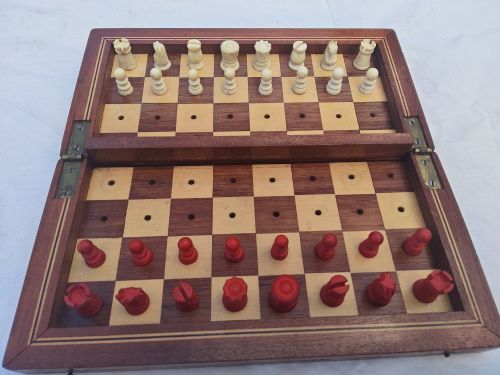
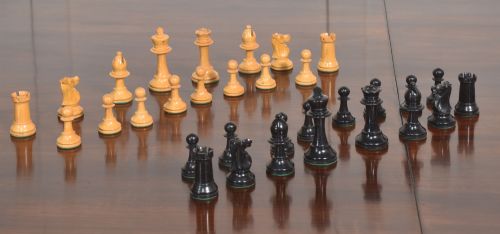
Traditional chess pieces encompass complete sets and compendiums originating from the Victorian and Edwardian eras, including the late nineteenth century and around nineteen hundred. Buyers searching for traditional chess pieces encounter recognizable forms such as the Staunton pattern, Whittington pattern, and Calvert pattern sets.
The materials span boxwood, ebony, ebonised wood, mahogany, rosewood, and bone, frequently supplemented by felt bases and weighted interiors. Surviving examples range from travelling sets housed in mahogany boxes to large four inch library sets and folding board compendiums.
How they were made
Turned woods form the foundation of these sets, utilising dense timbers like boxwood paired with ebony or ebonised wood to achieve the classic contrasting black and white appearance. Skilled artisans shaped bone and rosewood for alternative sets, incorporating weighted bases to improve stability during play.
Detailing relied on precision turning and carving, particularly evident in the intricate knights and distinct rook turrets characteristic of nineteenth century workshops. Manufacturers such as the British Chess Company and makers like F. H. Ayres applied specialised weighting and finishing techniques to standardise their production.
Some nineteenth century players clearly lost enough pawns to warrant travelling sets accompanied by draughts pieces for instant distraction.
What varies in quality
The refinement of the hand carving on the knight pieces distinguishes superior sets from mass production, reflecting the individual skill of the carver. Consistency in the turning of the pawns and the proportion of the king and queen further separate fine examples.
The selection and density of the original materials, such as well-figured boxwood paired with genuine ebony rather than simple ebonised alternatives, dictate the grade of the set. Furthermore, the presence of original weighted bases and matching period storage boxes elevates the integrity of the ensemble.
F. H. Ayres·British Chess Company
The Traditional Chess Pieces Glossary
- Staunton pattern
- The standard design for chess pieces introduced in the mid nineteenth century, featuring realistic architectural forms for major pieces and heavily standardised proportions. This style remains the benchmark for tournament play and antique collecting alike.
- Ebonised wood
- Fruitwood or boxwood treated with a black dye to imitate genuine ebony. This technique provided a cost-effective alternative for dark pieces while maintaining a consistent grain.
- Calvert pattern
- An early nineteenth century style of turned chess pieces characterised by distinctive, slightly squat proportions and finely detailed knights. These sets predate the dominance of the Staunton design.
- Games compendium
- A multi-game box containing chess pieces alongside other pastimes such as draughts and cribbage. These Victorian and Edwardian boxes are frequently housed in mahogany or rosewood cases.
- Weighted set
- Chess pieces fitted with lead weights inside their bases to provide a heavier, more stable feel during movement. This improvement was particularly favored for larger library and club sets.
Traditional Chess Pieces: Frequently Asked Questions
How do I date traditional chess pieces?
Dating relies on examining the style of the pieces, the materials utilised, and any accompanying boxes or compendiums from the nineteenth or early twentieth century.
Specific patterns like the Calvert or Whittington designs point firmly to nineteenth century origins, whereas standard Staunton sets often span the Victorian and Edwardian periods.
Were all old chess pieces weighted?
Not all historical sets include weighting, as smaller travelling sets and bone examples were typically left unweighted for portability.
Larger library sets from the late nineteenth century frequently incorporated lead weights in the bases to enhance stability during competitive play.
What materials were used historically?
Makers predominantly utilised boxwood for the lighter pieces, pairing it with dark timbers such as ebony, rosewood, and mahogany.
Bone was also employed for distinct sets, while ebonised wood served as a popular substitute for genuine ebony in many Victorian workshops.