


Antique Library Games
Antique library games bring tactile pastimes into the study, offering leather boards, carved chess sets and folding tables designed for quiet hours.
Antique Library Games
When you search for antique library games, you encounter a selection of furnishings and pastimes intended for study spaces, spanning card tables, chess sets and games boards. These pieces date from the nineteenth century through the Edwardian era and into the 1920s and 1930s.
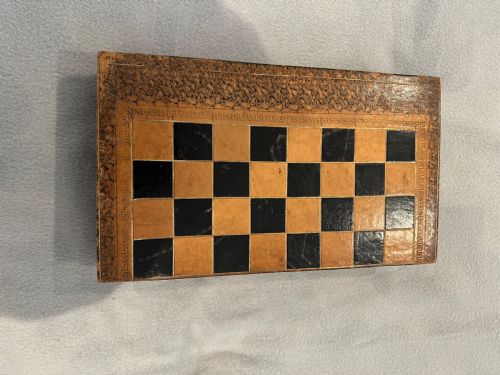
The assortment on this page most frequently includes wooden tables in mahogany, oak and rosewood alongside portable leather faux book games boards. You also find Staunton chess sets in boxwood and ebony, designed to sit on a desk or library table.
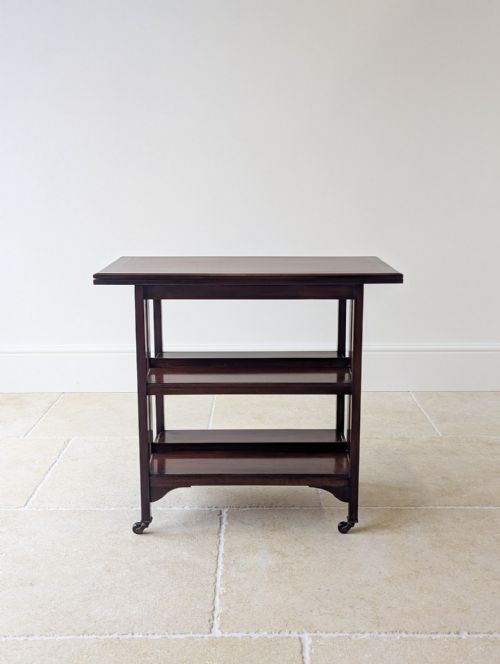
Forms range from card tables with bookshelf bases to folding top tables and gentleman's gaming chairs in red leather. Each object reflects the domestic leisure of Victorian and Edwardian libraries.
How they were made
Cabinet makers utilised dense timbers such as mahogany, oak, rosewood and burr walnut to construct tables and boards. These woods provided the structural weight needed for frequent use in domestic studies.
Surface decoration involved tooling on leather, gold leaf accents and contrasting boxwood and ebony for chess pieces. Joinery techniques ensured folding tops and card tables operated smoothly.
Listings feature mahogany, oak, rosewood, leather, and brass across Victorian and Edwardian periods.
What varies in quality
Quality rests in the choice of timber and the precision of the carving, particularly visible in boxwood and ebony chess sets. Finer faux book boards display careful leather binding that mimics genuine library volumes.
Structural complexity also separates standard pieces from finer examples, such as tables featuring integrated bookshelf bases or multi-use folding tops. The integration of materials like brass and gold leaf determines the visual richness of the piece.
Gerrard and Sons London
The Antique Library Games Glossary
- Staunton chess set
- A standard style of chess set with heavily standardised piece designs, introduced in the mid-nineteenth century. It remains the standard pattern used in tournament play today.
- Faux book board
- A games board disguised as a leather-bound book to blend into a library shelf. These pieces combine storage convenience with decorative discretion.
- Card table
- A folding or swivel-top table designed specifically for card games. They often feature baize-lined surfaces and sometimes include storage compartments underneath.
- Burr walnut
- A wood harvested from the burl of a walnut tree, prized for its swirling grain patterns. Cabinet makers utilised veneer slices of this timber on high-status furniture.
Antique Library Games: Frequently Asked Questions
What periods do these pieces date from?
The pieces span from the mid-nineteenth century through the Victorian and Edwardian periods, extending into the nineteen-twenties and thirties.
Most items reflect traditional craftsmanship from these eras, utilising period timbers and manufacturing techniques.
How were library games boards stored?
Many boards were designed to look like leather-bound books so they could sit upright on a shelf among actual volumes.
This clever disguise kept the study looking orderly when the games were finished.
What materials are common in chess sets?
Chess sets from this category are typically turned from boxwood and ebony.
These contrasting woods provided the pale and dark pieces necessary for traditional play.
How do I identify a card table?
Card tables usually feature a fold-over or swivel top that opens to reveal a flat playing surface.
Some examples include integrated bookshelf bases or storage for cards and counters beneath the top.