
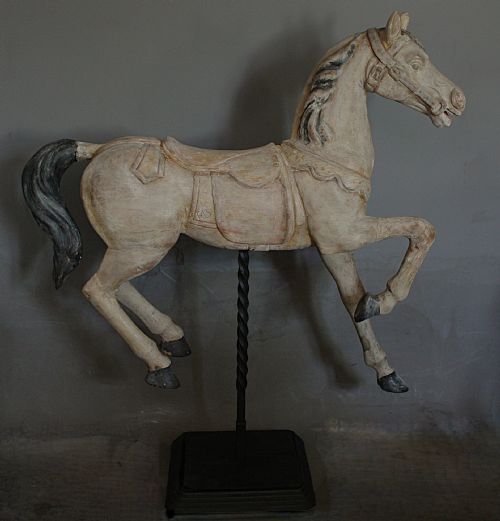


Traditional Carved Rocking Horse
A traditional carved rocking horse brings the charm of the nursery into a room, offering tactile wood and painted character that collectors prize.
Traditional Carved Rocking Horse
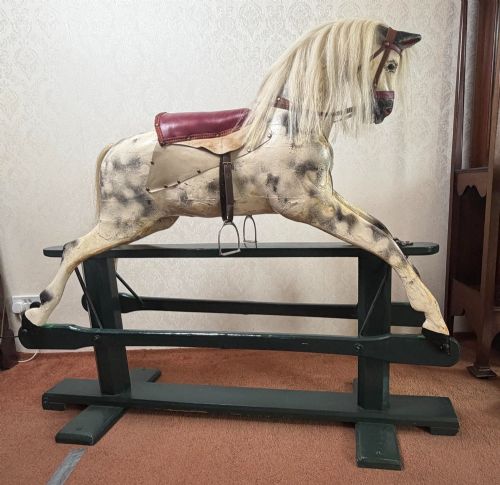
When you search for a traditional carved rocking horse, you encounter sturdy children's toys and decorative sculptures shaped from solid timber. These pieces span from the nineteenth century through the interwar period, capturing the evolution of domestic playthings.
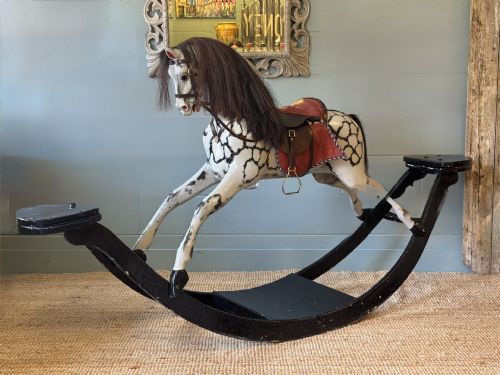
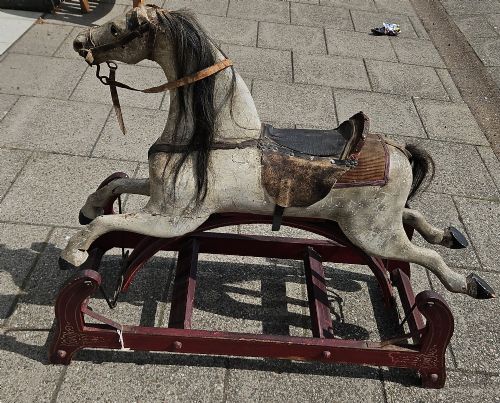
The selections available here include examples mounted on original curved wooden rockers as well as larger workshop-made models. Makers such as F.H. Ayres and G & J Lines produced robust animals that survive today in various states of preservation.
Victorian and Edwardian eras dominate the selection, often finished with real horsehair manes and leather tack. Folk art interpretations also appear, showing naive painted surfaces and distinct regional carving styles.
How they were made
Carvers shaped bodies primarily from pine and other dense woods, constructing them in sections to withstand heavy play. Iron and steel components reinforced the internal structure and the swing of the bow rockers.
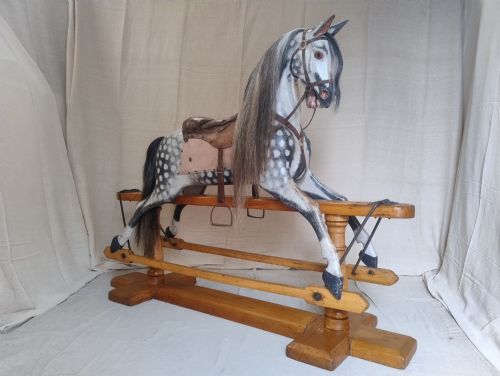
Artisans applied layers of paint to create dappled coats or solid finishes, often sealing the wood before final decoration. Real horsehair formed the manes and tails, secured alongside leather saddles and metal bits.
The listings span from the nineteenth century through the nineteen-fifties, utilising pine, iron, leather, and horsehair.
What varies in quality
The skill of the carver dictates the sculptural grace of the head and the musculature of the body. Workshop attributions from notable makers elevate the standing of a piece within the field.
The survival of original paint and tacked leather fittings preserves the historical integrity of the toy. Pieces retaining their initial bowed rockers demonstrate higher fidelity to their original manufacturing context.
G & J Lines of London·F.H. Ayres·Collinson·Lines Bros Sportiboy
The Traditional Carved Rocking Horse Glossary
- Bow rocker
- The curved wooden platform upon which the horse mounts, allowing the toy to swing back and forth. These curved timbers form the base for many nineteenth-century models.
- Dappled
- A painted finish mimicking the mottled spots on a grey horse's coat. This traditional decorative scheme required careful layering by workshop painters.
- Tack
- The harness, saddle, and bridle fitted onto the horse. These leather and metal elements complete the realistic appearance of the toy.
- Folk art
- Objects created outside formal academic traditions, often by naive makers or regional workshops. These pieces display charming irregularities in form and paintwork.
Traditional Carved Rocking Horse: Frequently Asked Questions
How do I identify an older rocking horse?
Look to the construction methods, nail types, and materials used in the body and rocker assembly. Nineteenth-century examples often feature heavy pine construction and hand-forged iron reinforcements.
Examine the paint layers and surface wear for signs of age. Original gesso and paint finishes exhibit natural craquelure and patination that modern reproductions cannot replicate.
Were these horses meant for children to ride?
Most large examples served as robust nursery toys built to withstand the energetic play of children. Workshops constructed them with strong internal frames and sturdy wooden rockers for daily use.
Over decades, many transitioned from active playthings into decorative sculptures. Their sturdy timber build ensured they survived generations of domestic life.
What is the difference between Victorian and later models?
Victorian models frequently display heavier carved wooden bodies mounted on substantial curved bow rockers. Makers during this period often emphasised detailed anatomical carving and traditional dappled paint.
Twentieth-century pieces, including interwar productions, sometimes utilised alternative framing systems and streamlined workshop methods. These later toys reflect changing manufacturing techniques in British toy production.
How should I care for the original paint?
Keep the horse away from direct sunlight and dramatic temperature fluctuations to protect the aged wood and painted surfaces. Environmental stability prevents the timber from splitting and the gesso from lifting.
Dust the surface gently with a dry, soft cloth rather than utilising liquid cleaners. Preserving the existing patina maintains the historical character of the piece.