



Dappled Grey Rocking Horse
A dappled grey rocking horse brings the nursery craftsmanship of the Victorian and Edwardian eras straight into the playroom.
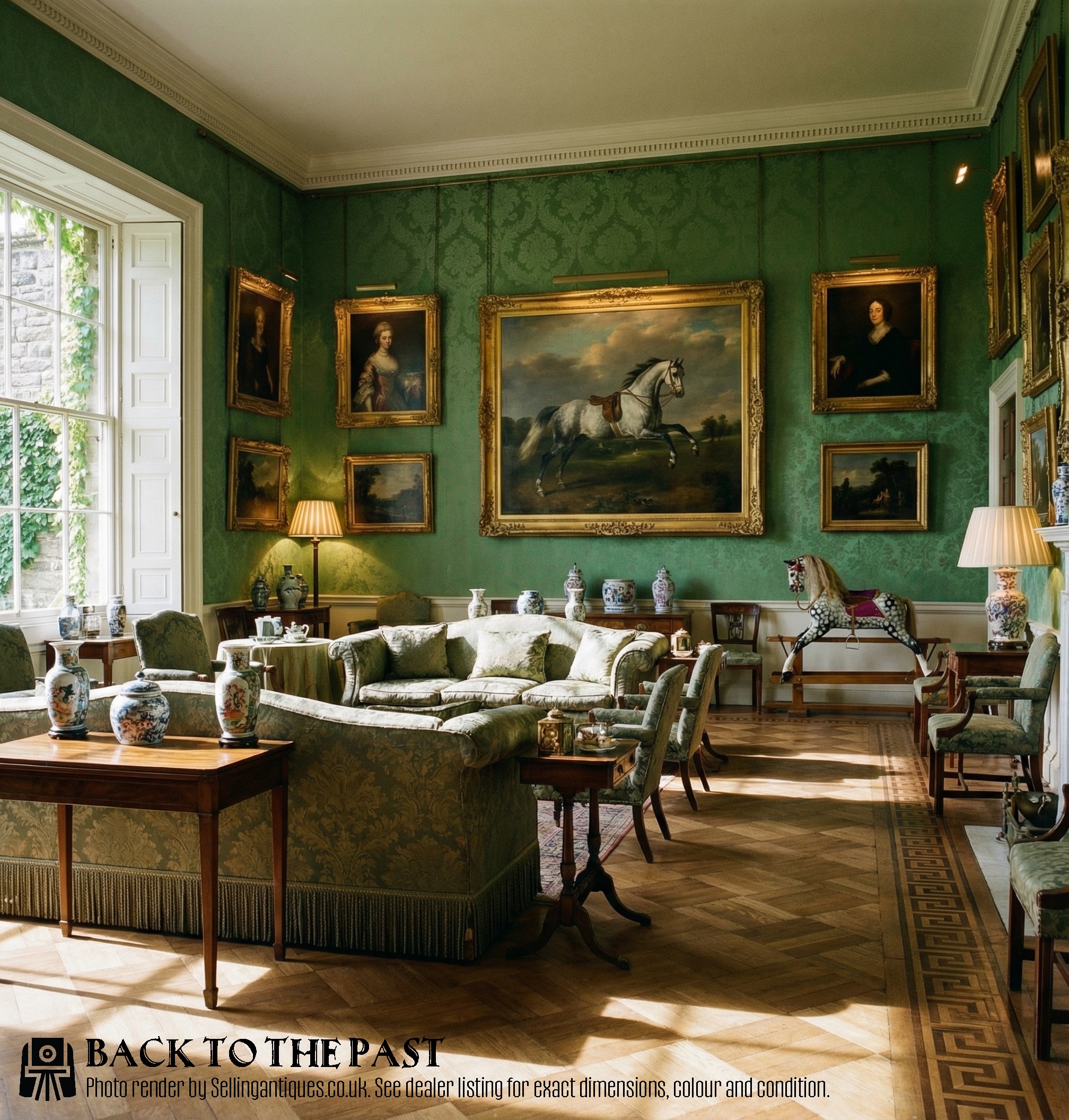
Dappled Grey Rocking Horse
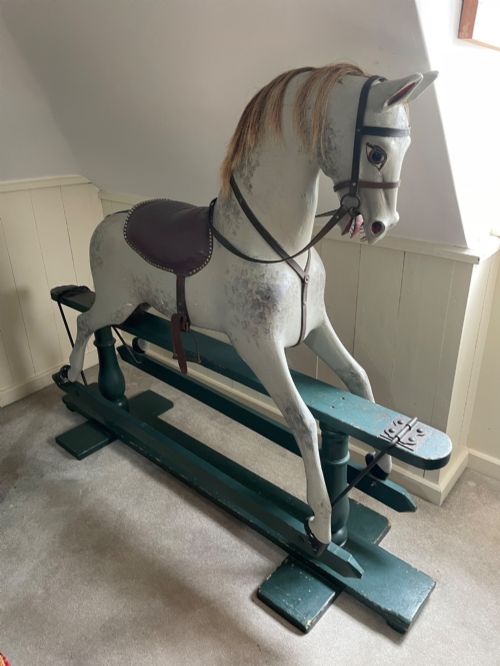
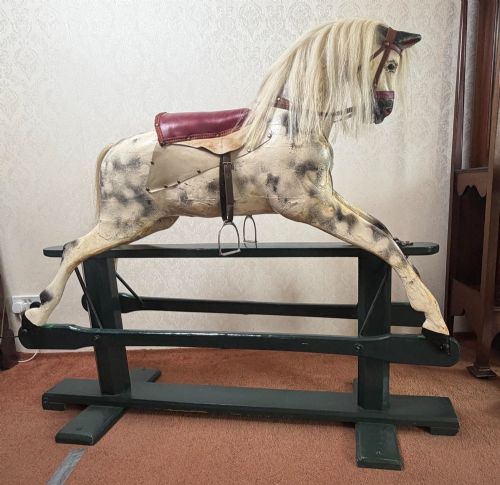
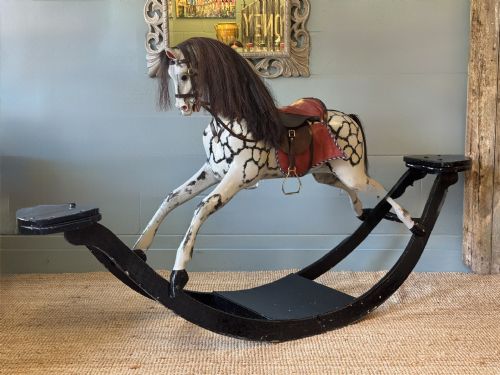
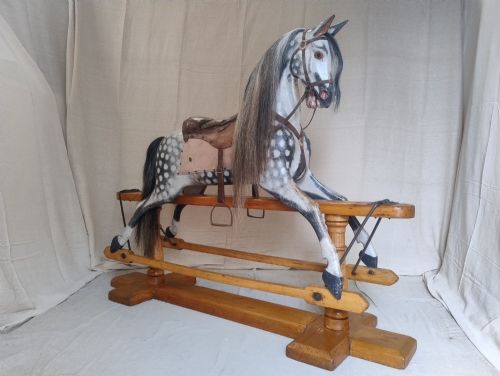
A dappled grey rocking horse represents traditional British toy-making at its most ambitious, featuring carved wooden bodies mounted on curved wooden rockers or safety stands. These pieces span from the late nineteenth century through the interwar period, capturing decades of playroom history in carved pine and painted finishes.
The versions most frequently met on this page date from the Victorian and Edwardian eras up to the nineteen-forties, constructed by prominent makers or anonymous workshops. They range in size from standard nursery models to extra-large playground pieces designed to carry generations of children.
How they were made
Makers carved the bodies from pine and other woods, mounting the carved figures onto sturdy wooden rockers or iron-reinforced swing frames. Artisans built up the dappled grey finish using layers of paint to create the characteristic spotted texture over carved woodwork.
Finished examples integrated real horsehair for manes and tails, alongside leather tack, glass eyes and metal brackets. These traditional materials gave each horse its individual character and tactile presence.
Dappled Grey Rocking Horse Retail Price Guide 2026
Typical asking prices for dappled grey rocking horse among the pieces listed under this phrase on Sellingantiques today, from the lower quarter to the upper quarter. They describe what is for sale here now, not the wider market.
Listings on this site include pieces from the Victorian era, Edwardian period and nineteen-forties.
What varies in quality
The standard of carving in the head and shoulders dictates much of the quality, separating ambitious workshop output from simpler output. Anatomical detail in the expression, legs and muscle structure shows the hand of a skilled maker.
The survival of original painted dappling, leather tack and horsehair determines the integrity of an individual piece. Retaining these early surface elements preserves the historic character of the toy.
G & J Lines of London·F.H.Ayres·Collinson
The Dappled Grey Rocking Horse Glossary
- Dappled grey
- A painted finish imitating a horse coat with lighter spots over a grey base colour. This traditional decorative scheme defines the classic antique rocking horse.
- Safety stand
- A rigid floor-standing wooden frame on which the horse swings rather than rocks on curved floor boards. This design prevented the horse from tipping over during vigorous play.
- Rockers
- The curved wooden timbers attached beneath the hooves that allow the horse to sway back and forth. Early examples rely entirely on these floor-sweeping wooden arcs.
- Tack
- The harness, bridle and saddle fitted to the horse, often executed in leather with metal buckles. Original tack adds significant authenticity to the piece.
- Glass eyes
- Inset glass spheres used to give the carved head a lifelike expression. These are characteristic of better-workshop production.
Dappled Grey Rocking Horse: Frequently Asked Questions
How old is my rocking horse?
Dating relies upon construction methods, the shape of the carved wooden body and the style of the paint finish.
Evidence from nineteenth and twentieth-century examples shows shifts in maker stamps, mounting stands and materials over time.
Who made these rocking horses?
British workshops such as Ayres, Lines and Collinsons produced many of the substantial rocking horses found today.
Numerous other pieces remain unsigned products of regional joinery shops and specialist toy makers.
Are they safe for children?
Antique rocking horses are primarily decorative objects or collector pieces rather than modern safety-tested toys.
Heavy wooden construction and rigid rockers mean they require supervision if used by young children today.
What wood was used?
Pine served as the primary timber for carving the large bodies of these horses.
Additional woods such as ash or oak often formed the structural rockers and supporting frames.