



Hand Carved Toy Horse
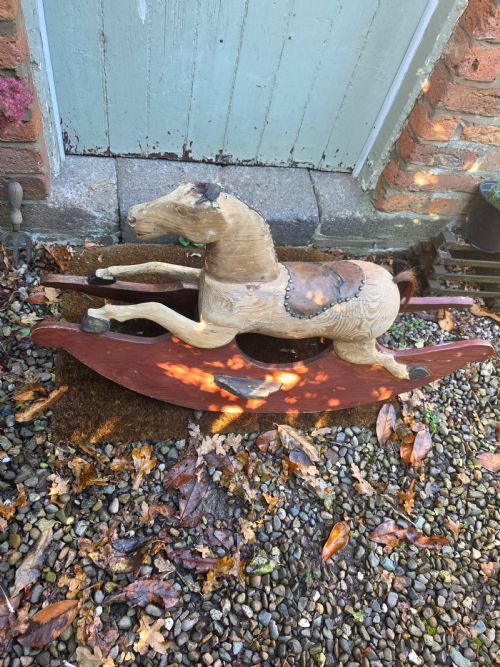
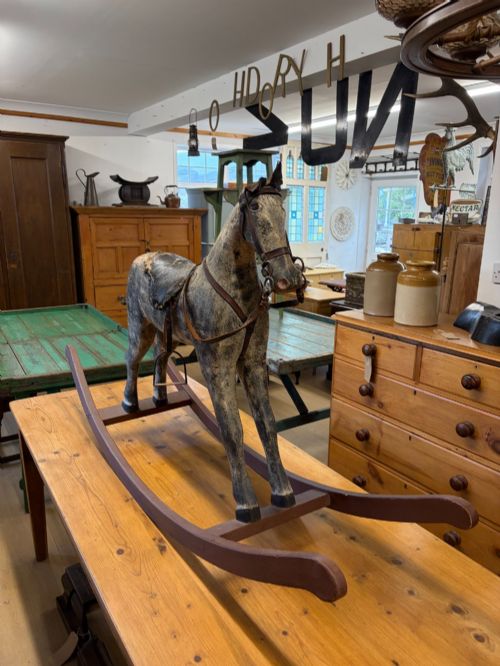
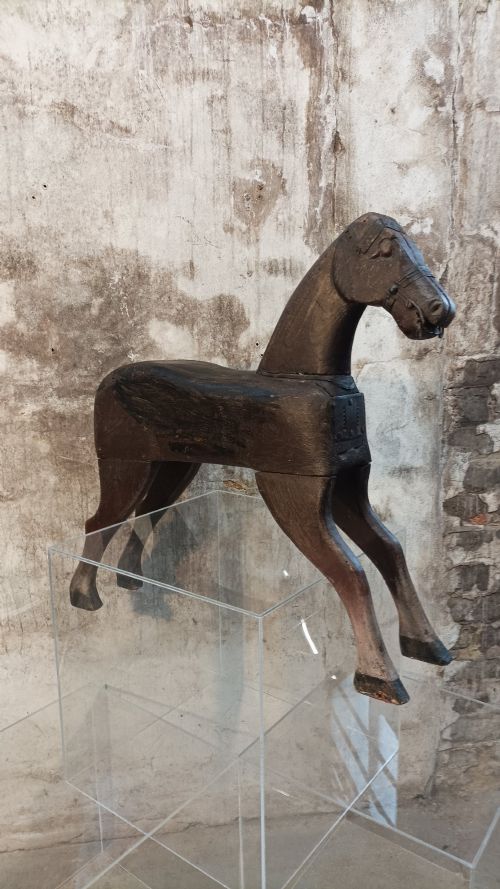
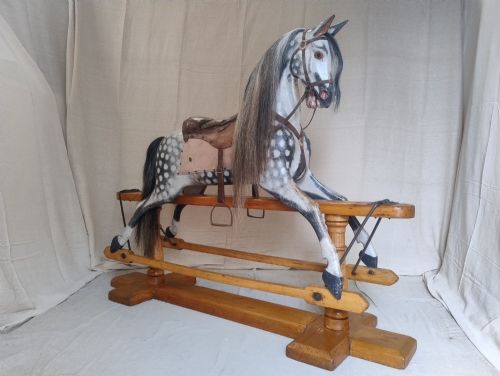
These hand carved toy horse examples bring tangible Victorian character and rustic folk art charm straight into a room.
Hand Carved Toy Horse
When searching for a hand carved toy horse, you find antique wooden playthings and decorative sculptures shaped largely across the nineteenth and twentieth centuries. These objects reflect traditional craftsmanship through enduring forms designed for play or display.
You are most likely to meet nineteenth century pieces on this page, including primitive rocking horses and naive painted wooden horse sculptures. Many examples hail from the Victorian era and carry the distinct aesthetic of folk art traditions.
How they were made
Makers shaped these pieces primarily from carved wood and pine, building sturdy wooden structures designed to withstand childhood use. Natural materials such as leather and horsehair often completed manes, tails and tack.
Paint finishes applied directly to the timber provided colour and surface detail, while iron and other metal components added necessary structural reinforcement.
Hand Carved Toy Horse Retail Price Guide 2026
Typical asking prices for hand carved toy horse among the pieces listed under this phrase on Sellingantiques today, from the lower quarter to the upper quarter. They describe what is for sale here now, not the wider market.
Listings span the nineteenth and twentieth centuries, featuring wood, paint, leather, and horsehair across Victorian and folk art styles.
What varies in quality
The distinction between standard examples and superior pieces rests largely on the expressiveness of the carving and the originality of the surface paint. Retained early pigment layers elevate a sculpture above later overpainting.
Proportion and anatomical detail also separate basic naive items from ambitious large scale creations, reflecting the skill of the maker.
F.H.Ayres
The Hand Carved Toy Horse Glossary
- Folk art
- Objects created by self taught or traditional artisans outside the academic mainstream. These pieces prioritise rustic charm over strict classical proportion.
- Naive
- A stylistic approach characterised by simplified forms and a childlike perspective. It appears frequently in nineteenth century wooden sculptures.
- Primitive
- An early, unrefined style of construction showing minimal tooling. It points to regional workmanship and older construction methods.
- Original paint
- The initial surface coating applied by the maker, highly prized by collectors for its historical integrity and untouched visual character.
Hand Carved Toy Horse: Frequently Asked Questions
What are antique rocking horses made from?
These historical toys are constructed mainly from carved wood and pine timbers. Artisans frequently incorporated leather, horsehair and iron elements to finish the figures.
Paint served as the primary medium for decorating the wooden surfaces and adding colour to the toys.
How old is a primitive wooden horse?
Many examples date back to the nineteenth century, with some stretching into the Victorian period. Earlier pieces often display simpler folk art characteristics.
Twentieth century variations from the nineteen thirties and forties also appear among these traditional wooden items.
How do you display a toy horse?
Large rocking horses and smaller wooden sculptures make striking statement pieces in living areas or hallways. Placing them on stable surfaces protects their aged wooden frames.
Allowing the piece to stand alone highlights its historic folk art qualities within a room.