

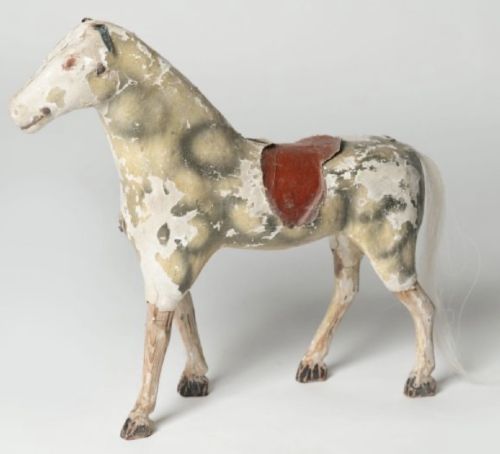
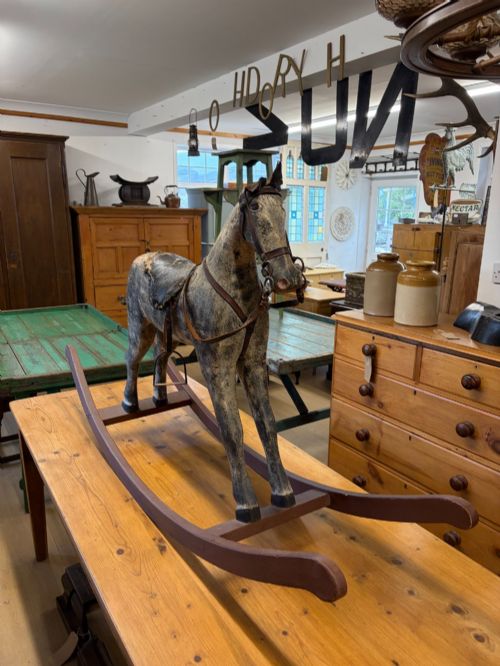
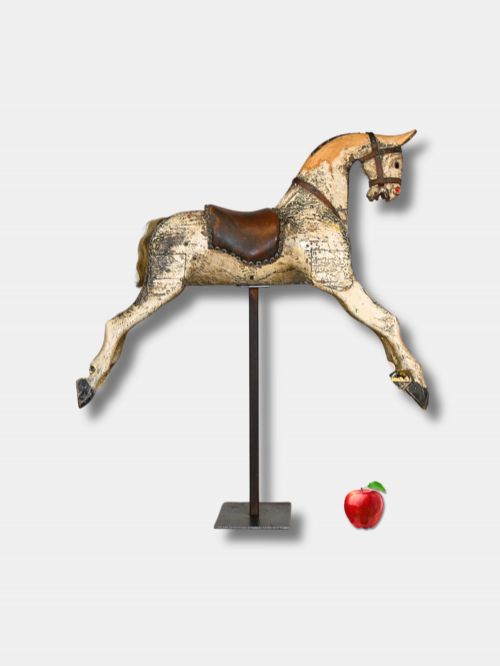


Distressed Paint Wooden Horse
These distressed paint wooden horse figures bring weathered texture and organic form into a room, offering the charm of antique folk art.
Distressed Paint Wooden Horse
A distressed paint wooden horse combines utilitarian origins with rustic charm, drawing buyers who appreciate folk art and historical patination. These figures span the nineteenth and early twentieth centuries, encompassing decorative sculptures, carousel figures, and former rocking horses.
The pieces on this page originate from English, French, Spanish, and continental workshops, reflecting regional vernacular traditions. Most examples take the form of rocking horses on stands or carved figures adapted for decorative display.
Makers such as G. J. Lines represent the commercial toy production of the period, whilst naive and primitive carvings highlight domestic craftsmanship. Buyers encounter both large-scale fairground animals and smaller antique toys showing extensive surface wear.
Materials and construction methods
Makers carved these figures primarily from pine and solid wood, often applying layers of gesso to smooth the body before painting. Iron components provided structural stability, particularly in rocking mechanisms and internal bracing.
Surfaces received coats of oil-based or lead paint, which weathered over decades of use into the cracked patination collectors prize. Additional details such as horsehair tails and leather tack completed the traditional construction.
Distressed Paint Wooden Horse Retail Price Guide 2026
Typical asking prices for distressed paint wooden horse among the pieces listed under this phrase on Sellingantiques today, from the lower quarter to the upper quarter. They describe what is for sale here now, not the wider market.
Some of these wooden horses retain remnants of real horsehair manes that have withstood over a century of affectionate pulling.
Assessing quality and character
The distinction between ordinary and exceptional pieces lies in the integrity of the original surface and the sculptural energy of the carving. Original paint layers that survive without modern repainting elevate a piece, whereas heavy restoration diminishes authenticity.
Anatomical proportion paired with naive charm dictates visual success, distinguishing master carvers from provincial joiners. The depth of patination and the natural wear of the wood tell a visual story that cannot be replicated by artificial ageing.
The Distressed Paint Wooden Horse Glossary
- Folk art
- Objects created by self-taught or traditional artisans outside academic traditions. These pieces prioritise practical utility and regional expression over formal academic rules.
- Gesso
- A plaster mixture applied to wooden sculptures to create a smooth base for painting. It provides the chalky foundation that cracks and flakes over time.
- Patina
- The surface alteration caused by age, use, and exposure to light. It manifests as softened edges, worn paint, and mellowed wood tones.
- Carousel horse
- A carved wooden figure mounted on a fairground ride. These examples often feature dynamic poses and remnants of decorative gilding or bright pigments.
Distressed Paint Wooden Horse: Frequently Asked Questions
What is a distressed paint wooden horse?
These pieces are antique carved figures, including former rocking horses and fairground animals, shaped from solid wood and finished with painted surfaces. They served as toys or amusements before transitioning into decorative objects.
Over decades of use, their paint layers have worn down, revealing the bare wood and gesso underneath. This weathered appearance defines their appeal in modern interiors.
How were these wooden horses used originally?
Many examples functioned as children's toys, enduring heavy daily play in nineteenth-century nurseries and parlours. Others served a commercial purpose on fairground carousels, spinning on outdoor rides.
Today, collectors repurpose them entirely as sculptural objects for display. They stand on floors or mantelpieces as focal points in rustic and eclectic spaces.
How do I care for antique painted wood?
Preserving these surfaces requires stable indoor humidity and protection from direct sunlight, which can fade old pigments and dry out pine. Dusting should be done gently with a dry, soft cloth rather than liquid cleaners.
Avoid applying modern waxes or oils to original distressed paint, as foreign substances can alter the historical patination. Letting the surface remain untouched protects the integrity of the finish.
How can I tell the age of a wooden horse?
Dating relies on examining the construction marks, nail types, and the composition of the paint layers. Nineteenth-century pieces typically show hand-carved tool marks, traditional joinery, and multiple underlying coats of lead or oil paint.
Wear patterns around footrests and handles also indicate the duration of use. Comparing the style to documented makers helps narrow down the period of origin.