


19th Century Carved Horse
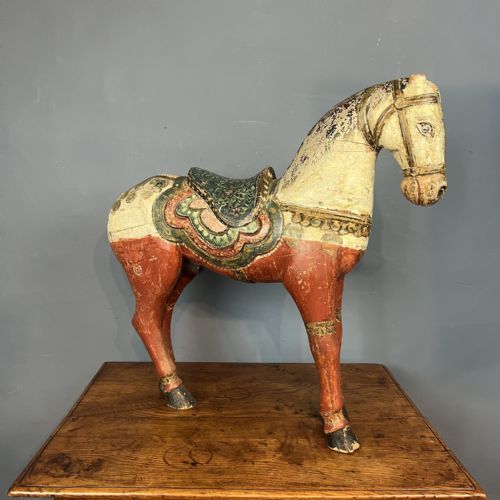
These pieces of 19th century carved horse bring tangible character and historic movement into a room.
19th Century Carved Horse
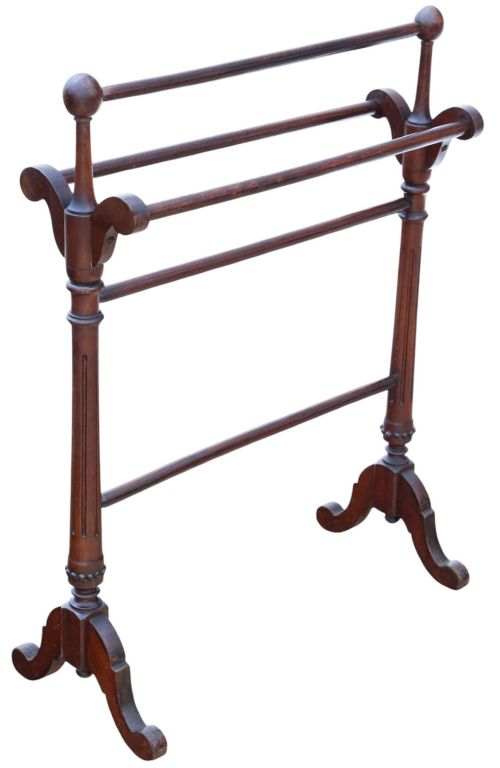
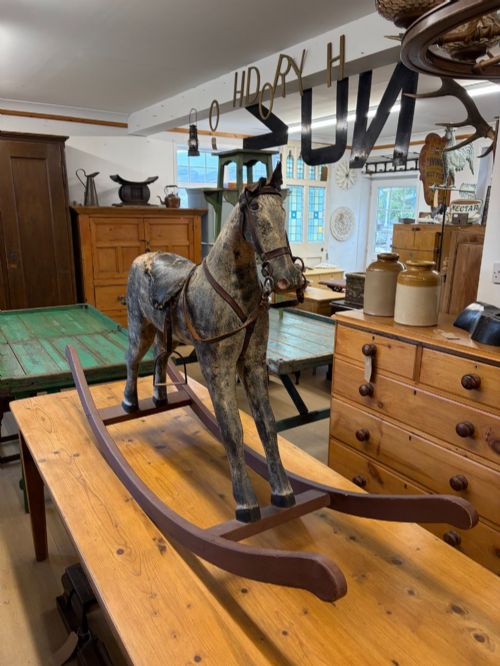
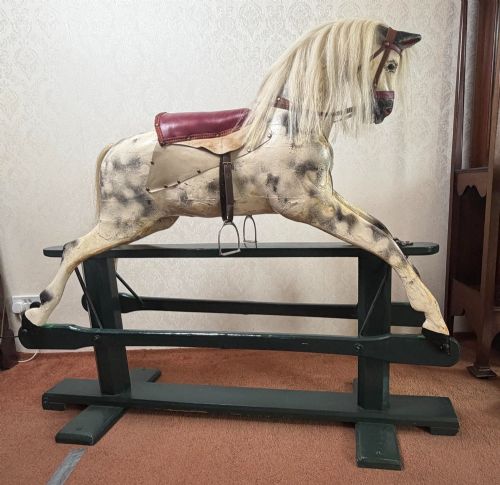
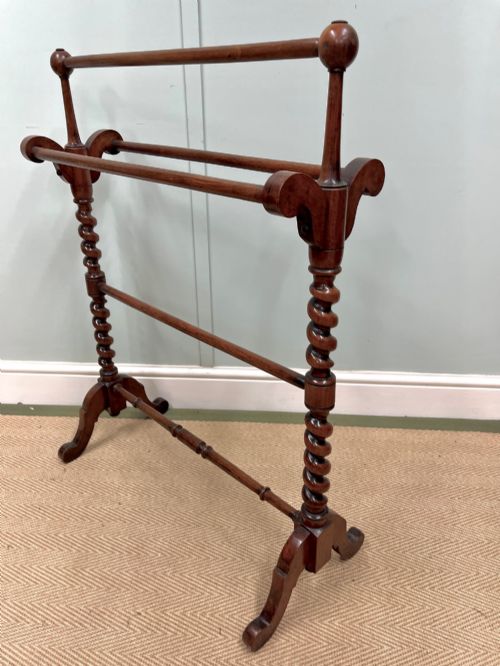
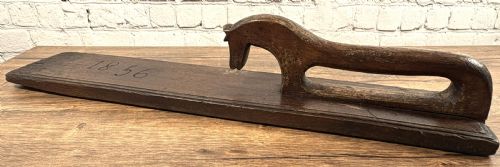
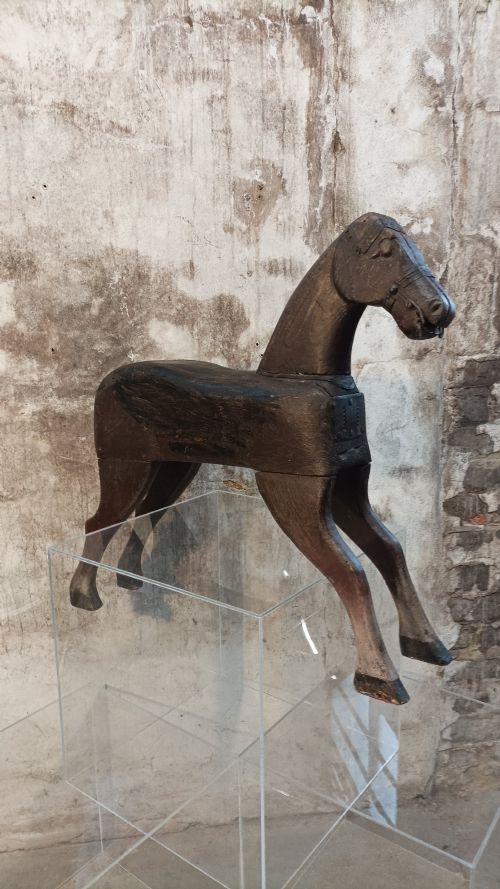
A 19th century carved horse spans everything from full-scale rocking horses and fairground figures to small decorative sculptures, architectural panels, and domestic items like towel rails and mangle boards. You are most likely to encounter wooden rocking horses, decorative animal heads, and folk art sculptures across various regional traditions.
The selections range from English rocking horses on original stands to French and German carousel figures, Spanish carved heads, and Asian hardwood studies. Each form carries the distinct sculptural hand of its maker, whether built for children's play, festive display, or functional household use.
Materials and construction
Makers shaped these objects primarily from timber such as mahogany, oak, walnut, elm, pine, and general carved wood, often adding leather, iron, and horsehair for harness or mane details. Surfaces frequently show original paintwork, lacquer, or bare grain that reveals the tool marks of the period.
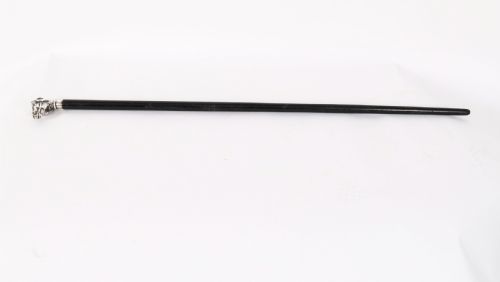
Construction methods vary widely by form, uniting structural joinery for rocking horses and furniture with direct carving for sculptural heads, panels, and folk art figures. The integration of metal elements, such as chains on tricycles or silver on walking canes, complements the predominant woodwork.
Materials range from soft pine and hardwood to hard stone, iron, and textiles.
Distinctions in quality
Quality rests in the anatomical accuracy and expressive vigour of the carving, distinguishing master-carved workshop pieces from naive or primitive folk art interpretations. The survival of original paint, leather tack, and authentic rocking stands elevates the integrity of an item.
Proportion and scale play significant parts, particularly in larger fairground figures and rocking horses where dynamic posture defines the visual impact. The crispness of detail in mane, muscle, and harness separates standard production items from exceptional surviving examples.
G J Lines·Limonaire Freres Paris·Andersons Bristol·Bayol
The 19th Century Carved Horse Glossary
- Carousel horse
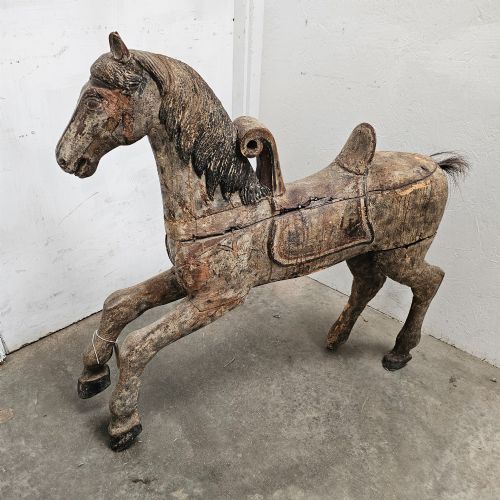
- A carved wooden figure mounted on a fairground ride, typically featuring dynamic poses and decorative painted details. These pieces often retain remnants of bright pigments from their working life.
- Mangle board
- A domestic wooden board used historically in Scandinavia for pressing linen, frequently finished with a carved horse head handle. They combine utilitarian function with expressive regional folk art.
- Folk art
- Artistic work created in a naive style by self-taught or traditional makers, using local materials without formal academic training. These objects prioritise direct expression over strict proportion.
- Rocking horse
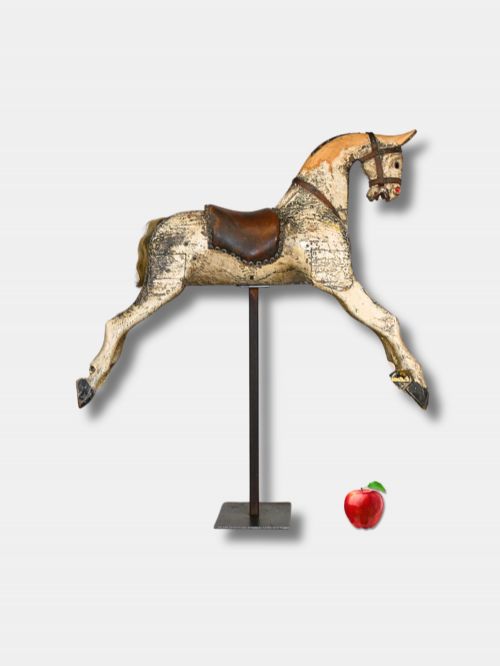
- A toy horse mounted on bow rockers or safety stands designed for children to ride. Examples from this period often display substantial timber construction and leather bridles.
19th Century Carved Horse: Frequently Asked Questions
How do I care for a painted wooden horse?
Keep wooden sculptures away from direct heat sources and fluctuating humidity to protect the timber and original paint layers from splitting or flaking.
Dust gently with a dry, soft cloth and avoid chemical polishes that can soften historic surface coatings.
Were all rocking horses painted originally?
Most period rocking horses received layers of paint, gesso, and sometimes real horsehair to create a realistic appearance for riders.
Some examples survive with natural wood grains exposed, reflecting either later stripping or specific regional folk traditions.
What is a fairground horse?
Fairground horses were carved wooden figures mounted on amusement rides like carousels and gallopers, built to withstand heavy public use.
They often feature dramatic, windswept manes and bright decorative paint schemes designed to catch the eye in motion.
How can I tell folk art from workshop pieces?
Folk art pieces display charmingly naive proportions and direct carving methods executed by local makers without industrial oversight.
Workshop pieces generally exhibit refined anatomical accuracy, sophisticated joinery, and occasionally manufacturer stamps or attribution.