



Antique Carousel Sculpture
An antique carousel sculpture brings the bold energy of the fairground into a room, offering tactile carved wood and weathered paint.
Antique Carousel Sculpture
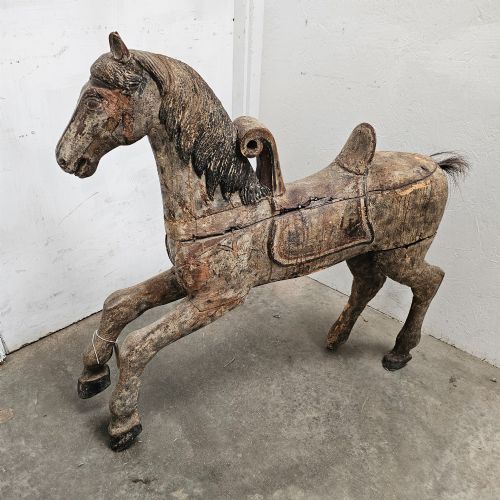
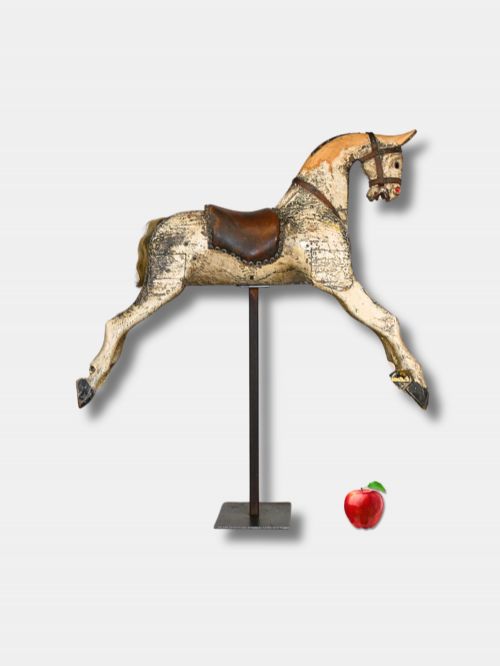
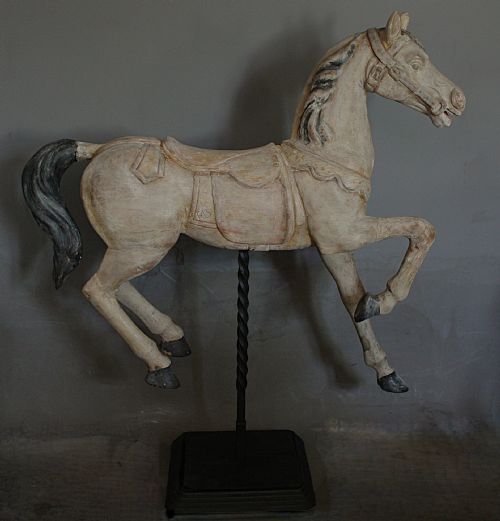
An antique carousel sculpture encompasses carved wooden horses, pigs, dragons and decorative panels rescued from nineteenth and early twentieth century fairground rides. These objects carry the distinct marks of heavy public use, outdoor exposure and working entertainment history.
The most common examples on this page are carved wooden horses from French and Continental fairgrounds, alongside British rocking horses and fairground ride fragments. They appear in styles ranging from French folk art to Victorian industrial and fairground art.
Forms vary from full decorative sculptures and wall sculptures to standalone figures and ride fragments. Each piece retains remnants of its original working life, often showing layered paint surfaces and structural ironwork.
How they were made
Carvers shaped these sculptures primarily from solid blocks of carved wood, often utilising hollow construction methods to reduce weight for the revolving platform. Artisans then applied durable coats of paint, sometimes adding horsehair for tails and manes to complete the lifelike appearance.
Structural integrity relied on iron and wrought iron brackets, bolts and internal framing to withstand the constant motion and stress of the fairground machinery. Leather straps and harnesses were frequently integrated into the final assembly for decorative and functional effect.
Listings feature materials such as wood, paint, iron, leather, carved wood, horsehair, metal and wrought iron.
What varies in quality
The distinction in quality rests upon the depth of the carving and the survival of the original painted surface. Sculptures that retain untouched polychrome paint layers without heavy overpainting demonstrate superior historical preservation.
Anatomical expression and decorative detailing set exceptional figures apart from standard ride components. Master carvers imbued these animals with dynamic movement and character, visible in the tension of the head and the musculature of the body.
Bayol·Limonaire
The Antique Carousel Sculpture Glossary
- Polychrome
- Painted in several colours. This term describes the multi-layered decorative paint schemes found on fairground figures.
- Ride fragment
- A surviving portion of a larger fairground attraction. These pieces demonstrate the decorative elements mounted to historical carousels.
- Folk art
- Utilitarian or decorative objects created by self-taught or traditional artisans. This style defines much of the hand-carved fairground material.
- Wrought iron
- Tough, malleable iron worked by hand forging. It appears in the structural supports and braces of these sculptures.
Antique Carousel Sculpture: Frequently Asked Questions
How were carousel figures used?
Carousel figures were mounted to rotating fairground platforms where riders sat on them during operation. They endured years of outdoor use and constant mechanical motion.
After their working life on the ride ended, many were salvaged as decorative sculptures for interiors and collections.
How do I date a carousel sculpture?
Dating relies on the carving style, the type of wood, and the layering of the paint surfaces. Pieces often span the nineteenth century through to the early twentieth century.
Construction methods, such as the use of wrought iron or specific joining techniques, also help identify the era of manufacture.
How do I display these sculptures?
These pieces can be mounted on stands or secured directly to walls as decorative sculptures and panels. Their substantial weight requires sturdy placement.
Placing them away from direct heat sources helps preserve the aged wood and historical paint finishes.