


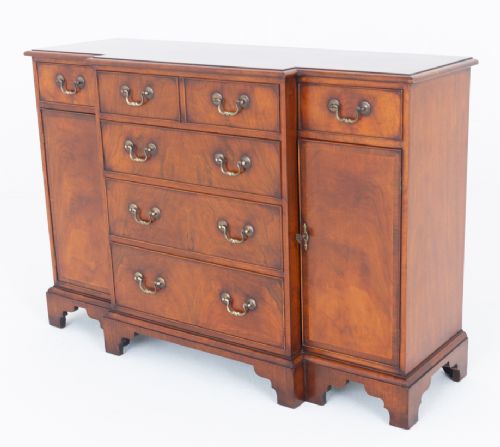


Traditional Breakfront Cabinet
A traditional breakfront cabinet organises a room with architectural projection and generous storage, uniting timber and glass in a commanding formal silhouette.
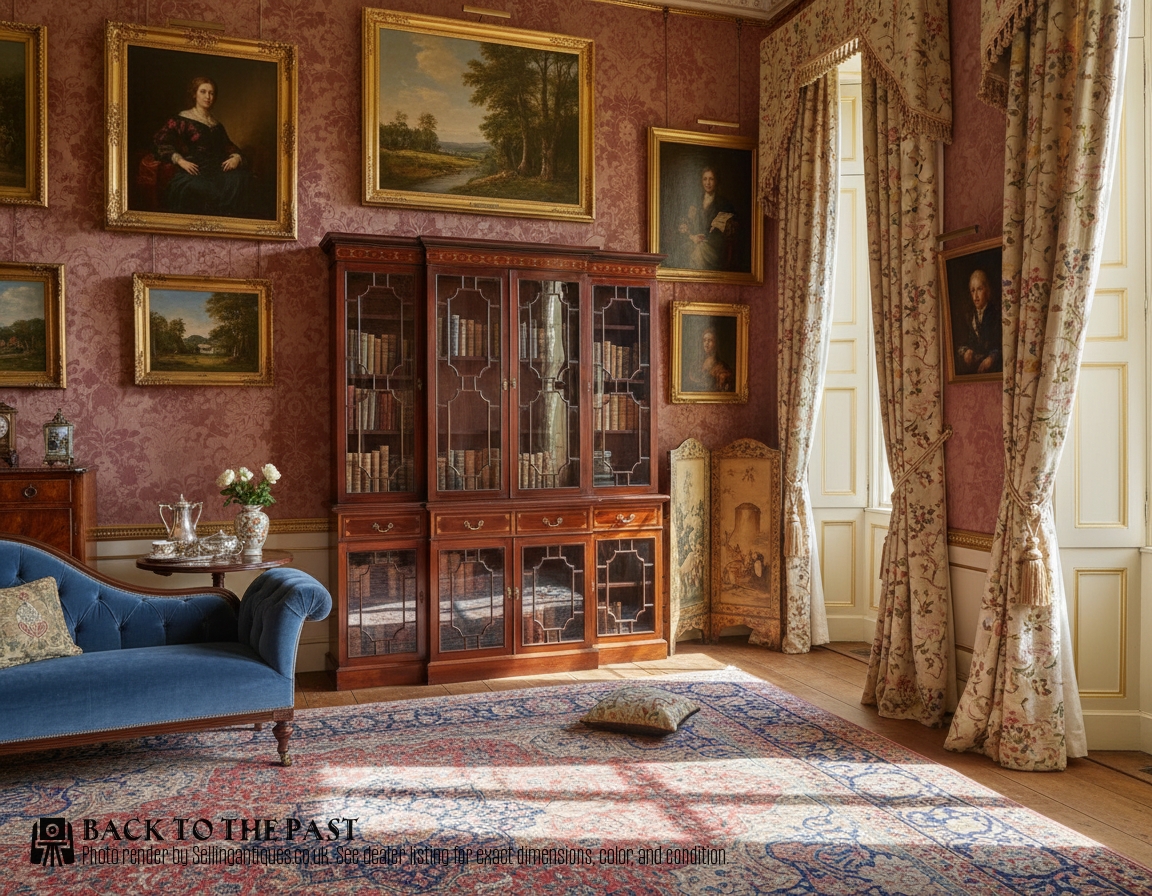
Traditional Breakfront Cabinet
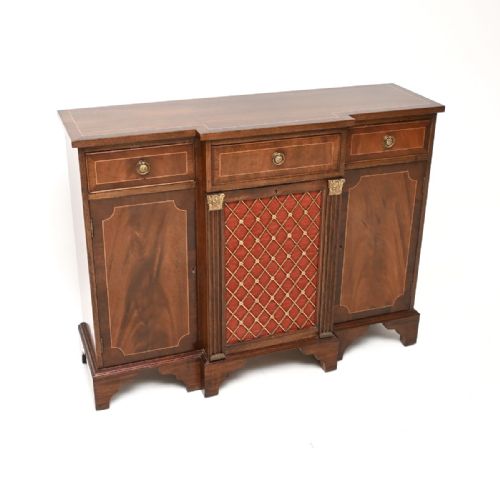
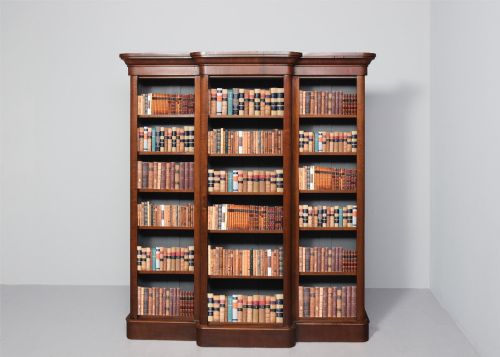
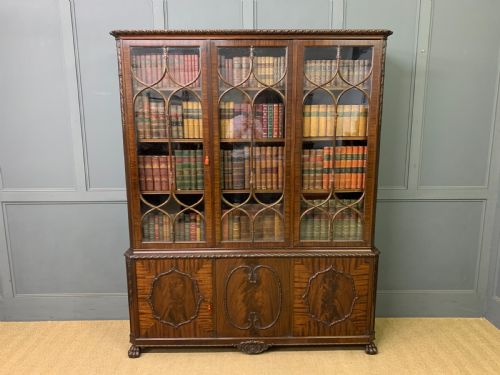
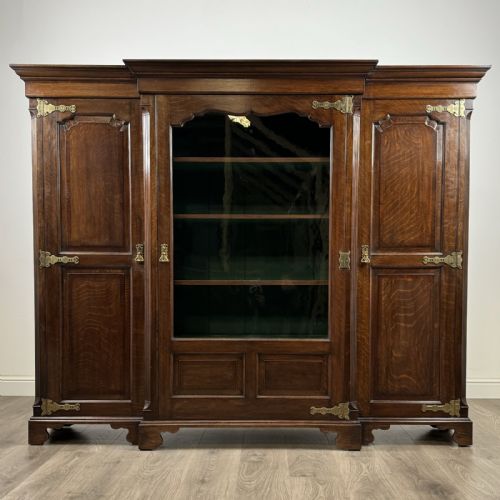
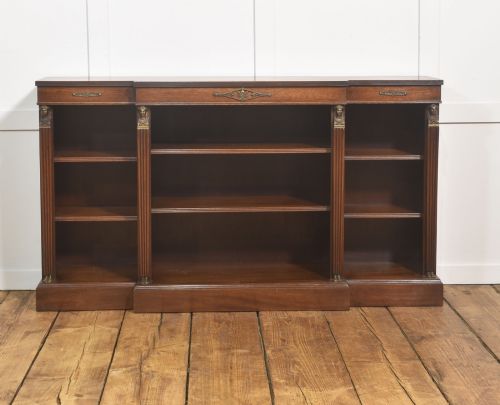
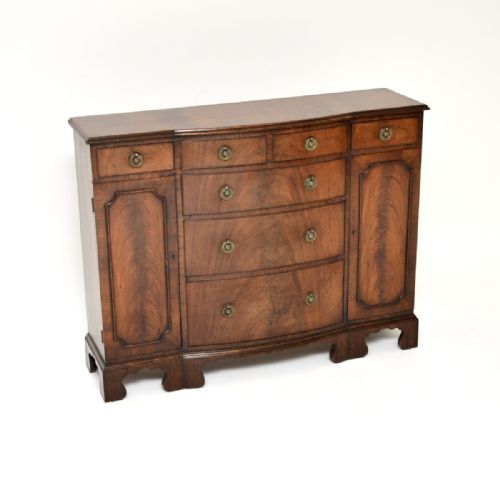
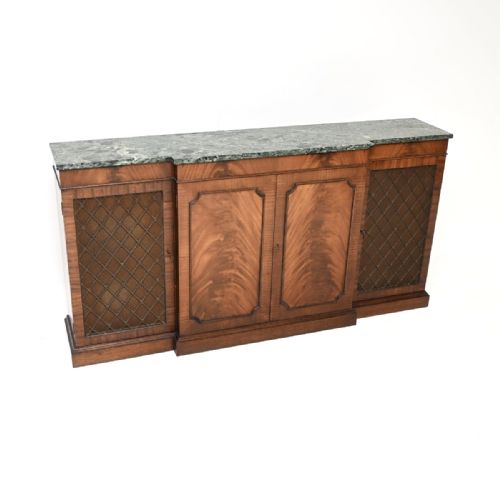
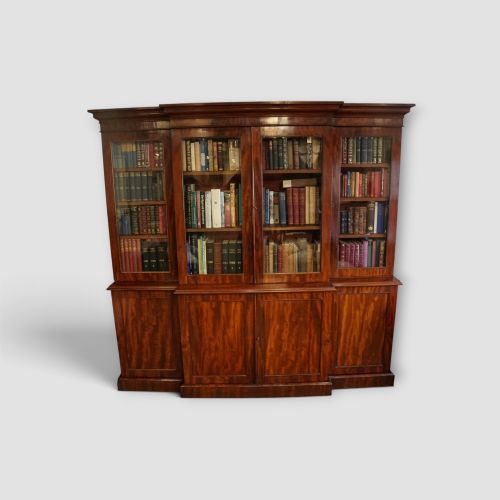
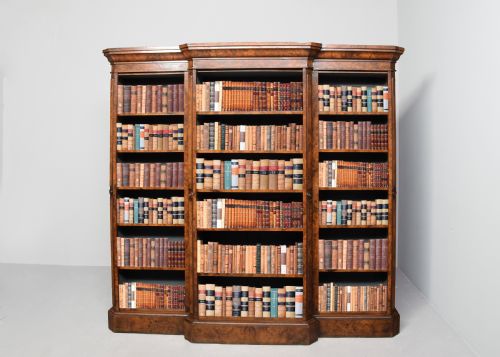
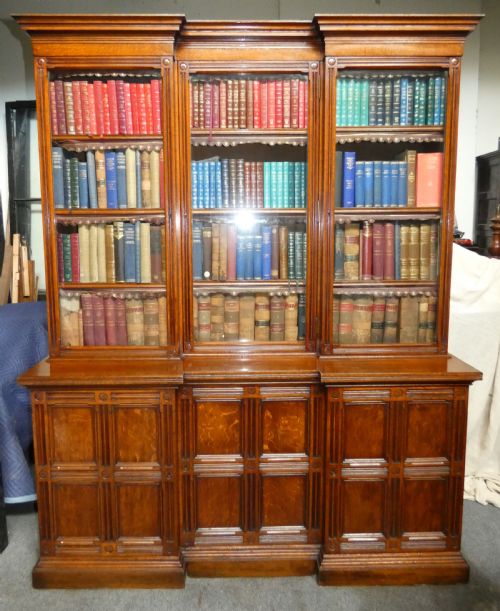
A traditional breakfront cabinet presents a distinctive projecting central section flanked by slightly recessed wings, creating a layered facade that catches the light. Buyers seek these pieces for substantial libraries, dining rooms and grand halls where linear storage meets classical proportion.
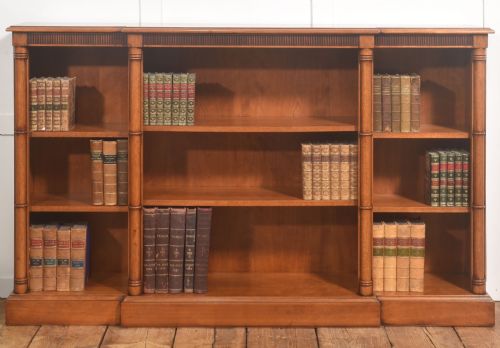
The selections here span centuries of British and continental woodworking, appearing predominantly as tall library bookcases, glazed display cabinets and low sideboard bases. Most examples date from the Victorian and Georgian periods through to later revival eras, constructed primarily in rich timbers like mahogany, walnut and oak.
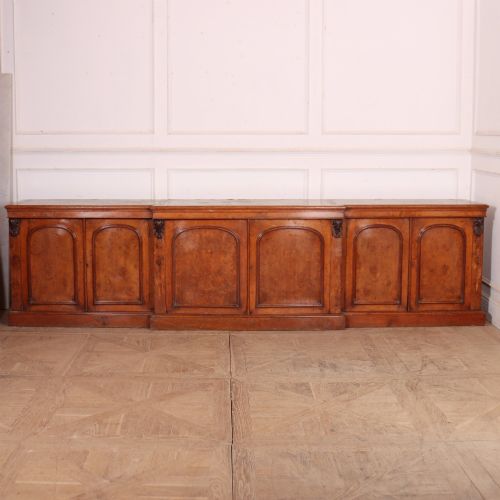
Form follows function across these varied types, shifting from large four-door library bookcases with adjustable shelving to smaller dresser bases and kitchen cupboards. The projected centre section might house deep cupboards or wider drawers, while the flanking wings adapt to books, linen or display items.
How they were made
Cabinet makers constructed these large pieces using solid foundational timbers such as oak and pine, applying choice veneers of flame mahogany, walnut or burr walnut to visible exterior surfaces. This technique allowed workshops to display striking wood grain figures across wide cabinet doors and drawer fronts without risking the structural movement inherent in solid exotic planks.
Glazing bars divided large glass panes into precise geometric arrangements on bookcase upper sections, while brass hardware secured doors and drawers. Joinery relied on traditional housing, dovetailing and mortise and tenon methods to support the considerable weight of heavy timber shelving and extensive book collections.
Traditional Breakfront Cabinet Retail Price Guide 2026
Typical asking prices for traditional breakfront cabinet among the pieces listed under this phrase on Sellingantiques today, from the lower quarter to the upper quarter. They describe what is for sale here now, not the wider market.
Listings feature mahogany, oak, walnut and pine timbers across Victorian, Georgian and Edwardian periods.
What varies in quality
Excellence in a traditional breakfront cabinet rests upon the selection of timber veneers and the crispness of architectural details such as dentil cornices, fluted pilasters and astragal glazing bars. Superior pieces exhibit carefully matched grain patterns that flow symmetrically across multiple doors, alongside heavy brass fittings and robust internal framing.
Lamb And Co
The Traditional Breakfront Cabinet Glossary
- Breakfront
- An architectural cabinet design where the central section projects forward from the flanking wings. This configuration breaks up a flat wall and creates visual depth.
- Astragal
- A small moulded bar that divides individual panes of glass within a cabinet door. These delicate wooden strips define the window pattern of upper bookcase sections.
- Flame mahogany
- A decorative veneer harvested from the fork of the mahogany tree where branches join the trunk. It yields a distinctive flickering flame pattern highly prized in formal furniture.
- Dresser base
- The lower enclosed portion of a dresser featuring cupboards or drawers without the upper plate rack. These sturdy items often serve as sideboards in dining spaces.
- Housekeepers cupboard
- A large tall storage piece traditionally used in large country houses for linens and dry stores. They feature panelled wooden doors and robust oak or pine construction.
Traditional Breakfront Cabinet: Frequently Asked Questions
How do I style a breakfront cabinet in a modern room?
Allow the substantial timber proportions to anchor the space by keeping surrounding walls neutral and uncluttered. Use the internal shelves to display curated collections of books, ceramics or glassware behind the glazed doors.
Balance the visual weight of the piece by placing minimalist seating nearby. This lets the classical lines and figured wood grain remain the primary focal point.
What is the difference between a bookcase and a sideboard version?
Bookcase variants feature tall upper sections with glass doors and adjustable shelves designed for displaying volumes and collectibles. Sideboard variants are lower pieces focused on enclosed cupboard and drawer storage.
Both maintain the signature projecting central facade, but bookcases serve upright display functions while sideboards operate at surface height for serving or storage.
Are the shelves inside adjustable?
Many traditional library bookcases and cabinets include adjustable wooden shelving supported by traditional ratchet systems or wooden pegs. This allows the interior height to accommodate volumes of varying sizes.
Earlier fixed-shelf configurations remain common in vernacular pieces and older dresser bases. Checking the interior setup ensures the cabinet meets practical storage needs.
How can I tell a Victorian piece from a Georgian one?
Georgian pieces generally display lighter proportions, refined bracket feet and understated classical cornices executed in dense native mahoganies. Victorian examples often introduce heavier timber dimensions, deeper mouldings and richer burr veneers with elaborate architectural carving.
Revival pieces from the later nineteenth and early twentieth centuries frequently emulate these earlier styles while incorporating machine-cut joints and distinct internal construction markers.