




Traditional Brass Wall Sconces
Traditional brass wall sconces illuminate hallways and reception rooms with period character, offering enduring metalwork and warm candle or electric light.
Traditional Brass Wall Sconces
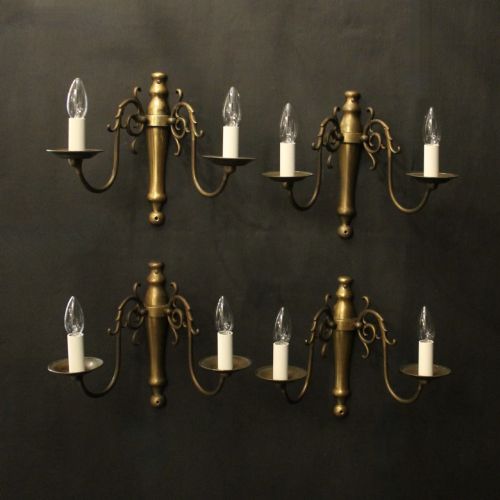
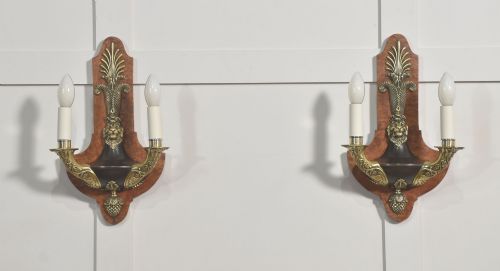
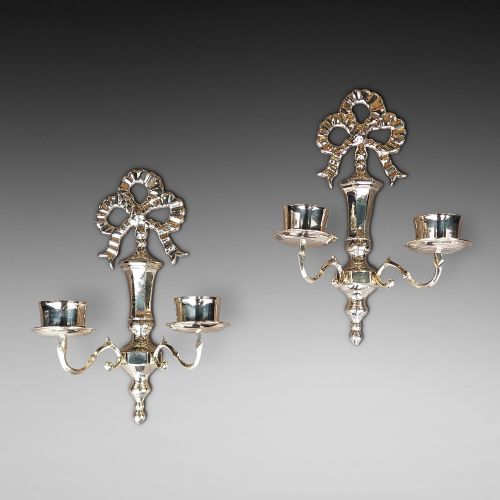
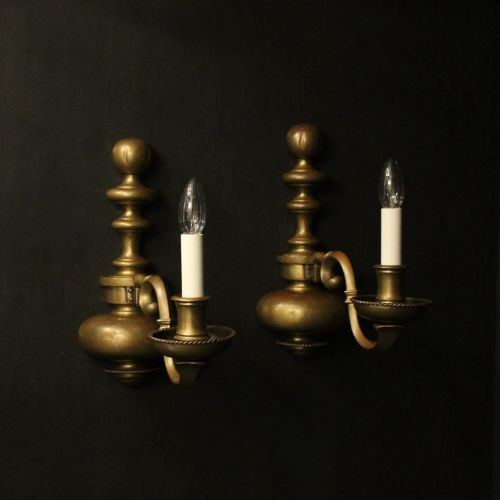
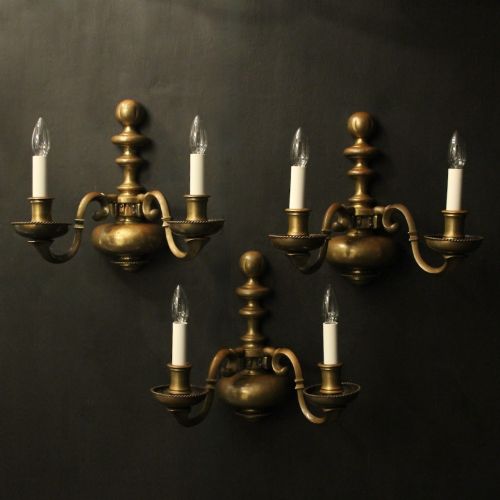
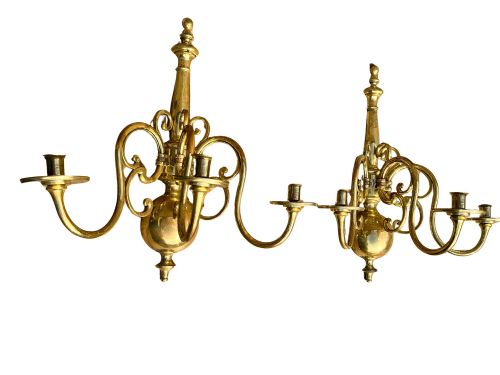
Traditional brass wall sconces encompass wall-mounted light fittings spanning the nineteenth and early twentieth centuries, including the Victorian, Edwardian, and 1920 periods. Buyers searching for traditional brass wall sconces will encounter English and French examples executed in styles ranging from French Rococo and Empire to Adam Revival and Neoclassical.
What varies in quality
Quality in traditional brass wall sconces depends upon the crispness of the original metal casting and the depth of hand-chasing applied to decorative details such as foliage or classical motifs. Heavier gauge brass and solid bronze construction indicate superior structural integrity compared to lighter pressed metal alternatives.
The integrity of surface treatments, whether original fire gilding, applied patination, or clean repolished finishes, distinguishes finer examples. Matching sets and pairs originating from established makers or distinct stylistic revivals retain greater design cohesion.
Listings span the 18th, 19th, and 20th centuries, featuring brass, bronze, copper, and crystal materials across English and French designs.
F. & C. Osler
The Traditional Brass Wall Sconces Glossary
- Adam Revival
- A neoclassical design style drawing on eighteenth-century Robert Adam motifs such as urns, husks, and classical symmetry. This aesthetic reappeared in lighting fixtures produced during the Victorian and Edwardian eras.
- Gilded Brass
- Brass that has been coated with a thin layer of gold or gold-coloured leaf to give the appearance of solid gold metal. It provides a bright, reflective surface popular in formal French and English interiors.
- Patinated Brass
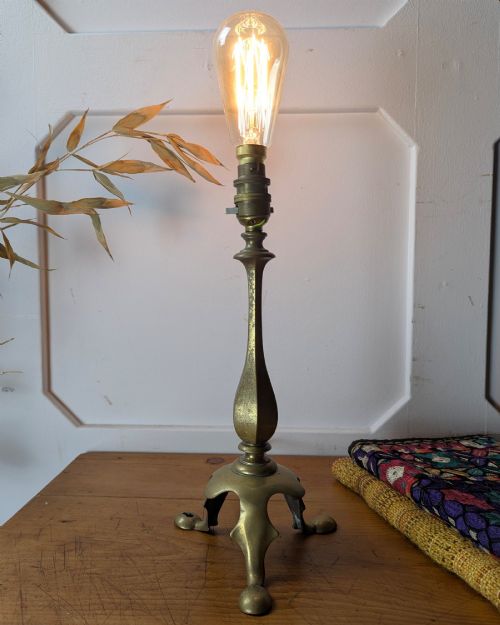
- Brass surfaces that have developed a darkened, aged finish through oxidation or artificial chemical treatment. This process highlights relief details and subdues the bright yellow tone of raw metal.
- Carriage Lamp
- A robust exterior or interior wall light modelled on the lighting fixtures once mounted to horse-drawn vehicles. They frequently incorporate glass panels and metal hoods designed to withstand weather or movement.
Traditional Brass Wall Sconces: Frequently Asked Questions
How do I date an antique wall sconce?
Dating relies on identifying manufacturing techniques, screw threads, and stylistic markers associated with specific periods like the Victorian era or the 1920s. Heavier sand-cast components often point to nineteenth-century origins, while later twentieth-century pieces display different assembly methods.
Examining the wiring channels, backplates, and any maker stamps provides further chronological clues. Comparing the decorative vocabulary to known revival styles helps narrow the decade of production.
Are these wall sconces wired for electricity?
Many surviving wall lights have been adapted for modern electrical supplies during their working lives, though some retain original candle-fitting configurations. Listings specify the current setup of each individual fixture.
Buyers planning to install antique lighting should consult a qualified electrician regarding rewiring and compliance with current safety standards. Original candle sockets can often be retrofitted with small modern bulb holders.
How should I clean antique brass?
Maintenance depends on whether the brass has a polished finish or an aged, patinated surface that requires preservation. Dusting with a soft, dry cloth is generally sufficient for regular care.
Avoid abrasive metal polishes on patinated or gilded pieces, as harsh chemicals will strip the historic finish. Professional advice should be sought if deep cleaning or lacquer removal is required.
Can I find matching pairs of sconces?
The inventory frequently includes matched pairs and larger sets, particularly from Edwardian and 1920s production runs. These groupings were originally made for symmetrical placement around fireplaces, doorways, or mirrors.
Single sconces also appear alongside pairs, offering options for smaller spaces or accent lighting. Checking the listed dimensions and branch counts ensures visual balance when pairing disparate pieces.