




Cut Glass Wall Sconces
Cut glass wall sconces are glittering antique light fittings that bounce candle or gas light off crystal drops and mirrored plates to illuminate a room.
Cut Glass Wall Sconces
Cut glass wall sconces bridge the gap between functional illumination and decorative wall furniture. When buyers search for cut glass wall sconces, they encounter items taking forms such as wall lights, wall sconces, and wall mirrors.
The pieces appearing on this page span several distinct periods including the 1860s, 1880s, 1900, Edwardian era, 1920, and 1930. Stylistic influences draw from French Chateau, Regency, Regency Revival, Victorian, Neo-Classical, 19th Century Scandinavian, and French Art Deco aesthetics.
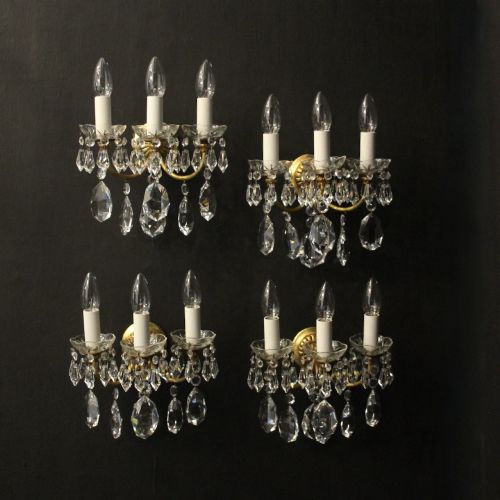
Among these choices, pairs and sets of crystal or glass wall lights dominate the selection. They frequently incorporate arms for multiple candles or bulbs, hanging lustres, and supportive metal backplates.
Materials and construction
Makers constructed these wall lights using combinations of glass, crystal, cut glass, and cut crystal mounted on brass, gilt brass, metal, or bronze frameworks. Mirror plates frequently sit behind the arms to reflect and multiply the illumination.
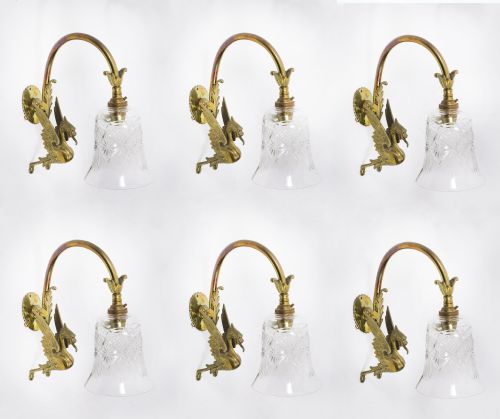
The glass components receive their decoration through wheel-cutting and hand-polishing techniques that create sharp facets designed to refract light. Metal mounts are cast, chased, and occasionally gilt or plated with silver and ormolu.
Listings feature brass, gilt brass, bronze, and silver alongside glass and crystal, spanning the Victorian, Edwardian, and Art Deco periods.
Judging quality in wall sconces
Quality rests upon the depth and crispness of the glass cutting, where sharper facets and higher crystal content create brighter refraction. The weight and casting detail of the brass, bronze, or ormolu mounts also signal superior manufacture.
Integrity of the components determines the standing of a piece, particularly the presence of matching original glass drops, lustres, and backplates rather than later replacements.
F. & C. Osler·Baccarat
The Cut Glass Wall Sconces Glossary
- Lustre
- A cut glass pendant or drop hung from a wall light to refract illumination. These pieces catch the light and create a shimmering effect.
- Ormolu
- Gilded bronze used for decorative mounts and frames. This technique provides a rich metallic finish that complements clear crystal.
- Bevelled glass
- Mirror or glass plate with an angled edge ground down for a decorative border. This treatment adds depth and a prismatic edge.
- Backplate
- The flat section of metal or mirror fixed directly to the wall to support the projecting light arms. It often incorporates decorative cast motifs.
- Twin branch
- A lighting arm configuration holding two distinct candle or bulb holders. This design increases the light output from a single mounting point.
Cut Glass Wall Sconces: Frequently Asked Questions
How were cut glass wall sconces used?
These fixtures hung in parlours, hallways, and formal rooms to provide ambient light alongside chandeliers. Placed near mirrors or opposite windows, they maximised the available daylight and candle flame.
Over time, many of these wall lights were adapted from candles to electricity while retaining their original glass drops and metal frames for daily use.
How do I date a wall sconce?
Dating relies on examining the metal casting techniques, screw threads, and the style of the glass cutting. Neo-Classical or Ormolu pieces often point toward the turn of the twentieth century, while streamlined forms lean into the 1920s and 1930s.
Backplate fixings and the composition of the mirror plate, where present, also offer clues to the manufacturing decade.
Can these wall lights use modern bulbs?
Most antique wall lights adapt easily to modern electrical wiring with small SES bulb fittings that replicate the scale of old candles. Professional rewiring ensures safety while preserving the historic brass and crystal structure.
Consulting a qualified electrician ensures the mounting brackets can securely bear the weight of the metal and glass components.
How do I clean cut glass sconces?
Cleaning requires removing glass drops and lustres to wash them individually in warm soapy water before drying with a lint-free cloth. Metal frames need gentle dusting or specialist metal care depending on whether they feature gilt brass, bronze, or silver plating.
Harsh chemical abrasives should be avoided to protect the original patination on the metal and the polished facets on the crystal.