

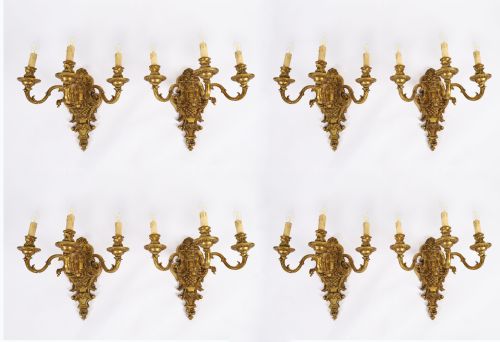
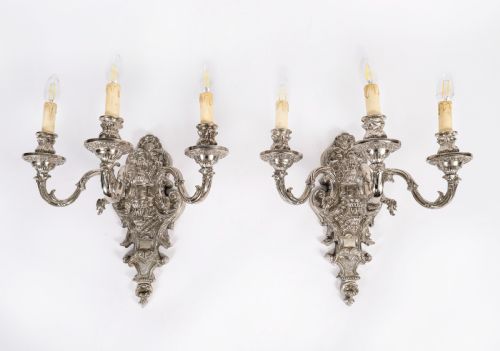


French Chateau Wall Appliques
These French chateau wall appliques bring interior illumination and grand decorative presence to a room, drawing on centuries of European design.
French Chateau Wall Appliques
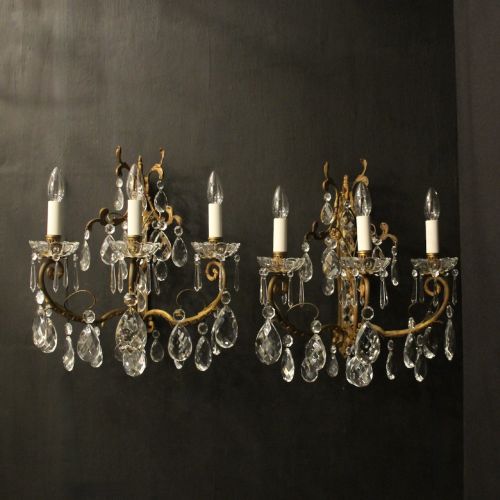
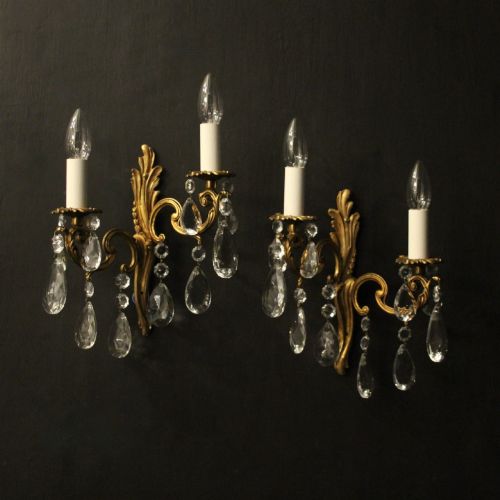
When searching for french chateau wall appliques, you encounter a selection of historic lighting fixtures designed to mount directly onto wall surfaces. The pieces listed span from the eighteenth century through to the nineteen-thirties, embracing periods such as the Georgian era and the early twentieth century.
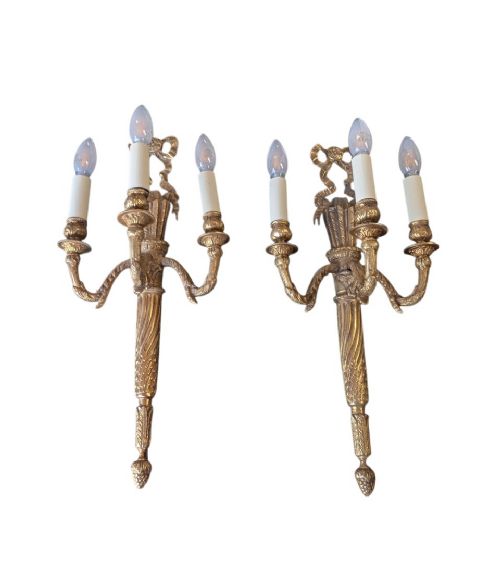
The forms vary from simple single-branch sconces to large triple-arm candelabra and multi-light fixtures. Most examples found on this page appear as matched pairs, which helps balance the proportions of a formal mantelpiece, hallway or drawing room.
Stylistically, the selection mirrors classical French interior design traditions. Louis XIV, Louis XV, Louis XVI and Rococo Revival influences dominate, alongside later twentieth-century interpretations.
How They Were Made
The construction relies heavily on cast metals, with gilt bronze, ormolu, brass and standard metal forming the structural foundation of the wall lights. Artisans also utilised iron, silver plating and carved wood or giltwood depending on the period and the regional workshop tradition.
Many fixtures incorporate decorative hanging elements or drip pans formed from crystal and glass. Toleware variations introduce painted sheet metal components, while other examples employ intricate ribbon motifs and floral details.
The listings span from the eighteenth century to the nineteen-thirties, featuring materials including gilt bronze, crystal, toleware and giltwood.
What Varies in Quality
The fineness of the casting work separates standard production pieces from high-end examples. Superior items exhibit sharp chiselling on ormolu and gilt bronze mounts, preserving crisp botanical and scroll details.
The integrity of the original gilding and surface finish dictates the visual impact of the fixture. Heavier gauge metals and substantial crystal drops also indicate superior manufacturing standards within the historical range.
Poix Blin·Maison Baguès
The French Chateau Wall Appliques Glossary
- Applique
- A wall-mounted lighting fixture designed to hold candles or electric bulbs. This term is frequently used interchangeably with wall sconce.
- Ormolu
- Finely ground high-carat gold applied to a bronze base using a mercury amalgamation technique. This historic method yields a deep, warm metallic lustre.
- Louis XVI Style
- A neoclassical design aesthetic characterised by straight lines, symmetry, and classical motifs such as ribbons and urns. It emerged during the late eighteenth century and saw revivals in later periods.
French Chateau Wall Appliques: Frequently Asked Questions
How do I wire historic wall appliques?
Most antique wall lights are adapted for modern electrical wiring by professional conservators or electricians. The internal channels are cleared to house safe modern flex without altering the exterior appearance.
For pieces retaining original candle sockets, subtle sleeve adaptations allow modern miniature bulbs to sit securely within the historic drip pans.
Where should I position wall sconces?
Wall lights perform best when flanking architectural focal points such as fireplaces, large mirrors or primary doorways. Height placement depends on ceiling dimensions, but eye level generally offers the most balanced illumination.
Matching pairs help establish symmetry in dining rooms, stairwells and formal hallways.
How do I identify the period of a wall light?
Dating relies on examining the casting techniques, fastening screws, and stylistic vocabulary used in the metalwork. Georgian and eighteenth-century examples display hand-cut threads and heavy patination, whereas twentieth-century pieces often show cleaner, standardised manufacturing.
Cross-referencing the decorative motifs against known royal French styles provides further chronological context.
Can I mix different styles of wall lights?
Pairing distinct historical styles requires careful attention to metal finishes and overall scale. Combining a Rococo Revival gilt bronze fixture with a simpler neoclassical brass sconce creates a layered interior if the room scale is appropriate.
Sticking to consistent metal tones like gilt brass or ormolu helps unify mixed aesthetic periods.