

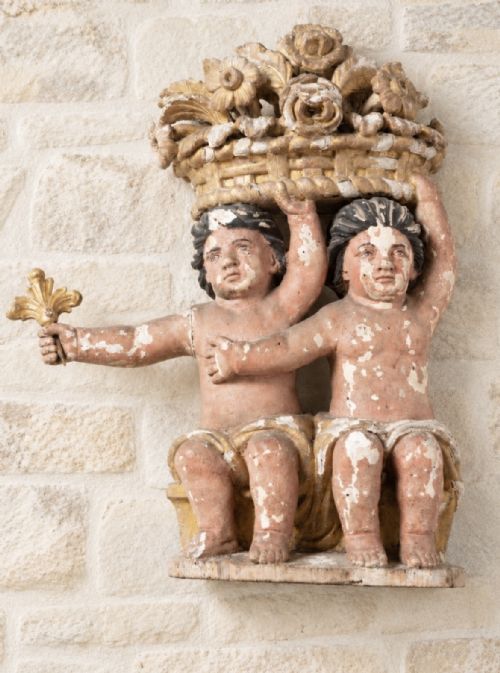


Gilded Carved Wooden Putti
These gilded carved wooden putti bring expressive movement and rich surface texture to an interior, shaped by centuries of European craftsmanship.
Gilded Carved Wooden Putti
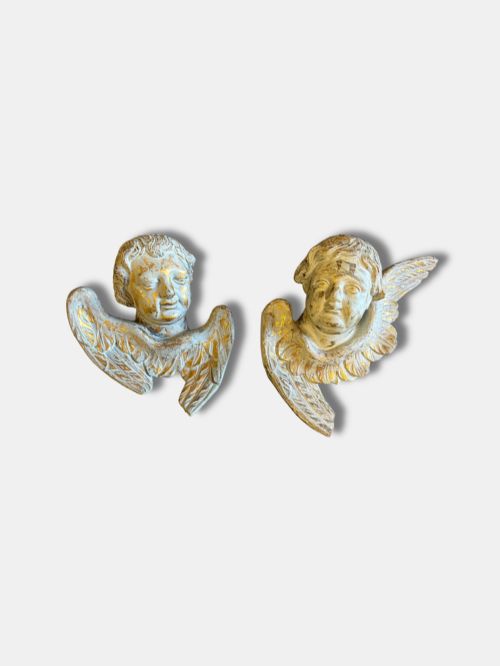
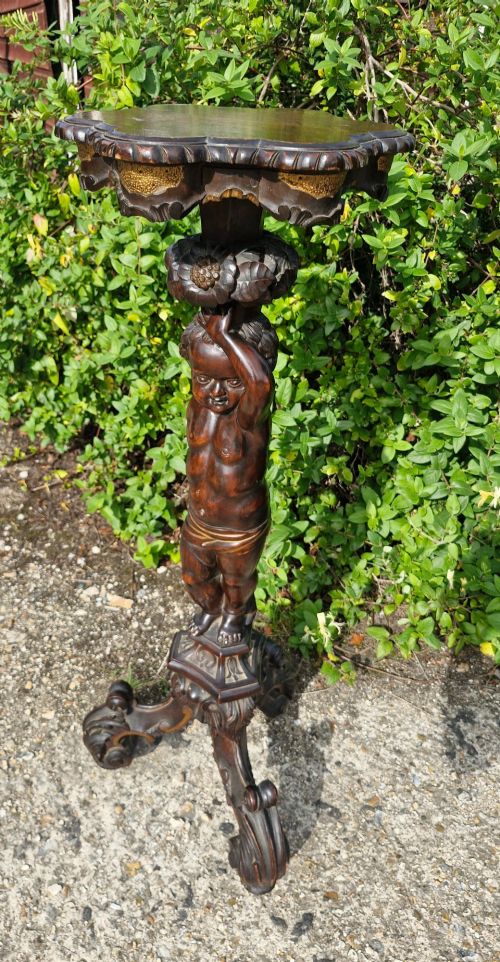
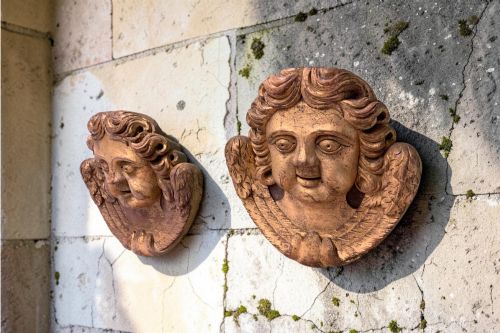
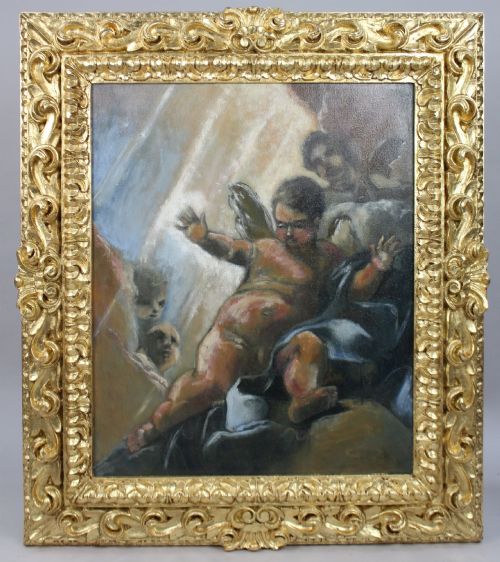
When buyers search for gilded carved wooden putti, they find sculptural figures and architectural fragments originating predominantly from the seventeenth, eighteenth, and nineteenth centuries. These pieces encompass pairs of wall sconces, church carvings of angel heads, wall brackets, and complete figures set upon clouds.
The most common examples on this page are nineteenth-century Italian and French interpretations, frequently executed in the Baroque or Renaissance Revival styles. They appear as standalone sculptures, architectural panels, and wall-mounted elements intended originally for ecclesiastical settings.
Makers and workshops across Italy and France produced these works utilising solid timbers, applying layers of gesso to build up smooth contours before finishing the surfaces with gold leaf or polychrome paint.
How they were made
Carvers shaped figures directly from hardwoods such as walnut and general timber substrates using sharp gouges and chisels to define limbs, hair, and facial expressions. This carved wooden foundation provided the structural base for subsequent decorative layers.
Artisans applied liquid gesso over the wood to create a receptive white ground, allowing for crisp detail refinement before the application of thin sheets of gold leaf or polychrome paint. The burnishing of gold leaf against the gesso ground produced the characteristic metallic sheen seen on giltwood surfaces.
Gilded Carved Wooden Putti Retail Price Guide 2026
Typical asking prices for gilded carved wooden putti among the pieces listed under this phrase on Sellingantiques today, from the lower quarter to the upper quarter. They describe what is for sale here now, not the wider market.
Current listings feature materials including gold leaf, gesso, polychrome paint, walnut, and carved wood across seventeenth to twentieth-century periods.
What varies in quality
The condition and application method of the gold leaf and gesso layers significantly alter the appearance over time. Original gilding that retains its warm, historic patina holds greater visual coherence than heavily restored or later repainted surfaces.
The Gilded Carved Wooden Putti Glossary
- Giltwood
- Wood that has been prepared with gesso and covered with thin sheets of gold leaf. This technique creates a rich metallic finish often associated with Baroque and Revival furniture and frames.
- Gesso
- A plaster mixture applied to wood surfaces as a smooth base for gilding or painting. It fills grain and allows carvers to achieve fine detail before applying gold leaf.
- Putto
- A figure of a small chubby male child, often winged, found in art from the Renaissance onwards. They frequently appear in ecclesiastical and decorative carvings.
- Polychrome
- Painted in several colours. This term describes wooden sculptures and panels retaining their original tinted pigment alongside or beneath gilding.
Gilded Carved Wooden Putti: Frequently Asked Questions
How were putti used originally?
These figures were carved primarily for European churches, chapels, and grand domestic interiors, often integrated into altarpieces, wall panels, or architectural cornices.
Over time, many of these elements were detached from their original architectural contexts to become standalone decorative objects and wall sconces.
How do I hang a wall sconce?
Wall-mounted pieces usually feature integrated hanging loops, brackets, or rear structural provisions designed for secure placement on solid walls.
Given the weight of carved timber, gesso, and gold leaf, professional installation using appropriate fixings for the specific wall type is recommended.
How do I distinguish eighteenth and nineteenth-century pieces?
Eighteenth-century examples often display deeper tool work and more integrated organic wear within the gesso and wood substrate, reflecting active liturgical use.
Nineteenth-century revival pieces frequently adopt cleaner, more uniform applications of gold leaf while mimicking earlier Baroque and Renaissance stylistic conventions.
How should I clean gilded wood?
Gilded surfaces require gentle dusting with a soft, dry brush to prevent the delicate gold leaf and underlying gesso from wearing away.
Water, chemical solvents, and abrasive cleaners must be avoided entirely, as moisture quickly damages historic water-gilding and exposed wooden grounds.