



Georgian Style Wall Sconces
Georgian style wall sconces bring refined classical proportion to an interior, offering sophisticated lighting through enduring revival designs.
Georgian Style Wall Sconces
When buyers search for georgian style wall sconces, they encounter lighting fixtures and wall brackets spanning the Victorian era through the early twentieth century. These pieces reflect historical revivals, channeling eighteenth-century aesthetic ideals into later decorative schemes.
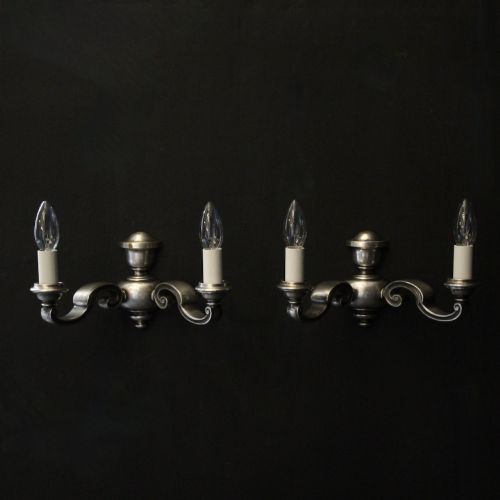
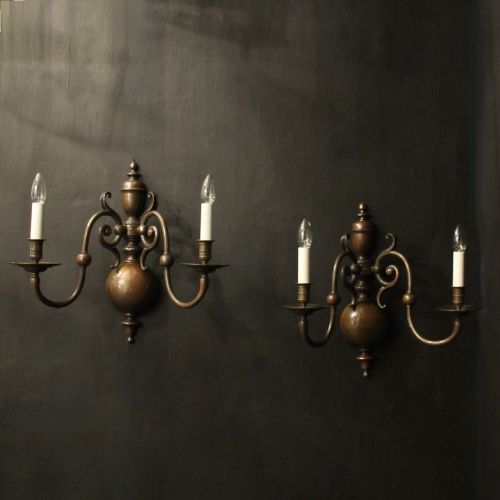
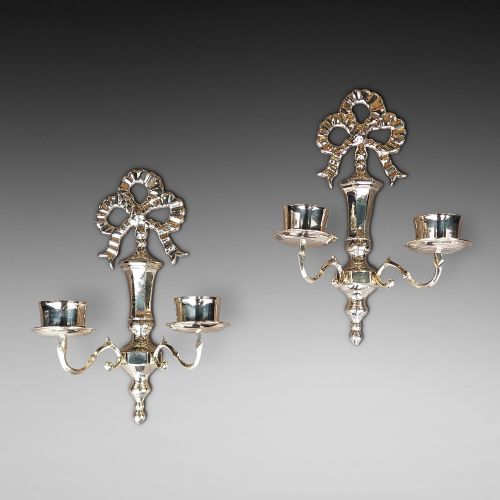
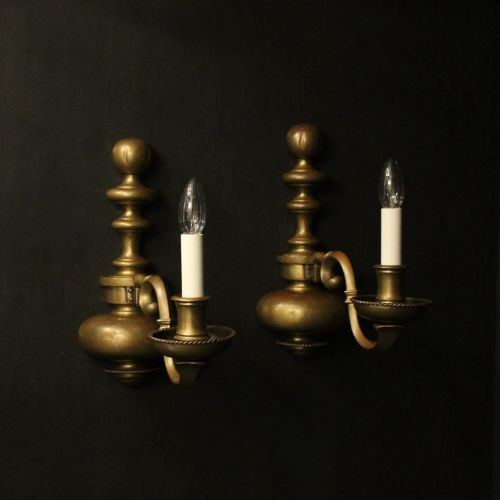
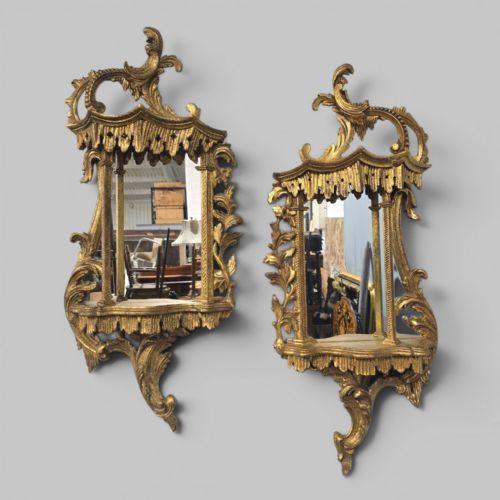
The selections available here include matched pairs and sets configured for multiple candles or electric conversions. Forms range from wall lights and hanging brackets to decorative wall mirrors integrated with sconce arms.
Originating predominantly from English workshops, these pieces draw on classical vocabulary such as Adam revival, George III, and Chinese Chippendale styles. Buyers meet varied interpretations shaped by nineteenth- and twentieth-century craftsmanship.
How they were made
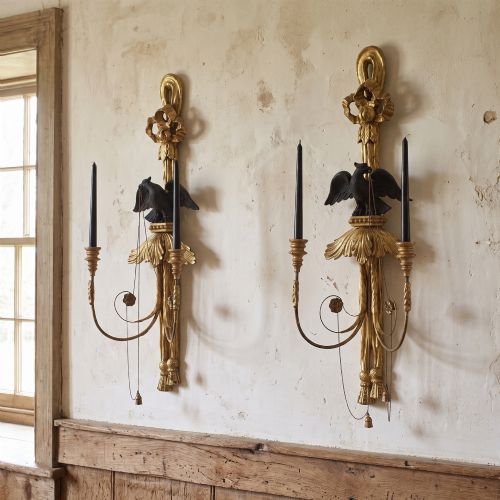
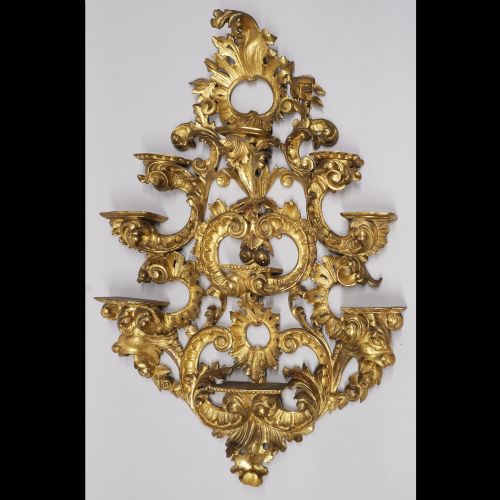
Maker's workshops utilised traditional casting, carving, and gilding techniques to achieve ornate surface detail. Carved gesso and giltwood provide textured relief on wooden frames, while cast bronze, brass, and silver plate offer durable metallic structures.
Surface treatments range from bright gilding to verdigris patinated copper on coach-house style lanterns. Metal components are assembled through soldering and mechanical fixings, supporting glass elements and decorative arms.
A verdigris patinated copper lantern brings a touch of the coach-house indoors.
What varies in quality
The standard of a piece rests on the crispness of its carved or cast ornament and the depth of its gilding. Fine examples demonstrate sharp relief in gesso work and well-balanced proportions across multi-arm sconces.
Material choice separates standard production from superior pieces, with heavy cast bronze or hand-carved giltwood commanding greater presence than simpler brass or plated alternatives. The articulation of classical motifs reveals the maker's skill.
The Georgian Style Wall Sconces Glossary
- Giltwood
- Wood that has been coated with a thin layer of gold leaf. It is frequently found on decorative frames and carved wall brackets from the nineteenth and twentieth centuries.
- Gesso
- A plaster-like mixture applied to wood surfaces and carved before gilding. This material allows for intricate low-relief ornamentation on revival frames.
- Chinese Chippendale
- An eighteenth-century English style incorporating asymmetrical rococo scrolls and exotic oriental motifs. Later revival pieces replicate these elaborate fretwork patterns.
- Wall Bracket
- A projecting shelf or support mounted to a vertical surface. In lighting contexts, it serves as the structural base for candle sconces.
Georgian Style Wall Sconces: Frequently Asked Questions
What periods do these wall sconces come from?
The pieces listed span the Victorian era, the nineteenth century, and several decades of the twentieth century. Rather than originating solely in the Georgian period, they represent later revivals of those earlier styles.
Maker's interpretations from the eighteen-eighties through the nineteen-thirties predominate, reflecting enduring tastes for classical interior decoration.
Are these sconces wired for electricity?
Many examples are adapted for electrical wiring, though older brackets originally held candles. Conversion depends on the individual piece and its previous restoration history.
Buyers should examine the physical structure of the arms and backplates to understand how wiring has been integrated into the historical metalwork or wood.
What materials are commonly used?
Construction materials include carved giltwood, gesso, cast brass, bronze, and silver plate. Copper and glass also appear in specific outdoor or lantern formats.
Different finishes create distinct visual effects, from the bright reflection of gilded surfaces to the darker patination of nineteenth-century bronze and copper.
How do Adam style sconces differ from other designs?
Adam style sconces draw specifically on neoclassical architecture, featuring restrained symmetry, urn motifs, and delicate swags. They contrast with heavier rococo revival or Dutch Baroque alternatives.
This aesthetic emphasises linear clarity and classical proportion, reflecting the archaeological discoveries popularised in the eighteenth century.