
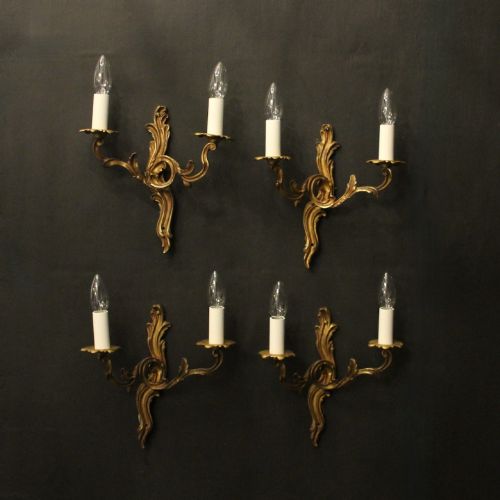
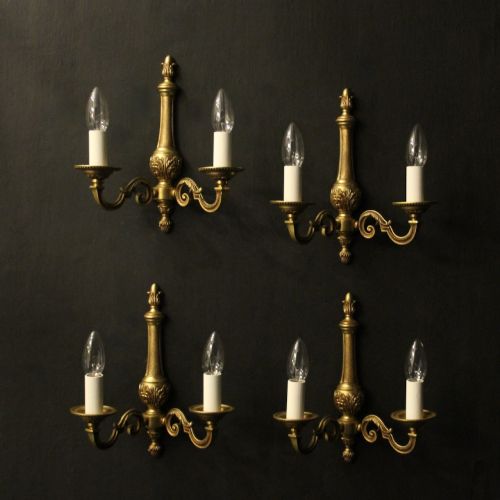
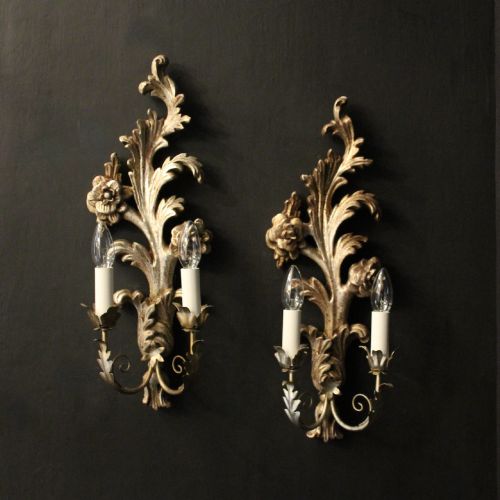
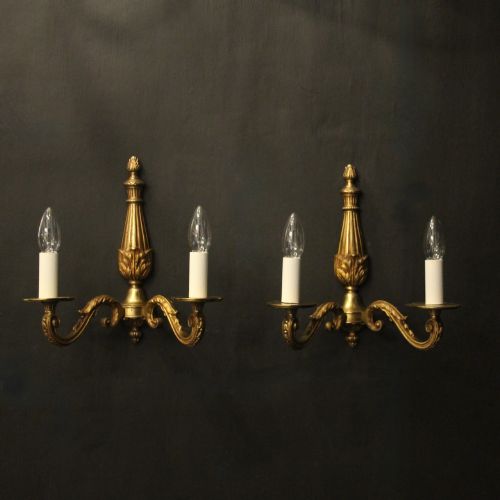
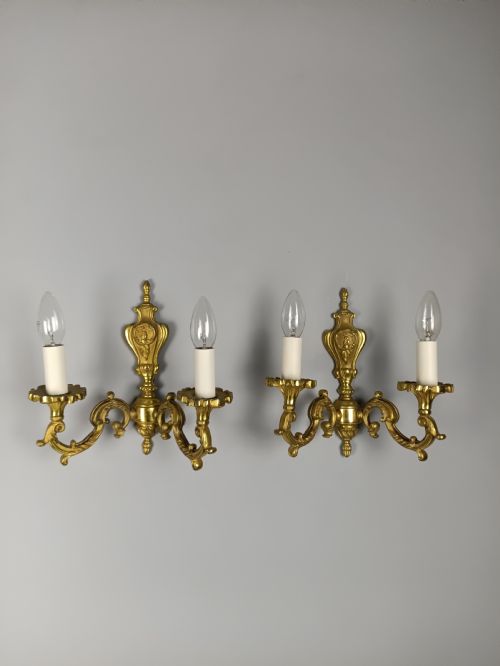
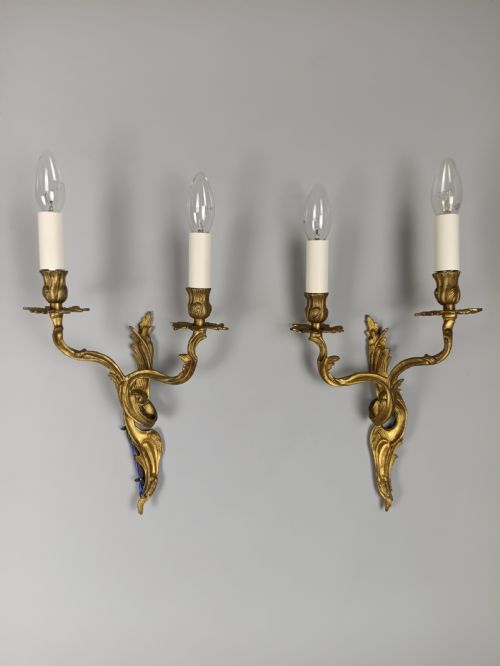
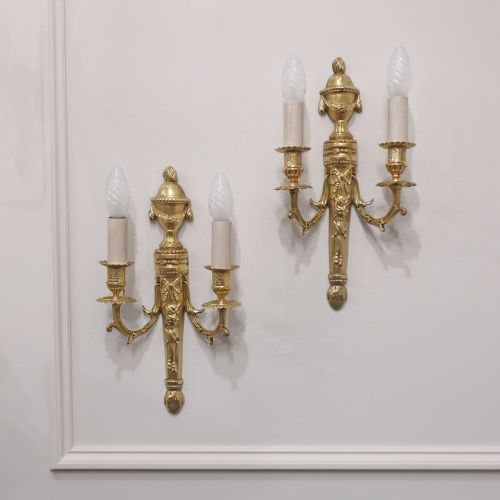
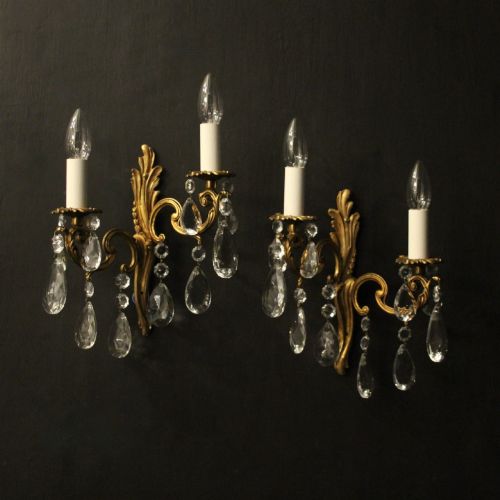
Double Arm Wall Lights
Double arm wall lights bring warmth and symmetry to a room, offering historic character and enduring utility.
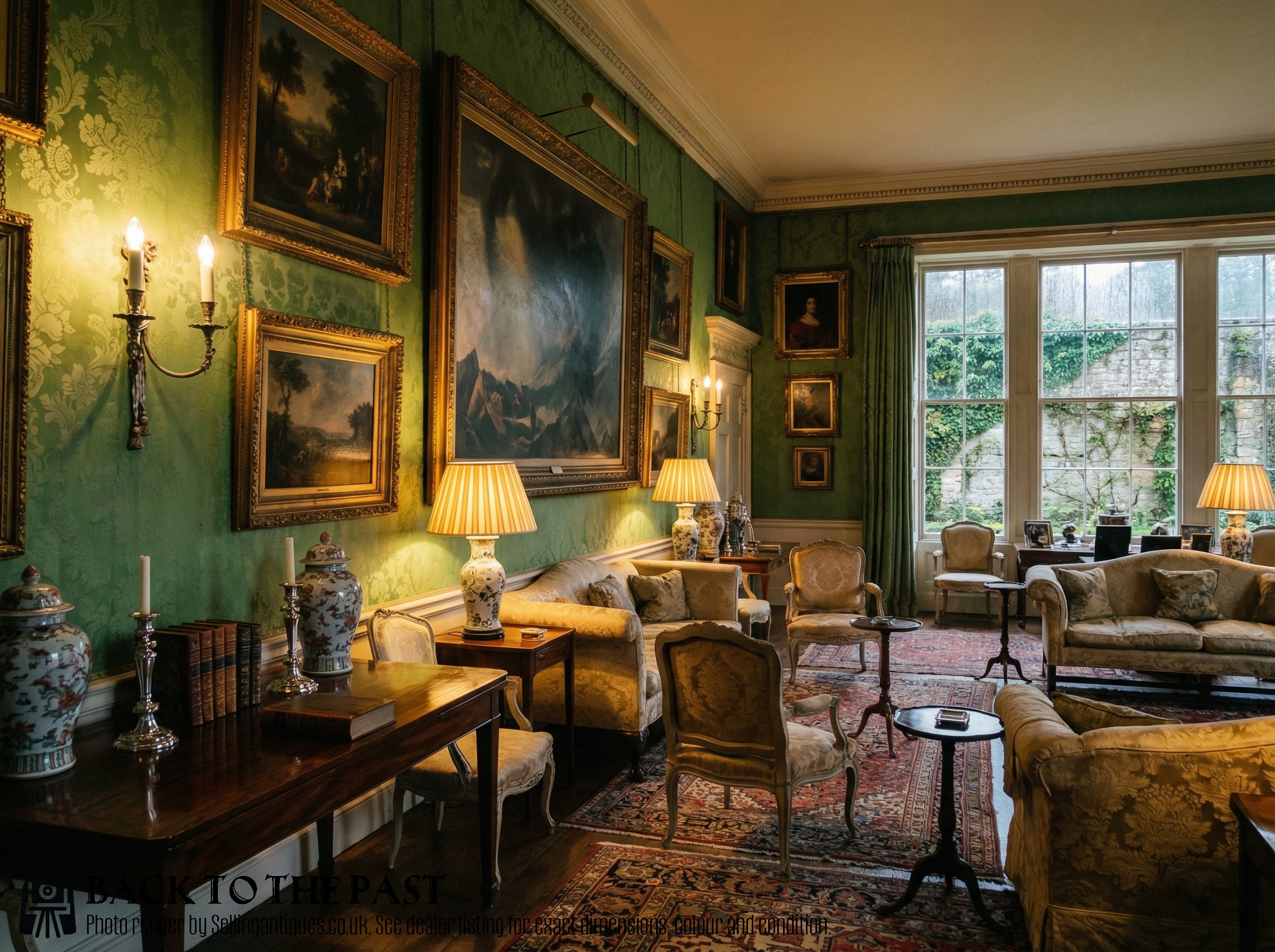
What Double Arm Wall Lights Are
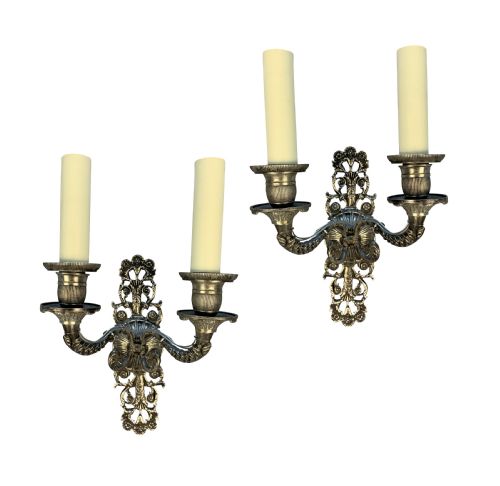
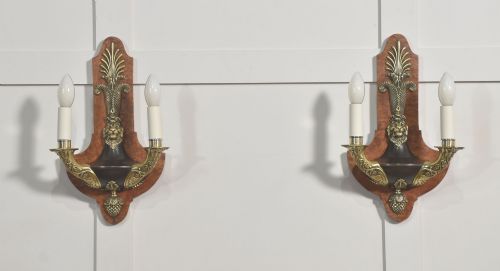
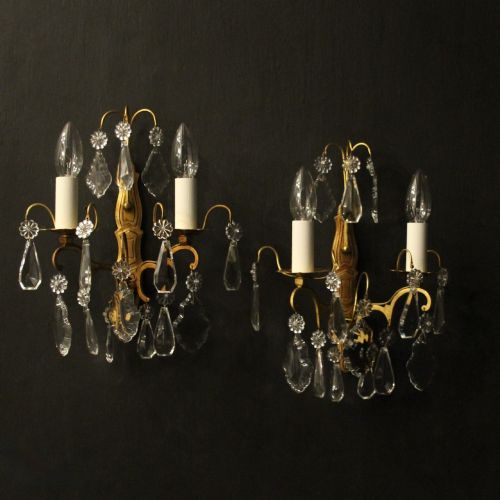
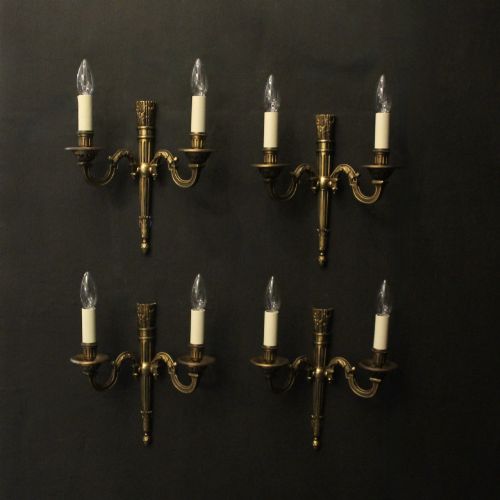
The selections available here span several distinct historic periods and revival styles. You find Victorian pieces alongside items from the Regency era, the nineteen-tens, nineteen-twenties, and nineteen-thirties. Forms range from strict Empire style and Adam revival designs to French Neoclassical and Louis XVI interpretations.
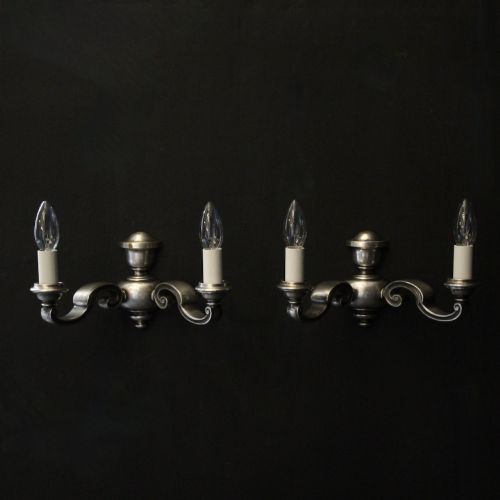
Most items appearing on this page emerge as pairs, ensuring symmetry for interior placement. Origins frequently cross between English workshops and French ateliers, occasionally touching upon Italian craftsmanship in the wider record. Each region brings distinct decorative priorities to the twin-branch format.

How They Were Made
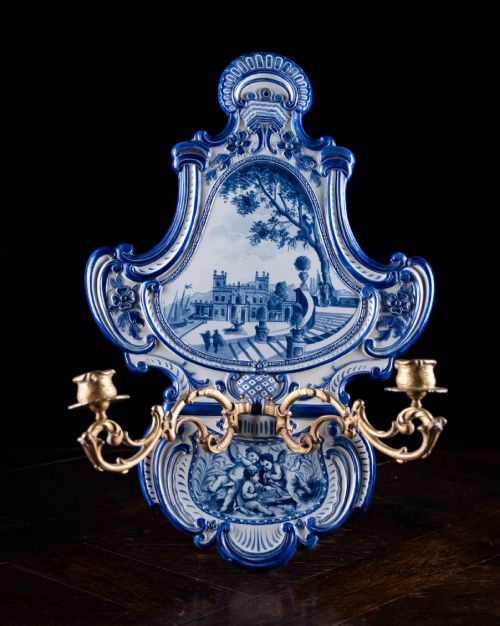
Construction relies heavily on durable metals combined through casting and fabrication techniques. Brass and cast brass form the structural core of many surviving fixtures, complemented by patinated bronze, silver plate, and ormolu. Wood also appears in select examples, notably burr walnut paired with brass mounts.
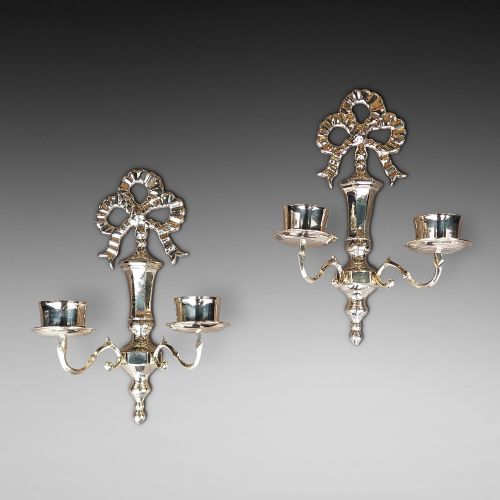
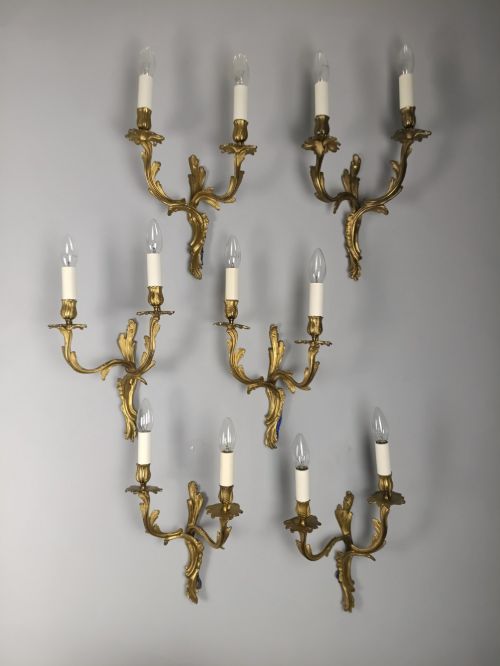
Surface treatments define the visual identity of these sconces through gilding, silver plating, and patination. French gilded antique pieces and silver gilded items demonstrate meticulous application of precious metal finishes over base metals. Cast brass components are often chased and polished to highlight neoclassical motifs.
Retail Price Guide 2026
Typical UK retail prices for double arm wall lights, calculated from the Sellingantiques database of over a million retail prices indexed since 2003. This retail price guide relies exclusively on Sellingantiques data; no external sources or auction records are used, so the figures do not describe the wider market.
Materials across this selection include brass, metal, burr walnut, cast brass, silver plate, patinated bronze, ormolu, and gilded brass.
What Varies in Quality
Quality in these wall lights rests upon the crispness of the metal casting and the depth of the surface finish. Superior pieces exhibit sharp detail in chased foliage, ribbons, and classical urns, whereas simpler examples display softer, less articulated contours. The choice of base material, such as heavy patinated bronze versus lighter sheet metal, further separates standard production from high-status work.
The integration of secondary materials like burr walnut or genuine ormolu elevates a piece significantly. Superior examples maintain balanced proportions across the twin branches and backplates, reflecting the designer's adherence to classical architectural principles.
The Double Arm Wall Lights Glossary
- Ormolu
- A technique of applying finely ground high-carat gold to a bronze object using a mercury amalgamation process. This imparts a rich, durable golden finish characteristic of luxury furnishings.
- Sconce
- A wall-mounted lighting fixture designed to hold candles or electric bulbs. The term traditionally implies a bracket fixed to a vertical surface.
- Patinated Bronze
- Bronze that has developed a controlled surface sheen or colour through age, chemical treatment, or handling. It provides a dark, subtle contrast to gilded highlights.
- Twin-Branch
- A lighting configuration featuring two distinct arms extending from a central backplate. This layout balances the visual weight of the fixture on the wall.
Frequently Asked Questions
How do I hang double arm wall lights?
Mounting requires securing the backplate firmly to wall studs or using appropriate masonry anchors given the weight of cast metal fixtures. Electrical wiring should be assessed by a professional to ensure safe integration with modern household circuits.
Position the fixtures at eye level or flanking a mirror to achieve balanced illumination and proper architectural proportion within the room.
Are these lights wired for electricity?
Many antique wall lights have been adapted for electricity during the twentieth century, though some retain purely candle-based configurations. It is prudent to inspect the internal wiring of any acquired piece before installation.
Rewiring can be easily managed by a qualified electrician to match modern safety standards while preserving the historic exterior components.
How do I clean brass and bronze sconces?
Dusting with a soft, dry cloth prevents the accumulation of grime without disturbing historic patination. Avoid harsh chemical cleaners that strip away original gilding or aged bronze surfaces.
For silver-plated or gilded sections, use non-abrasive specialised metal care products sparingly to maintain the intended lustre of the piece.
What rooms suit wall sconces best?
Wall sconces excel in hallways, dining rooms, and flanking fireplaces where ambient, layered lighting is desired. Their paired symmetry creates natural focal points on bare walls.
They function effectively as secondary light sources, softening the overall atmosphere of a space without relying solely on overhead chandeliers.