
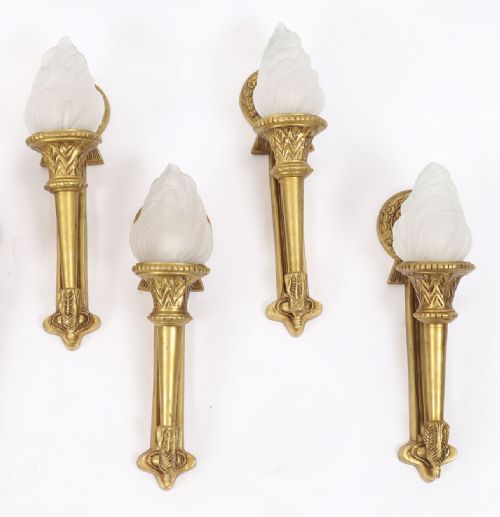


French Empire Sconces
French empire sconces bring classical formality and disciplined symmetry to a room through heavy gilt bronze, dark patinated metal and architectural wall mounts.

French Empire Sconces
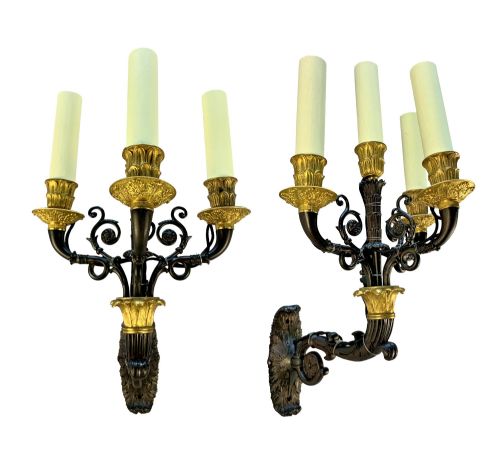
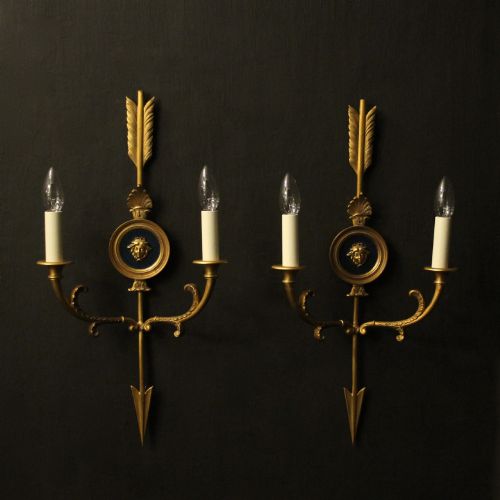
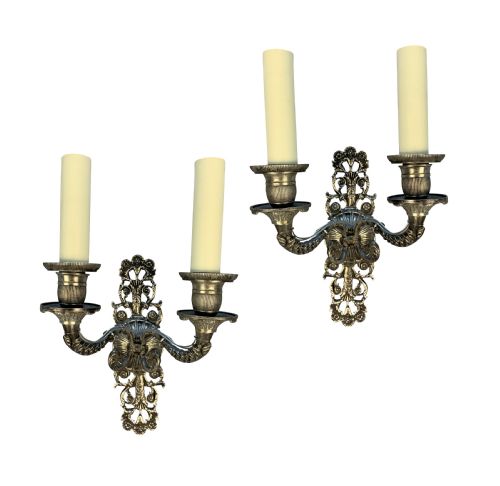
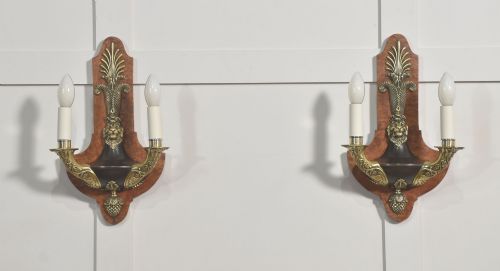
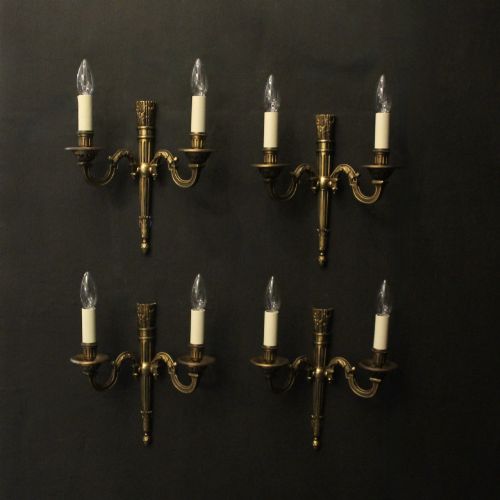
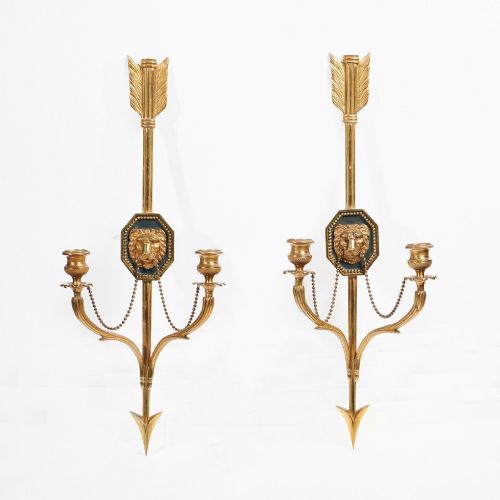
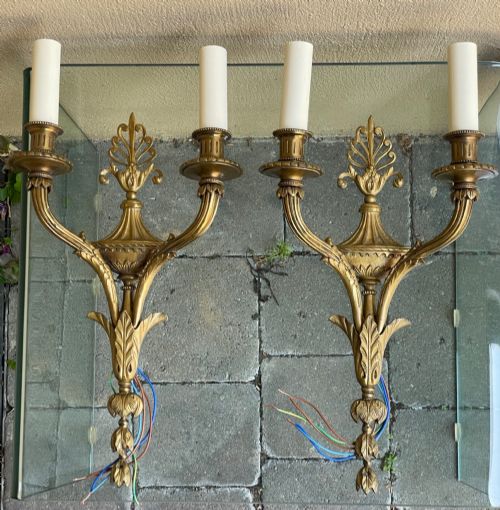
When you search for french empire sconces, you encounter decorative wall lighting and candelabra that draw on classical antiquity, military motifs and monumental forms. The pieces you meet most often on this page date from the nineteenth century and the early twentieth century, taking the form of paired wall lights and girandoles designed to hold multiple candles or electric bulbs.
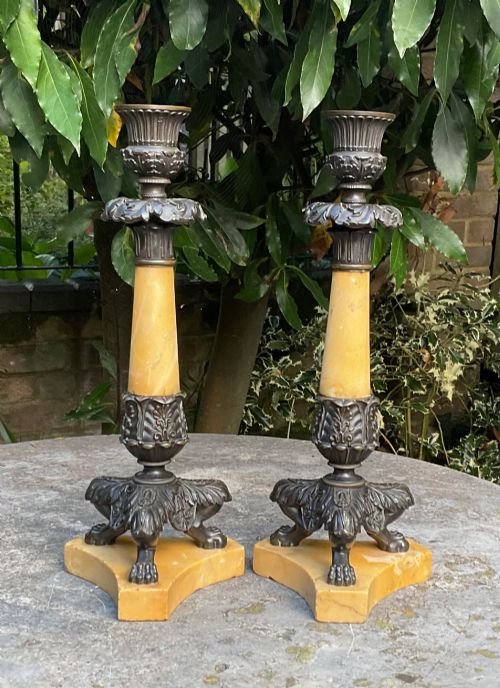
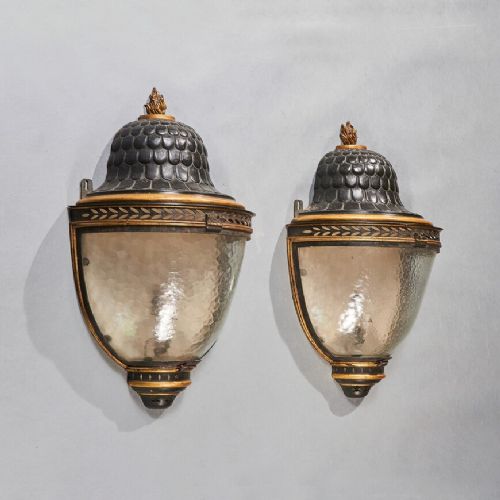
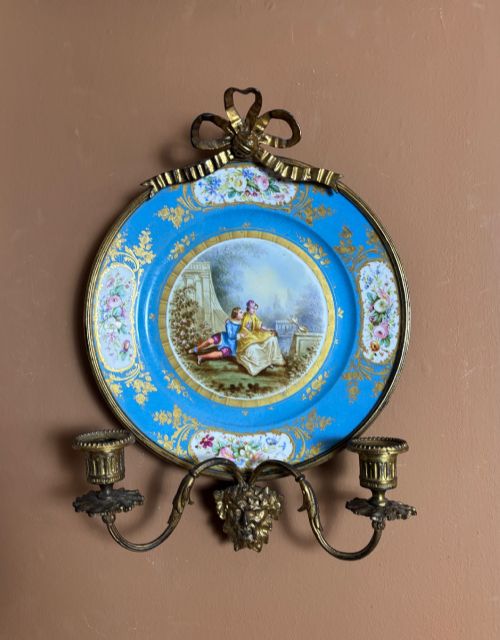
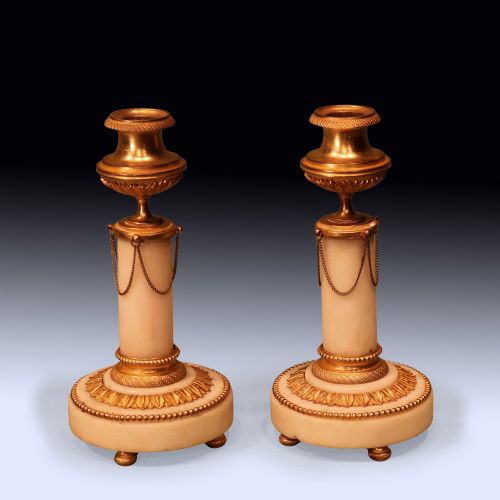
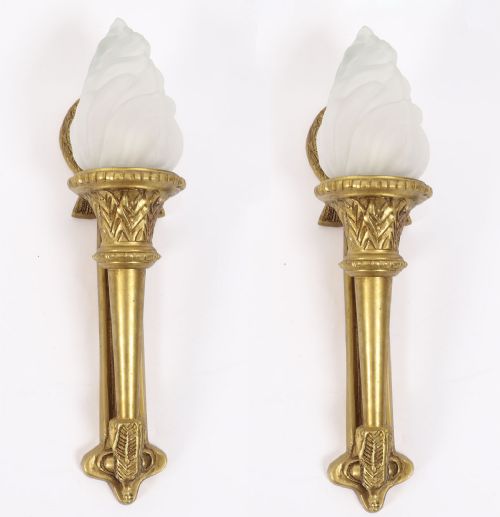
The inventory on this page ranges from strict neoclassical brass and ormolu brackets to later interpretations involving tole peinte, crystal drops and marble components. Alongside standard twin-branch wall lights, you find associated forms such as candlesticks converted for wall mounting, carriage lights and large torch-style sconces.
Makers and manufacturers channel these classical themes through diverse regional interpretations, producing both grand architectural fixtures and domestic wall sconces. The unifying characteristic across the selection remains the adherence to empire style vocabulary, translated into functional lighting for domestic interiors.
How they were made
The construction of french empire sconces relies primarily on bronze, brass and copper alloys, shaped through casting and chasing. Workshops utilised fire gilding to deposit gold onto bronze, creating the characteristic ormolu surface that reflects candle or electric light.
Secondary materials provide contrast and structural support, including white marble, onyx, burr walnut and painted toleware. Cast metal arms and backplates are assembled with threaded screws and pins, supporting glass components such as crystal drops, bag shades and flame-shaped torches.
French Empire Sconces Retail Price Guide 2026
Typical asking prices for french empire sconces among the pieces listed under this phrase on Sellingantiques today, from the lower quarter to the upper quarter. They describe what is for sale here now, not the wider market.
Materials documented across the inventory include ormolu, gilt bronze, toleware, onyx, marble, crystal and patinated metal.
What varies in quality
Structural integrity also separates standard production from finer examples, evident in the weight of the metal backplates and the secure seating of marble or glass elements. Well-made sconces hang flush to the wall and support multi-branch arms without sagging or relying on excessive solder.
The French Empire Sconces Glossary
- Ormolu
- Gilt bronze produced by applying a mercury and gold amalgam to a bronze object and heating it until the mercury vaporised. This historic technique leaves a durable, matt golden finish characteristic of fine antique metalwork.
- Toleware
- Lacquered or enamelled sheet metal, often painted in green or dark tones to imitate bronze or porcelain. It appears frequently on French wall lights and bouillotte fixtures.
- Girandole
- A branched wall light or candelabrum featuring reflective elements such as mirrors, crystal drops or polished backplates to multiply the illumination. The form dates back centuries and remains popular for formal interiors.
- Caryatid
- A sculpted female figure serving as an architectural support in place of a column or pilaster. In lighting, these figures often form the central shaft of a sconce or candlestick.
- Applique
- A French term for a wall-mounted light fixture or sconce designed to attach directly to wood panelling or plastered walls. The word is frequently used interchangeably with wall light in continental trade.
French Empire Sconces: Frequently Asked Questions
How do I mount heavy wall sconces?
Heavy bronze and marble wall lights require direct anchoring into wall studs or solid masonry using appropriate heavy-duty fixings. Because many antique fixtures lack standardised modern mounting brackets, a professional installer should evaluate the backplate to ensure it supports the weight safely.
Electrical wiring must also be assessed during installation, as older fixtures often require rewiring to meet current safety standards while preserving the original metal arms and candle tubes.
Can these antique wall lights take electricity?
Most antique wall lights found on the market have already been converted to electricity at some point in their history. The internal channels designed for candle holders or early gas fittings generally accommodate modern slim wiring without altering the exterior appearance.
When evaluating a pair, check whether the current bulb holders and internal wiring match, as many antique sets are assembled from mismatched components over the decades.
What is the difference between empire and regency styles?
Empire style emerged from Napoleonic France, drawing heavy inspiration from ancient Roman, Greek and Egyptian military victories. It favours monumental symmetry, heavy ormolu mounts and specific motifs like wreaths, sphinxes and laurel leaves.
Regency style represents the British equivalent from a similar era, sharing classical roots but often incorporating lighter woods, patinated bronze alongside gilt, and distinct naval or Asian motifs reflecting British trade and maritime power.
How do I clean antique ormolu safely?
Cleaning historic ormolu requires minimal intervention, restricted to gentle dusting with a soft, dry brush or microfibre cloth. Avoid abrasive metal polishes, chemical dips or water, as these can strip the fragile gold layer and expose the underlying bronze.
If the metal requires deeper conservation to remove accumulated grime, consult a professional conservator specialising in historic gilt bronze rather than attempting DIY cleaning methods.