



Traditional Afghan Wool Rug
When choosing a traditional afghan wool rug, you select a handwoven piece carrying deep tribal heritage from nineteenth and early twentieth century village workshops.
Traditional Afghan Wool Rug
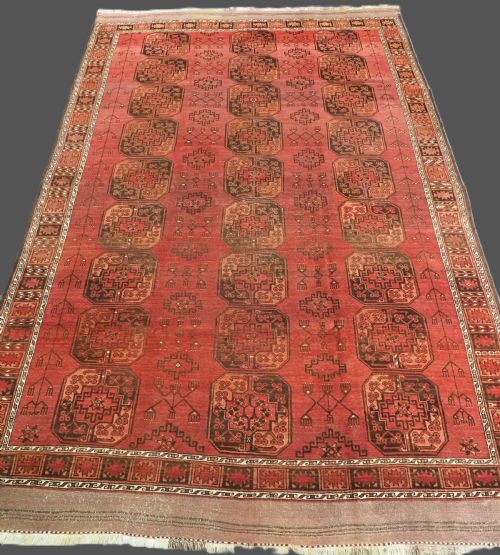
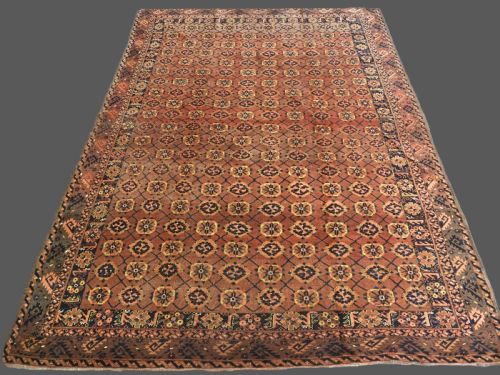
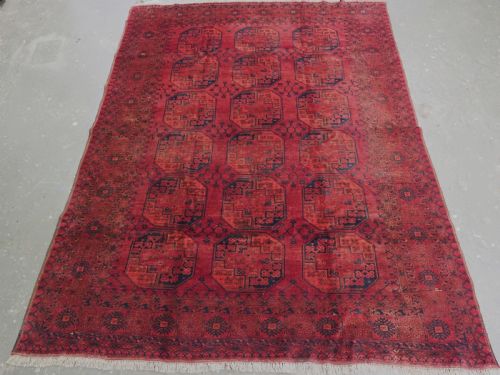
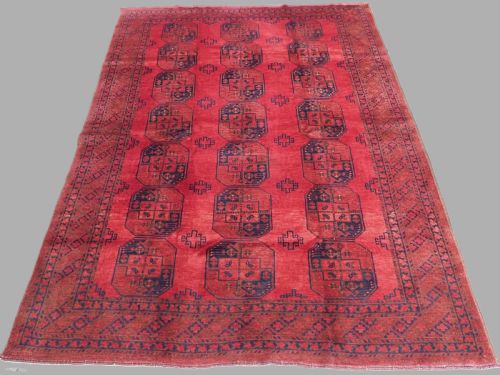
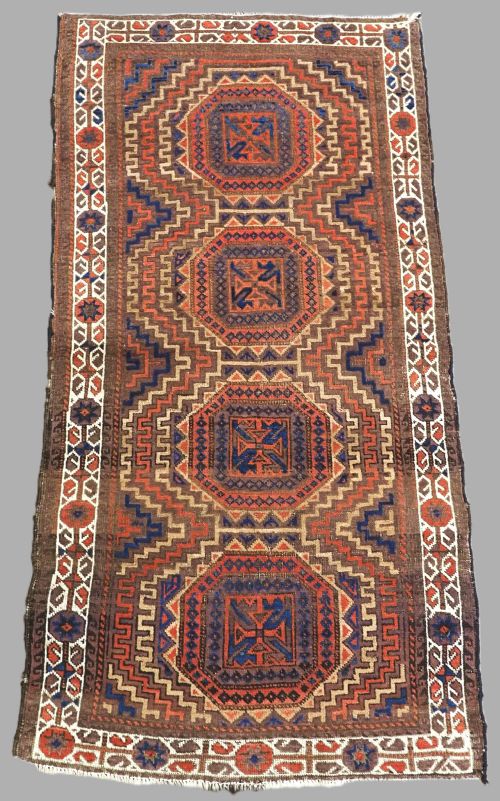
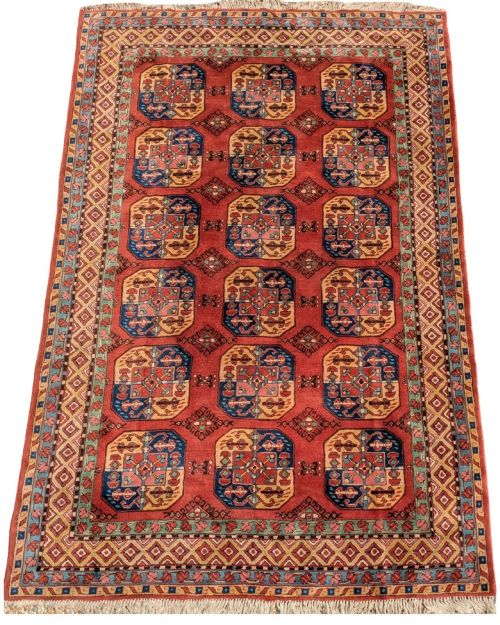
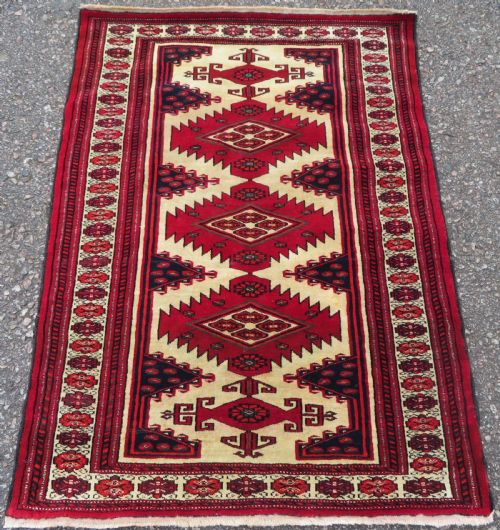
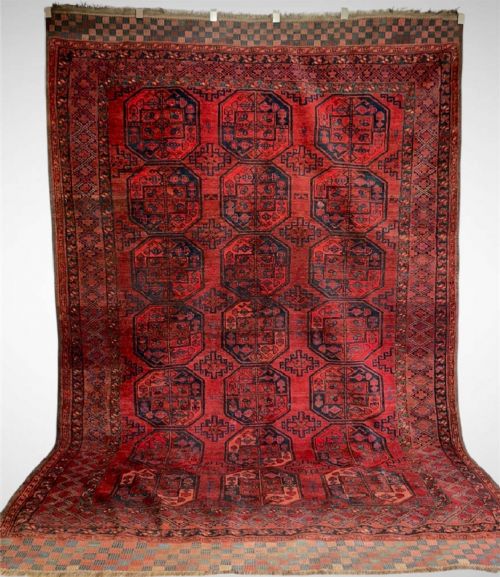
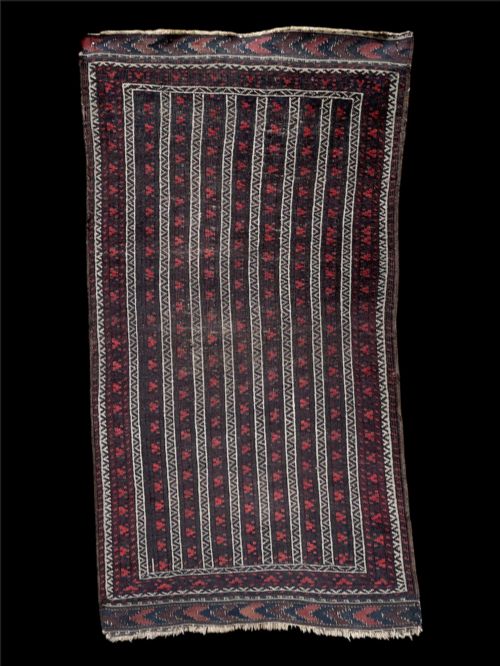
A traditional afghan wool rug encompasses room size carpets, long runners, and smaller prayer mats originating from regions across Afghanistan. Buyers encounter village weavings and tribal pieces dating from the late nineteenth century through to the 1930s, displaying characteristic patterns shaped by Turkmen, Baluch, and Ersari traditions.
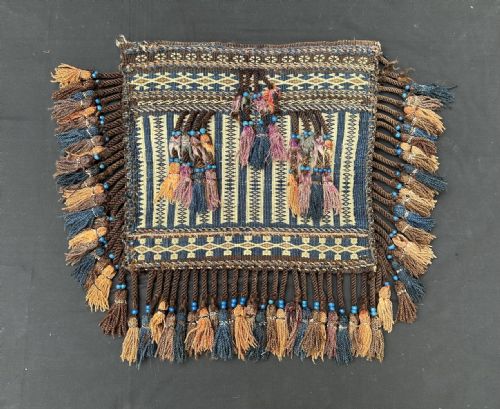
The format varies widely between large country house carpets, compact village rugs, and utilitarian items such as storage bags and horse trappings. Common layouts incorporate traditional gul motifs, double mihrab prayer arches, and distinctive geometric borders executed in warm red and old gold tones.
Assessing quality
Quality depends upon the fineness of the knotting and the integrity of the natural dye palette, which develops a soft gloss as the wool ages. Consistency in the hand-spun wool foundation and the precision of geometric gul motifs separate standard village pieces from finer tribal carpets.
Preservation of original side cordings and complete borders elevates a rug's standing. The depth of the pile and the harmony of the traditional red or gold background hues dictate the visual impact of the weaving.
Several nomadic weavings include glass beads and horsehair alongside standard wool to adorn traditional wedding camel headdresses.
The Traditional Afghan Wool Rug Glossary
- Gul
- A repeating octagonal medallion motif frequently found in Turkmen and Afghan tribal carpet designs. These primary ornaments often signify specific tribal lineages.
- Mihrab
- A niche design element modelled on the prayer niches of mosques, typically featured in prayer rugs. Double mihrab formats present matching arches at both ends.
- Kilm
- A flatweave textile produced without a pile, utilised for lightweight carpets and traditional coverings. They rely on tightly packed warp and weft threads.
- Baluch
- A designation for rugs and trappings woven by nomadic and village groups originating from the borderlands of southwestern Afghanistan. Their pieces often incorporate dark wools and distinctive motifs like the Kalam Donneh.
- Ersari
- A major Turkmen tribal group known for large main carpets featuring deep red colourways and turreted gul patterns. Their weavings form a substantial portion of nineteenth century Afghan village output.
Traditional Afghan Wool Rug: Frequently Asked Questions
What are prayer rugs used for?
Prayer rugs feature a distinctive mihrab arch design that historically indicated the direction of prayer for the owner. These smaller format rugs were portable and served personal devotional functions within village and nomadic settings.
Today, collectors appreciate them as compact decorative floor pieces or wall hangings that display concentrated local symbolism and finer knotting work.
How should I care for a wool rug?
Maintain wool carpets through regular gentle vacuuming without a rotating brush head to protect the hand-spun pile and natural dye foundation. Rotating the rug periodically ensures even wear across high traffic areas in your home.
Professional cleaning tailored for antique textiles preserves the integrity of cotton and goat hair foundations while preventing fibre degradation over time.
What distinguishes Ersari from Baluch rugs?
Ersari carpets typically present large room sizes featuring spacious red fields and prominent octagonal gul medallions. They reflect northern Afghan tribal traditions focused on substantial main carpets.
Baluch rugs tend to be smaller, darker, and feature intricate geometric filler patterns including pencil box or lotus leaf motifs. They originate primarily from the western and southern regions of the country.