




Antique Afghan Floor Carpet
These heavy-duty antique afghan floor carpet examples bring tribal designs, warm red grounds and rich wool into a room.
Antique Afghan Floor Carpet
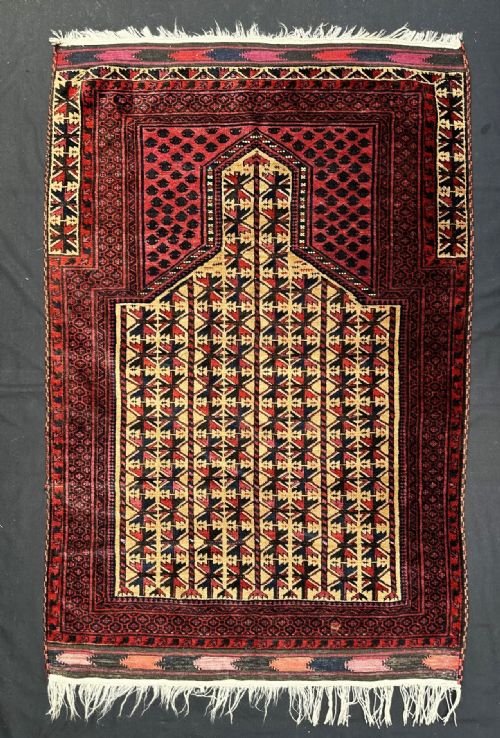
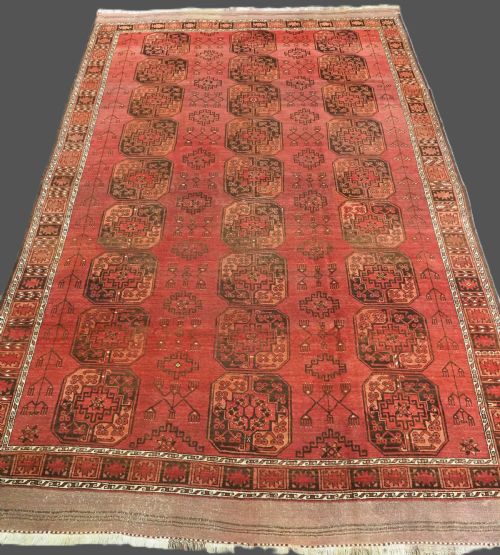
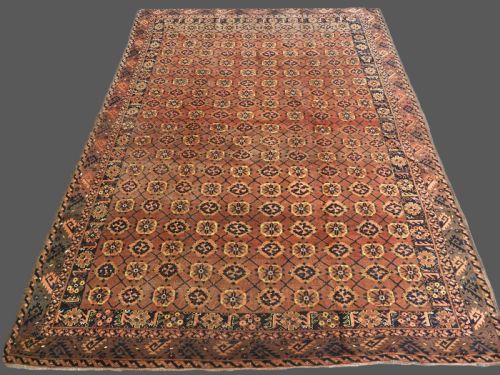
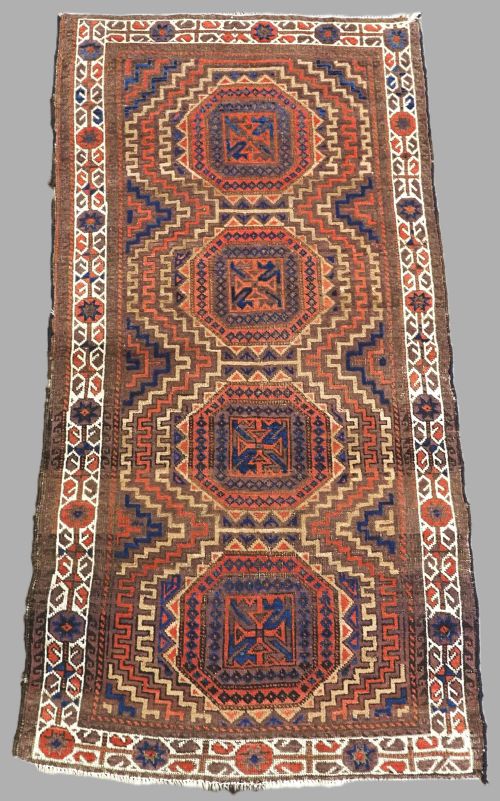
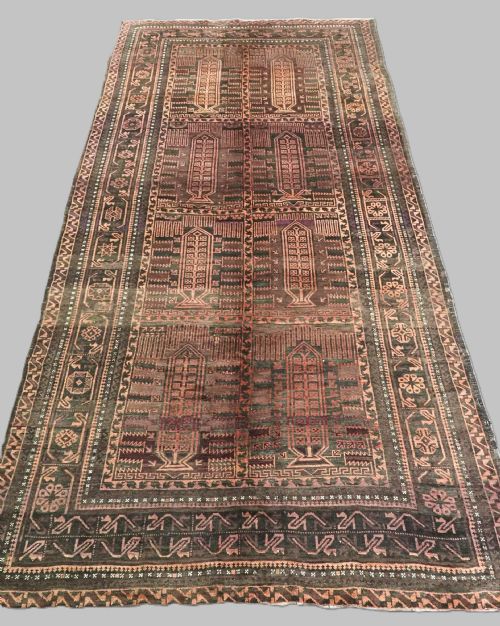
An antique afghan floor carpet covers substantial floor space with tribal and nomadic motifs rooted in Central Asian weaving traditions. The selections on this page span from the late nineteenth century into the early decades of the twentieth century, including room-sized main carpets, village rugs and hallway runners.
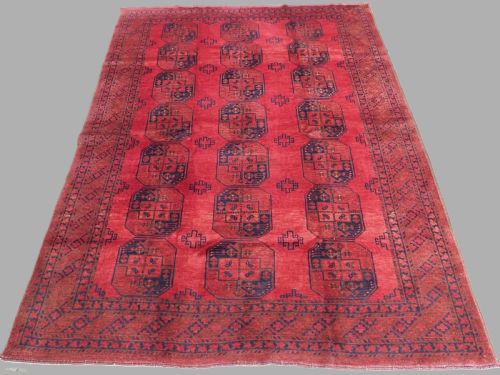
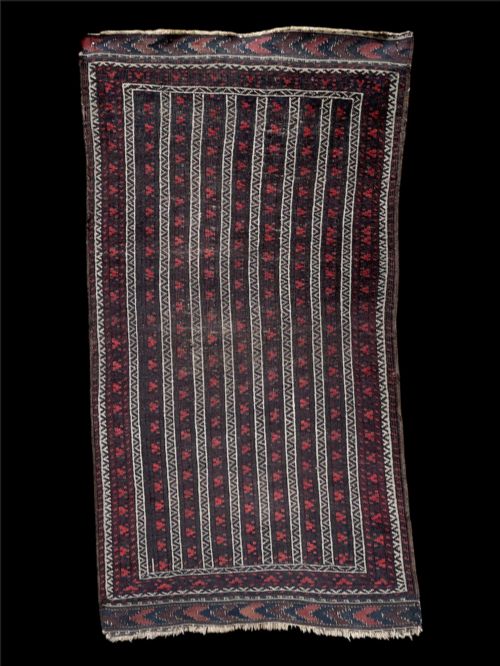
Buyers encounter distinct regional groupings within these textiles, notably Ersari and Kizil Ayak Turkmen pieces alongside Baluch, Timuri and Arab Baluch rugs. Many examples display repeating guls, traditional geometric arrangements and prayer rug formats originating from western and northern Afghanistan.
Village and tribal weavers produced these floor coverings for domestic utility, utilising sturdy structures suited for heavy wear. The surviving pieces present deep red colour palettes, gold tones and classic motifs passed down through generations of makers.
How They Were Made
Weavers constructed these carpets using hand-spun wool and natural dyes, yielding soft, glossy surfaces with deep red and mellow colour tones. Auxiliary foundations frequently incorporate cotton or goat hair alongside wool warps and wefts to build durable structures.
Nomadic and village workshops employed traditional upright looms, knotting dense piles designed to withstand hard daily use. Vegetable and natural dye sources produced the rich ground colours and dark accents that remain stable across decades.
Antique Afghan Floor Carpet Retail Price Guide 2026
Typical asking prices for afghan floor carpet among the pieces listed under this phrase on Sellingantiques today, from the lower quarter to the upper quarter. They describe what is for sale here now, not the wider market.
Some weavers hid tiny geometric amulets within the border guls to ward off mischief.
What Varies in Quality
Quality rests in the handling of the wool, the depth of the natural dyes and the crispness of the tribal guls. Softer, glossier wool fleeces and richer reds elevate certain village carpets above standard production.
Structural integrity also separates examples, as heavier duty weaves and well-preserved pile condition distinguish top-tier main carpets from simpler runner formats. The precision of the geometric layout and the saturation of the colour palette dictate the standing of each piece.
The Antique Afghan Floor Carpet Glossary
- Gul
- A primary medallion or repeating octagonal motif used extensively in Turkmen and Afghan tribal rugs. These motifs often identify the specific tribe or village that wove the carpet.
- Main carpet
- A large-format floor covering traditionally woven for domestic tribal use rather than export. These pieces measure substantially larger than standard scatter rugs or prayer rugs.
- Prayer rug
- A small format rug featuring a mihrab or arch design indicating the direction of prayer. Baluch weavers frequently produced distinctive variants of this form.
- Mihrab
- The arched niche design depicted on prayer rugs. It directs the viewer through its distinct geometric outline.
- Runner
- A long, narrow carpet format designed for hallways and corridors. These pieces maintain the same tribal wool and dye characteristics as larger room-sized examples.
Antique Afghan Floor Carpet: Frequently Asked Questions
How do I clean an antique carpet?
Professional dusting and gentle washing by specialists familiar with natural dyes and hand-spun wool preserve the pile. Avoid harsh chemical treatments and excessive water immersion.
Regular light vacuuming without a beating brush removes surface grit before it settles into the foundation. Keep the textile out of direct, continuous sunlight to protect the red grounds.
Where were these carpets woven?
Weavers produced these rugs in northern and western Afghanistan within village and nomadic tribal settings. Communities such as the Ersari Turkmen, Baluch and Timuri contributed distinct regional designs.
Local workshops utilised materials gathered from their immediate surroundings, including sheep wool and natural dye plants. This regional isolation fostered distinct visual vocabularies across different valleys.
Are these rugs durable enough for hallways?
Many examples are heavy duty and hard wearing, constructed specifically for continuous foot traffic. Village carpets and runners utilise dense wool piles over sturdy foundations.
Placing an appropriate underlay beneath the carpet prevents slipping and reduces friction against hard flooring. This simple addition extends the working life of older wool foundations.
How do I identify a Turkmen design?
Turkmen designs typically feature repeating octagonal guls arranged in strict geometric grids across red ground fields. Ersari and Kizil Ayak pieces display variations of these classic tribal motifs.
Secondary borders often incorporate hooked guls, minor gulls and stepped polygons. The colour palette relies heavily on deep madder reds contrasted with dark brown and ivory details.