

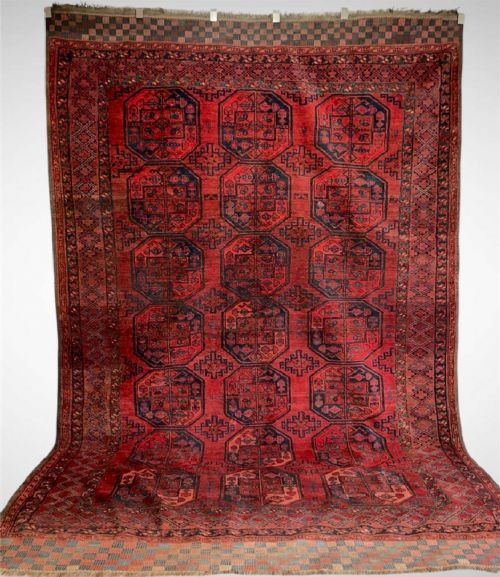


Large Afghan Wool Rug
A large afghan wool rug brings deep red tones and tribal character into a room.
Large Afghan Wool Rug
A large afghan wool rug delivers substantial room coverage through traditional tribal formats rooted in Central Asian weaving practices. Buyers exploring this selection encounter main carpets and village room sizes originating from periods spanning the late nineteenth century to the early decades of the twentieth century.
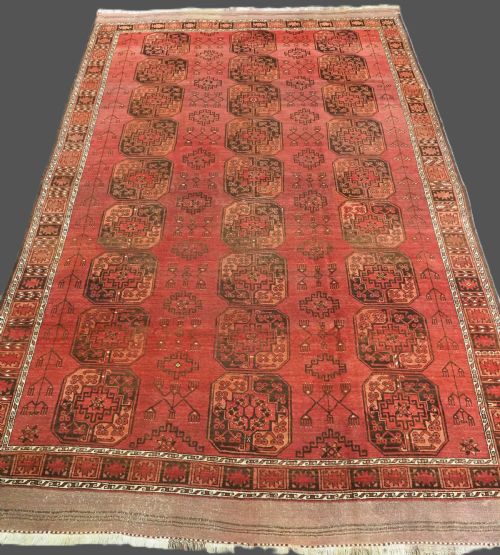
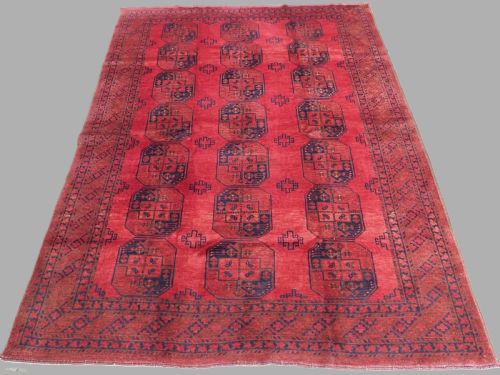
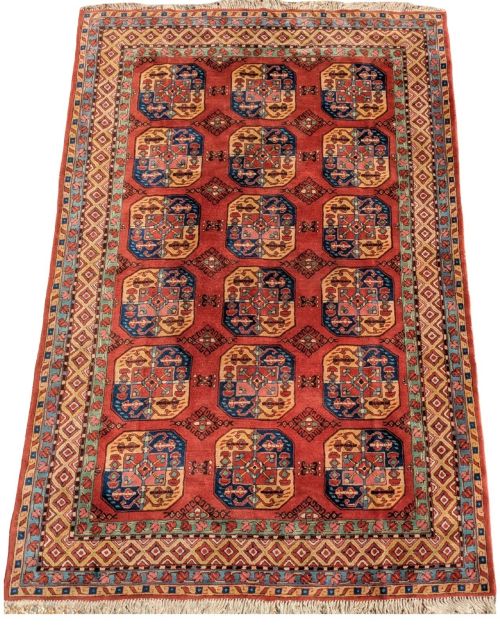
The most common piece met on this page is the Ersari Turkmen main carpet, identifiable by repeating guls and warm red colour fields. These large floor coverings serve domestic interiors that require generous proportions and robust woolen construction.
Materials and construction
Makers utilised hand-spun wool combined with natural dyes to build dense, hard-wearing pile carpets designed for heavy daily use. Cotton foundation threads frequently support the structure, giving stability to room-sized formats.
Weavers executed traditional tribal patterns including large turreted guls and geometric motifs by hand. The reliance on natural dyestuffs yields the characteristic soft reds observed across nineteenth and early twentieth century examples.
Large Afghan Wool Rug Retail Price Guide 2026
Typical asking prices for large afghan wool rug among the pieces listed under this phrase on Sellingantiques today, from the lower quarter to the upper quarter. They describe what is for sale here now, not the wider market.
Several carpets are specifically catalogued as heavy duty and hard wearing, proving that nineteenth-century nomads built floors to outlast empires.
Distinguishing quality factors
Quality separates ordinary village production from finer tribal main carpets through the density of the weave and the clarity of the wool pile. Superior examples maintain balance in the natural colour palette and structural integrity across large dimensions.
The precision of the gul design and the handling of the wool dictate the visual depth of the carpet. Better pieces retain pile resilience and clear geometric definition despite decades of use.
The Large Afghan Wool Rug Glossary
- Gul
- A repeating primary medallion motif found across Turkmen and Afghan carpets. These octagonal or polygonal shapes form the backbone of traditional tribal layouts.
- Kelleh
- A long carpet format, typically narrower than a full room-size main carpet but longer than a standard area rug. This shape suits corridors or extended spaces.
- Kilim
- A flat-weave carpet produced without a pile by tightly interweaving warp and weft threads. These lightweight textiles offer graphic geometric designs.
- Main carpet
- A large-format floor covering traditionally created for domestic living spaces by tribal groups. These pieces require substantial time and material to complete.
- Natural dyes
- Colourants derived from plant and mineral sources rather than synthetic chemicals. These agents produce the variable red tones characteristic of older wool rugs.
Large Afghan Wool Rug: Frequently Asked Questions
How do I care for a large wool rug?
Vacuum gently without a rotating brush roll to protect the hand-spun wool pile from damage. Lift the piece periodically to allow proper ventilation beneath the cotton and wool foundation.
Keep the rug away from prolonged direct sunlight to protect the natural dye colours from fading unevenly. Professional cleaning suited for antique tribal textiles ensures the wool remains supple.
What periods do these carpets come from?
The available pieces originate primarily from the late nineteenth century through to the early twentieth century. Common production dates span the eighteen-eighties to the nineteen-thirties.
Earlier nineteenth-century examples often display deeper natural red dyes and distinct tribal guls. Later pieces from the nineteen-twenties maintain traditional motifs while reflecting twentieth-century village weaving output.
Where were these rugs made?
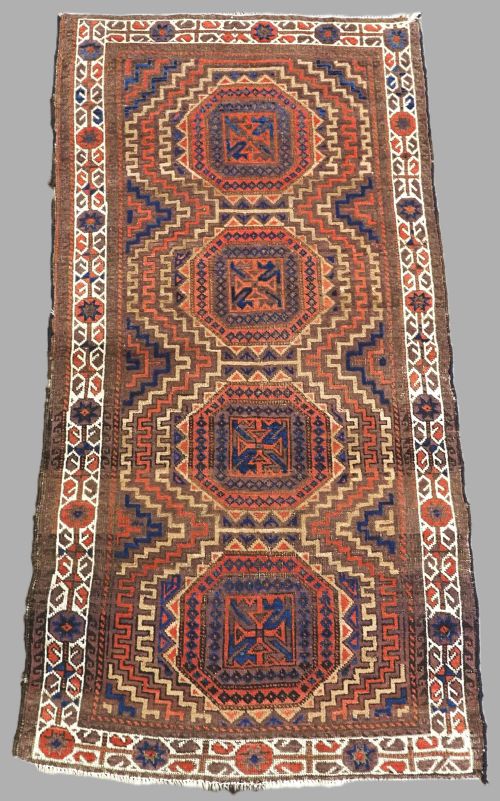
These textiles originate from Northern Afghanistan and surrounding Central Asian regions associated with Turkmen and Baluch tribal groups. Ersari and Kizil Ayak weavers produced many of the larger room-size carpets.
Village workshops and nomadic communities shaped the traditional designs seen across these regions. The geography of Northern Afghanistan heavily influenced the materials and tribal patterns utilised.
How do I identify an Ersari Turkmen carpet?
Look for repeating octagonal guls set against a dominant warm red wool background. Ersari carpets frequently display large formats with geometric borders and traditional tribal guard stripes.
The structural use of hand-spun wool and natural dyes creates a distinct tactile and visual depth. These main carpets showcase the specific design vocabulary of Turkmen tribes.