

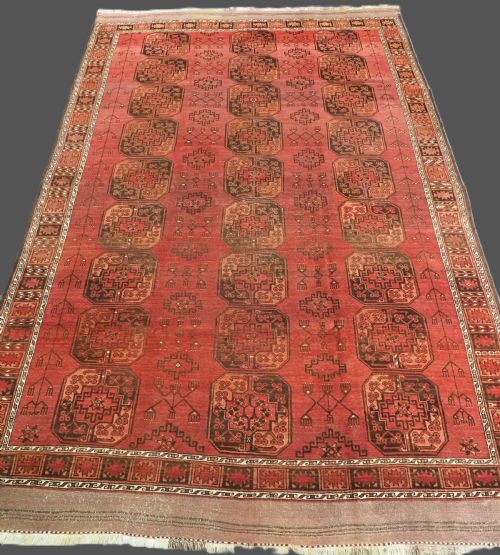
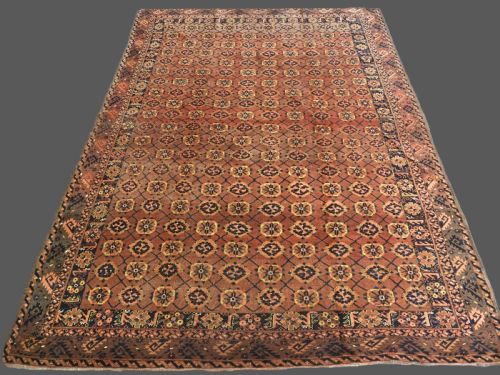
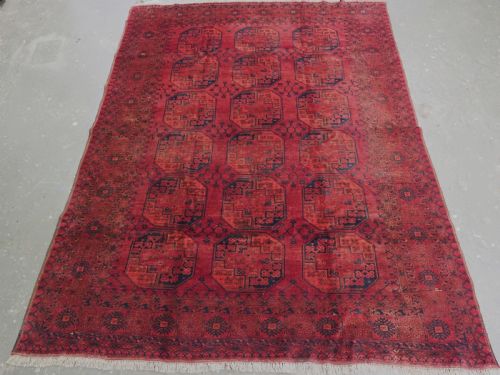
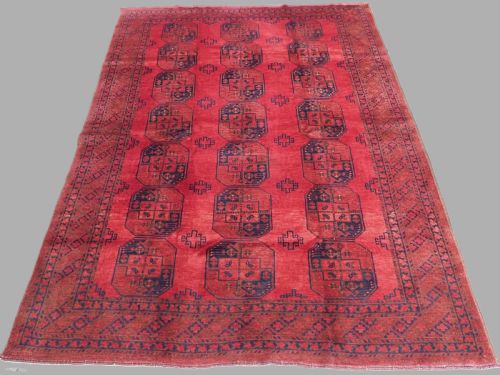
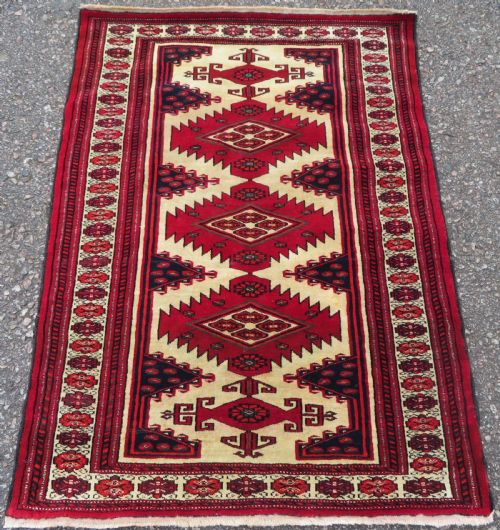
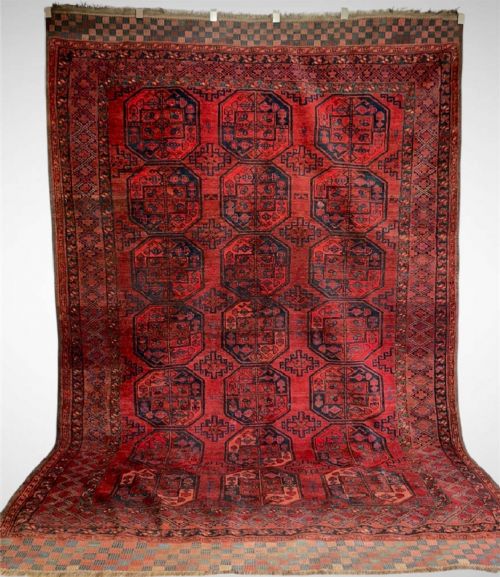


Red Wool Afghan Carpet
A red wool afghan carpet brings tribal warmth and enduring structure into a room through deep madder tones and geometric motifs.
Red Wool Afghan Carpet
A red wool afghan carpet encompasses woven floor coverings originating from nineteenth and early twentieth-century village and nomadic workshops. Buyers encounter room-sized carpets, runners, and smaller prayer rugs displaying traditional tribal patterns.
How they were made
Weavers relied on hand-spun wool, often combined with goat hair and cotton foundations for structural resilience. Natural dyes provided the characteristic warm red colour palette that defines these regional textiles.
Nomadic and village production involved upright looms where knotting and flatweave techniques created dense, hard-wearing piles. Long kilm ends and sturdy selvedges protected the main field from fraying during daily use.
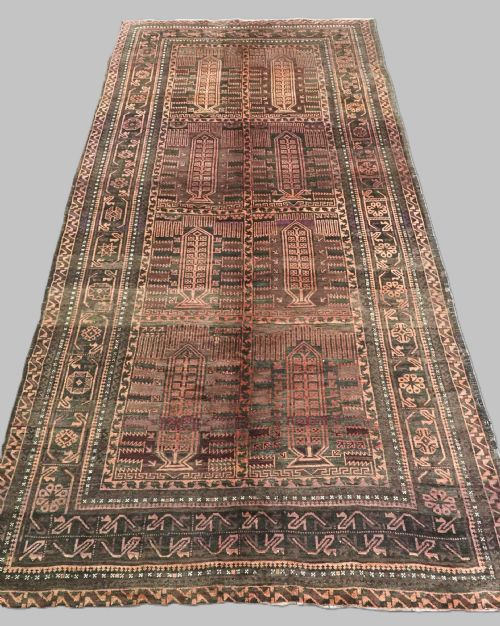
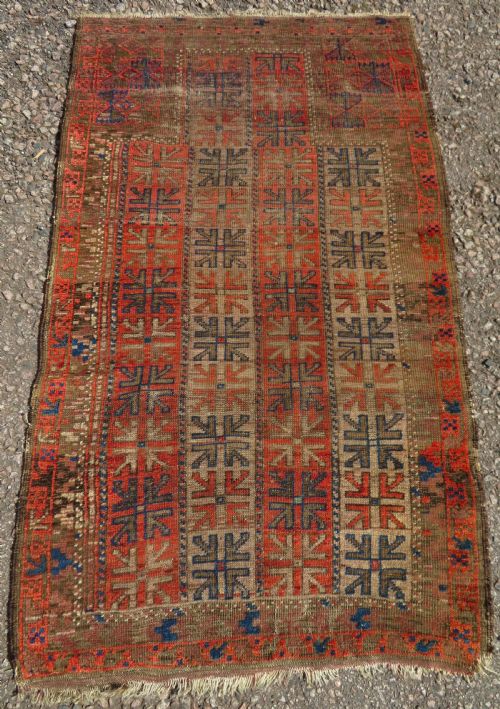
Common regional forms include Ersari Turkmen, Kizil Ayak, Timuri, and Mushwani Baluch village rugs.
What varies in quality
Quality rests in the precision of the weave and the depth of the natural dyes used across the field. Tightly packed knots and resilient wool produce a heavier handle that withstands heavy foot traffic.
Visual balance distinguishes standard village production from finer examples, where symmetrical gul motifs and crisp secondary borders display superior draughtsmanship.
The Red Wool Afghan Carpet Glossary
- Gul
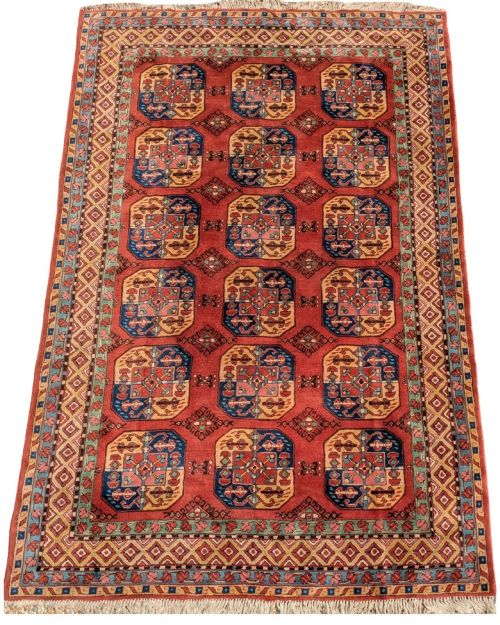
- An octagonal medallion motif repeated across Turkmen and Afghan carpets. This pattern forms the central design element in many main carpets.
- Mihrab
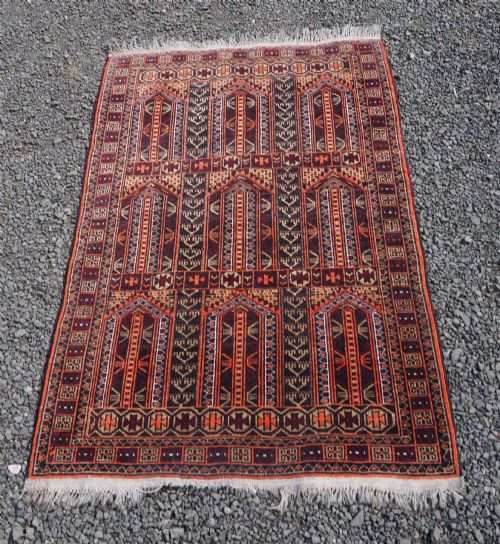
- A niche design found in prayer rugs, often indicating the direction of prayer. These architectural arches frequently feature double or triple tiers.
- Sofreh
- A woven spread or eating cloth used for communal meals in nomadic households. These flatwoven or piled textiles display specialised field patterns.
- Kilm
- A flatwoven textile structure without a raised pile. Long kilm ends often protect the structural warp threads at either end of a rug.
Red Wool Afghan Carpet: Frequently Asked Questions
How do I clean a wool carpet?
Gentle surface brushing and professional rug cleaning preserve the natural wool pile. Avoid harsh chemical treatments that strip the original dyes.
Regular rotation prevents uneven wear in high-traffic hallways and living spaces.
Are these carpets suitable for heavy traffic?
Nomadic and village pieces were built for rigorous domestic use on hard floors. Their dense wool construction handles daily foot traffic with ease.
Placing an appropriate underlay beneath the rug prevents sliding and cushions the foundation.
What does a prayer rug look like?
Prayer rugs feature a distinct pointed arch or mihrab design at one or both ends. This architectural motif directed the user during daily devotions.
Format dimensions tend to be smaller, making these pieces versatile for hanging or placement in intimate spaces.
How can I tell tribal groups apart?
Differentiating groups involves studying the specific secondary borders, wool texture, and repeating gul motifs. Ersari carpets often display large octagonal guls, while Baluch pieces utilise darker palettes and distinct prayer formats.
Examining the weave structure at the reverse reveals regional idiosyncrasies in knotting density.