



Tin Glazed Platter
A tin glazed platter brings a sweep of opaque white earthenware and cobalt pigment to a wall or sideboard, offering a broad surface of historic ornament.
Tin Glazed Platter
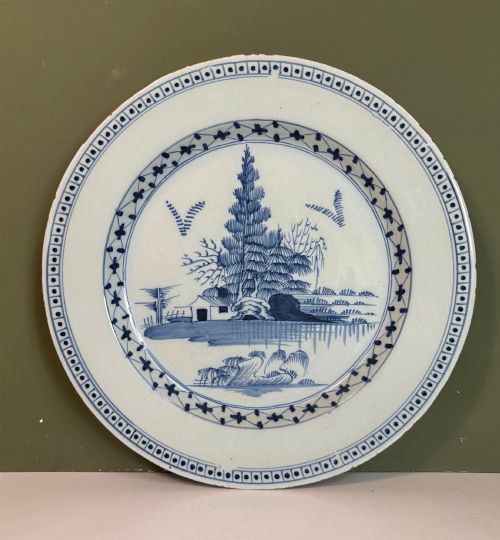
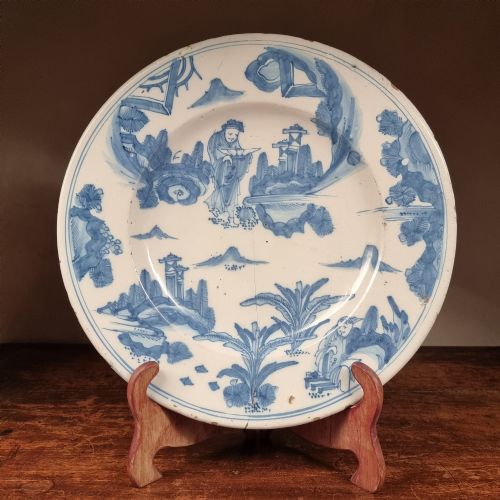
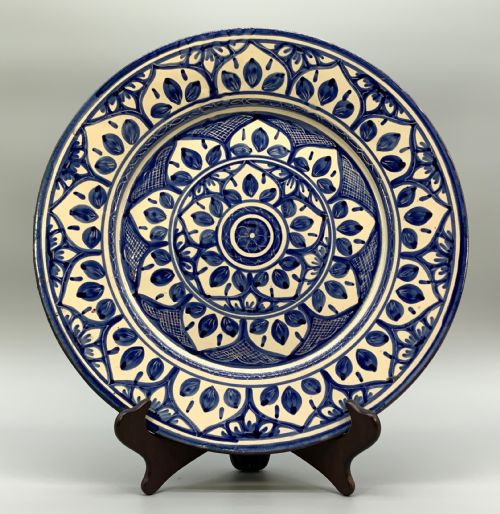
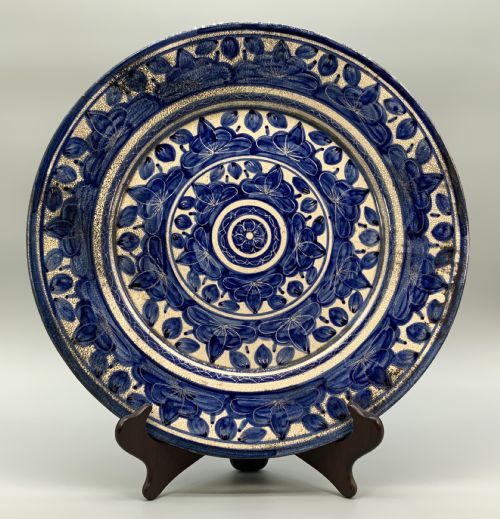
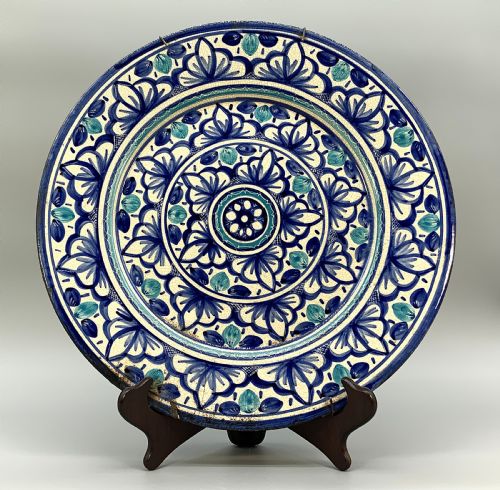
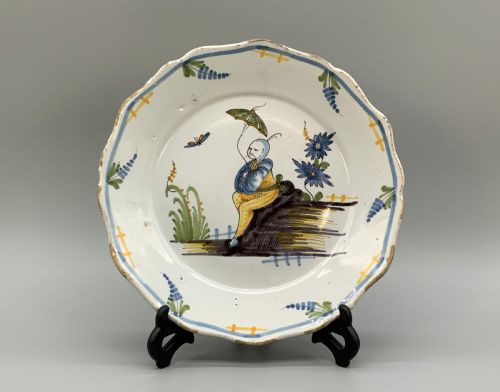
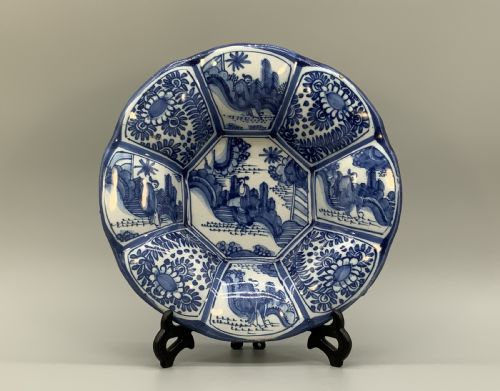
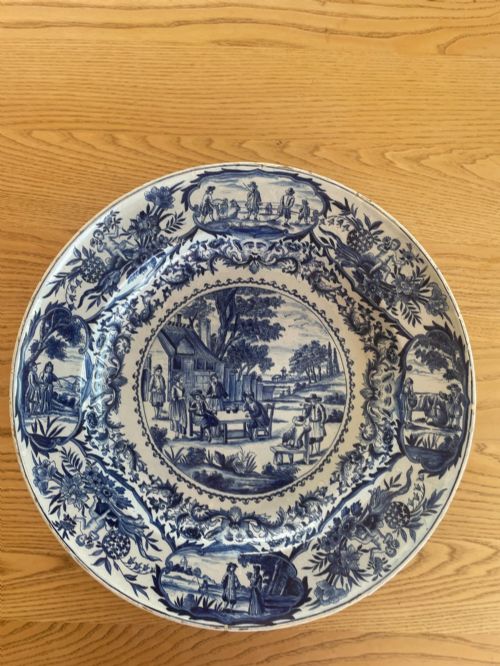
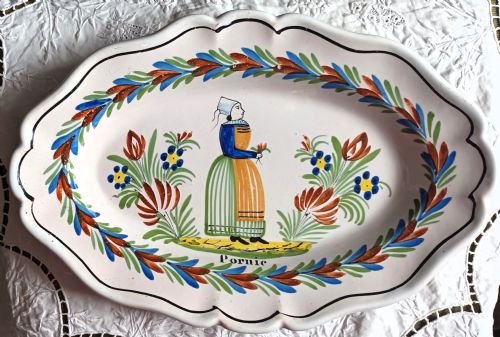
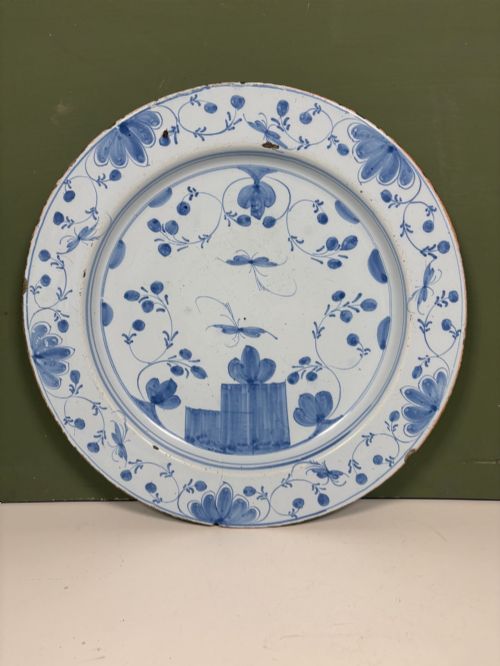
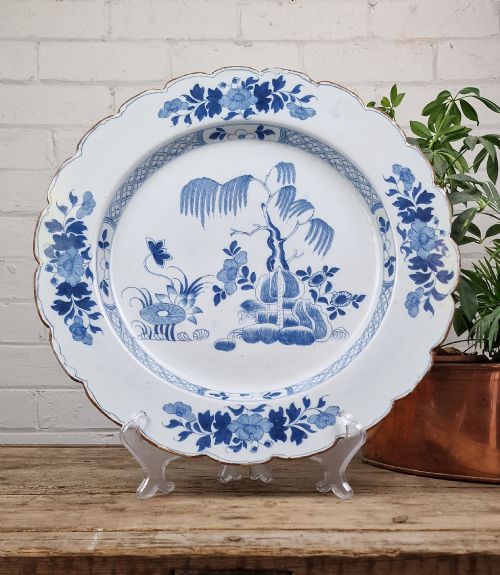
A tin glazed platter takes the form of a wide earthenware dish, often described as a charger or serving dish, designed primarily for display rather than heavy dining use. The tin glazed platter examples on this page span the seventeenth, eighteenth, and nineteenth centuries, originating from English, Dutch, French, and Italian kilns.
The most frequent discovery is a large circular charger finished in blue and white, reflecting Dutch Delftware or English traditions from the eighteenth century. Other versions introduce manganese purple, yellow, and polychrome pigments, alongside Moorish or Renaissance revival styles from later decades.
Materials and technique
Potters formed these pieces from common earthenware clay, shaping them into generous plates and platters before an initial firing. The biscuit body received a liquid glaze containing tin oxide, which dried to a chalky white surface ready to absorb pigments.
Painters applied cobalt oxide, manganese, and other mineral colours directly onto the unfrozen glaze, a technique requiring immense skill because the porous surface absorbed the paint instantly without permitting erasure. A final kiln firing fused the metal oxides into the glossy white coating.
A seventeenth-century dish survives simply because someone valued a cheerful blue rabbit enough to hang it on the parlour wall.
Judging quality and character
Quality rests upon the confidence of the brushwork and the clarity of the tin glaze over the earthenware body. Superior pieces display fluid, purposeful painting, whether depicting Chinese figures, classical scenes, or geometric borders, whereas lesser examples appear stiff and crowded.
The smoothness of the white glaze and the richness of the cobalt or polychrome palette distinguish ambitious workshop production from utilitarian output. Preservation of the tin glaze across wide rims and footrings further separates exceptional survivals from heavily restored plates.
The Tin Glazed Platter Glossary
- Tin-Glazed Earthenware
- Pottery covered in an opaque white glaze achieved by adding tin oxide to a lead glaze. This white surface serves as an absorbent canvas for painted decoration.
- Charger
- A large decorative plate or platter intended for display on a wall or dresser rather than for passing food at table. These pieces measure significantly wider than standard dining plates.
- Delftware
- Earthenware made in the Netherlands or England decorated with tin glaze, most famously in blue and white imitating Chinese porcelain. Production flourished across the seventeenth and eighteenth centuries.
- Maiolica
- Italian tin glazed earthenware noted for colourful narrative scenes or rich polychrome patterns. The tradition dates to the Renaissance and influenced later revival pieces.
- Grand Feu
- A firing method where pigments are applied directly to the raw glaze and subjected to a single high-temperature firing. This technique merges the colours permanently with the glaze.
Tin Glazed Platter: Frequently Asked Questions
How were these large platters used?
Historic households displayed large platters on dressers, sideboards, and walls to demonstrate taste and prosperity. Their generous surfaces provided an ideal canvas for narrative scenes and imported motifs.
While some served food on formal occasions, their porous earthenware bodies meant they chipped easily. Surviving examples generally owe their existence to domestic display rather than kitchen use.
How do I hang a heavy charger safely?
Hanging a heavy earthenware charger requires a specialised spring-clip hanger padded with rubber or plastic to protect the rim. Ensure the wire grips the footring securely and fastens into a wall stud.
Avoid adhesive disk hangers glued to the reverse, as the porous earthenware and historic glaze can detach under sustained tension. Check the stability of the hanging hardware periodically.
How do I tell English Delft from Dutch Delft?
English Delft chargers often feature a distinctive pinkish or buff-coloured earthenware body beneath a softer glaze, with footrings showing three distinct stilt marks from kiln supports. Dutch pieces frequently utilise a whiter clay body and denser tin glaze.
Border patterns and palette choices also offer clues, as English kilns adopted distinct regional painting styles for local markets. Examining the unglazed underside often reveals these subtle differences in clay preparation.
Can I use these antiques for serving food?
Using antique tin glazed platters for serving food is generally discouraged due to the fragile nature of historic earthenware and the presence of lead in older glazes. Acidic foods can also damage the historic glaze surface.
Enjoying these pieces as visual objects protects the fragile tin glaze from modern detergents, cutlery marks, and thermal shock. Displaying them dry ensures their longevity for future generations.