

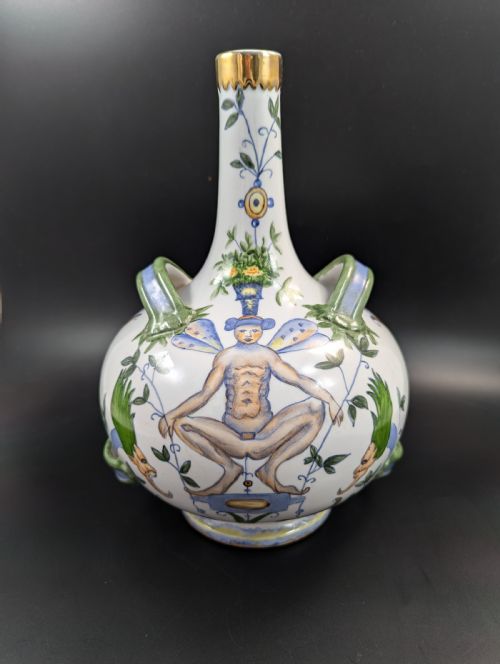

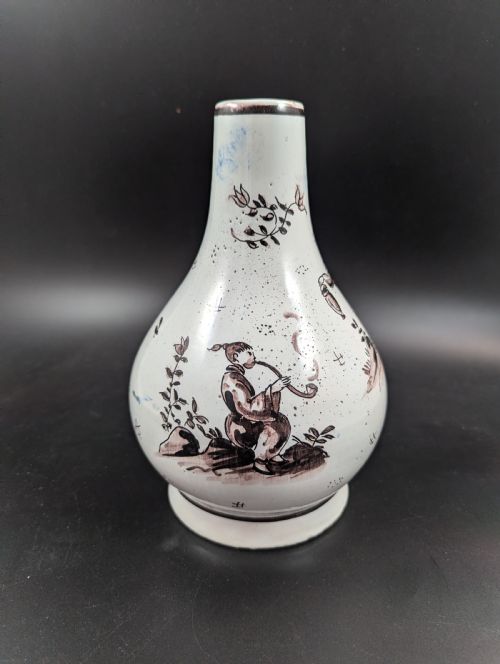


Tin Glazed Earthenware Bottle
These tin glazed earthenware bottle examples bring together centuries of European ceramic craft, offering rich tin glaze surfaces and hand-painted cobalt or enamel decoration.
Tin Glazed Earthenware Bottle
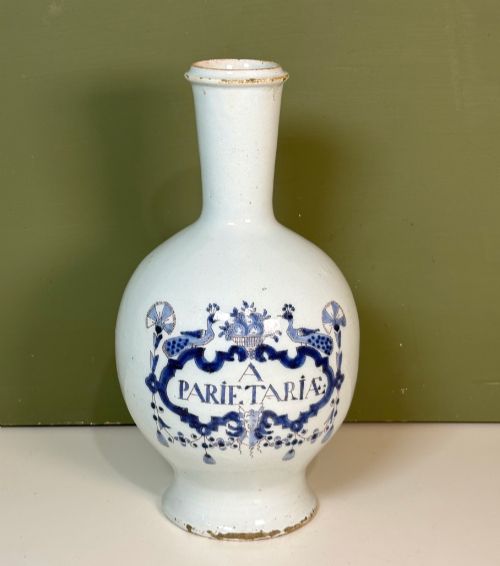
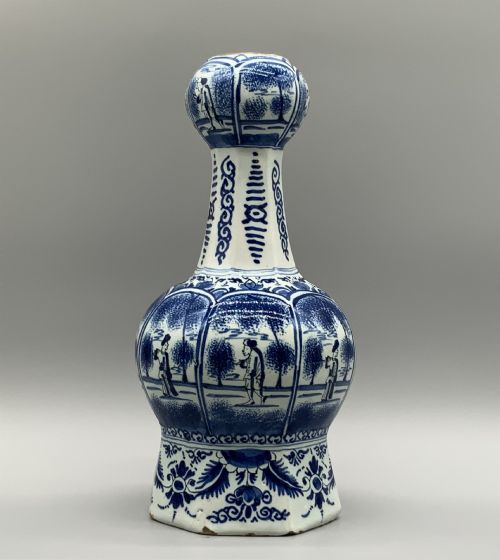
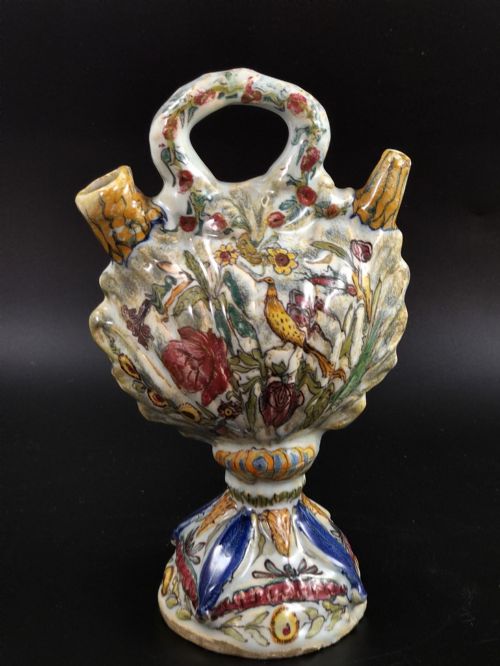
A tin glazed earthenware bottle encompasses a fascinating variety of apothecary containers, cruet jugs, and pilgrim flasks originating from seventeenth, eighteenth, and nineteenth-century European kilns. Buyers seeking a tin glazed earthenware bottle typically encounter Dutch Delftware, English delftware from Lambeth, French faience, and Italian majolica ranging from blue and white designs to polychrome schemes.
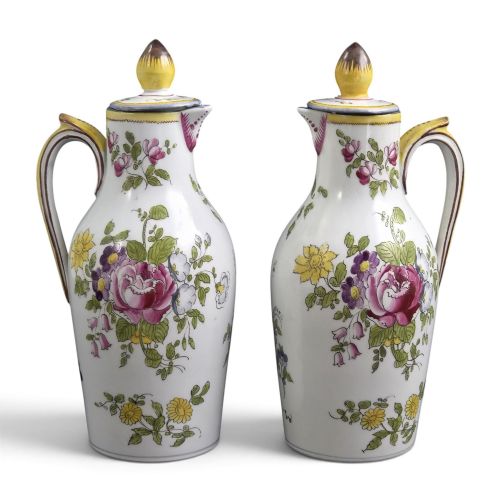
The forms span tall apothecary vessels, waisted drug jars, double-handled flasks, and oil and vinegar jugs with covers. Seventeenth and eighteenth-century examples dominate the offerings, often decorated with Chinoiserie motifs, armorial bearings, or botanical designs executed in cobalt oxide.
Materials and construction methods
Potters shaped these vessels from earthenware clay before applying an opaque white tin glaze that created a smooth, receptive canvas for subsequent painting. Artisans then hand-painted pigments such as cobalt oxide and enamel directly onto the porous unfired glaze surface before a final kiln firing fixed the colours.
Regional workshops utilised local earthen clays while refining glaze recipes to achieve varying degrees of opacity and gloss. The integration of painted tin glaze over earthenware formed the defining technical characteristic shared across Italian majolica, French faience, and Dutch Delftware production.
Tin Glazed Earthenware Bottle Retail Price Guide 2026
Typical asking prices for tin glazed earthenware bottle among the pieces listed under this phrase on Sellingantiques today, from the lower quarter to the upper quarter. They describe what is for sale here now, not the wider market.
Materials recorded in current inventory include earthenware, tin glaze, cobalt oxide, and polychrome enamel across various forms like apothecary jars and pilgrim flasks.
Evaluating quality and execution
The distinction between standard domestic wares and exceptional pieces rests upon the precision and fluidity of the hand-painted decoration. Finer examples display confident brushwork in cobalt oxide or polychrome enamel, while lesser pieces show hurried execution or muddied pigment application.
Surface preservation and the integrity of the tin glaze significantly influence the character of each vessel. Superior specimens maintain uniform glaze coverage and crisp definition across regional styles spanning Italian Baroque to French Rococo aesthetics.
Veuve Perrin Marseille
The Tin Glazed Earthenware Bottle Glossary
- Tin-Glazed Earthenware
- Pottery covered with a lead glaze made opaque by the addition of tin oxide. This white surface provided an ideal background for hand-painted decoration in imitation of Chinese porcelain.
- Albarello
- A type of majolica earthenware jar used by apothecaries to hold drugs and ointments. These vessels typically feature a waisted cylindrical body for easy gripping on apothecary shelves.
- Faience
- The French and general European term for tin-glazed earthenware. Production centres such as Marseille developed distinctive enamel palettes and forms like oil and vinegar jugs.
- Cobalt Oxide
- A mineral pigment used to achieve deep blue decoration under the glaze. It remained stable at high kiln temperatures, making it the primary colourant for seventeenth and eighteenth-century delftware.
- Majolica
- The Italian term for tin-glazed earthenware decorated with opaque coloured glazes. Italian workshops produced elaborate pilgrim flasks, vases, and drug jars during the Renaissance and Baroque periods.
Tin Glazed Earthenware Bottle: Frequently Asked Questions
How do I identify a tin glazed earthenware bottle?
Look for a porous earthenware body covered in a white, opaque tin glaze that often shows minor crazing or flake chips revealing the buff clay beneath. The decoration is typically hand-painted directly onto this glaze layer using cobalt blue or polychrome enamel pigments.
Examination of the base and interior surfaces usually reveals characteristic kiln stilt marks or unglazed areas typical of historic European ceramic production methods.
Where were these ceramic bottles made?
These vessels originate from major European ceramic centres including Dutch kilns producing Delftware, English potteries in Lambeth, French faience workshops, and Italian majolica production sites. Each region developed distinct stylistic traits ranging from Dutch Chinoiserie to Italian Baroque and French Rococo.
Trade routes and shared ceramic techniques led to stylistic exchanges between these regions while maintaining local manufacturing traditions.
How were apothecary bottles used historically?
Apothecaries and druggists utilised these containers to store liquid medicines, oils, syrups, and dry ingredients safely. The impervious tin glaze prevented volatile medical compounds from seeping into the porous earthenware body.
Many featured specialised spouts, handles, or waisted profiles to facilitate pouring and handling within busy dispensary environments.
How should I display a tin glazed earthenware bottle?
Place these vessels in stable interior environments away from direct sunlight and excessive humidity fluctuations to protect the delicate tin glaze surface. Display them on sturdy shelving or within cabinets where their hand-painted cobalt and polychrome details remain visible.
Avoid using water or floral displays inside antique specimens, as moisture can permeate historical earthenware through micro-cracks in the glaze.