
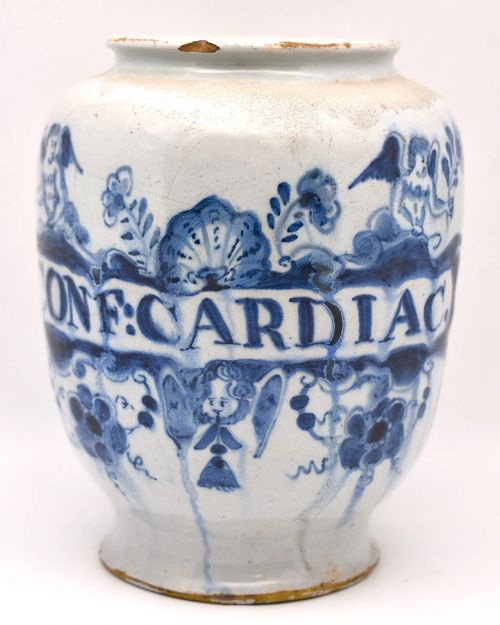


Tin Glaze Ceramic Pot
A tin glaze ceramic pot brings historic earthenware and rich cobalt pigment into a room through centuries of European potting traditions.

Tin Glaze Ceramic Pot
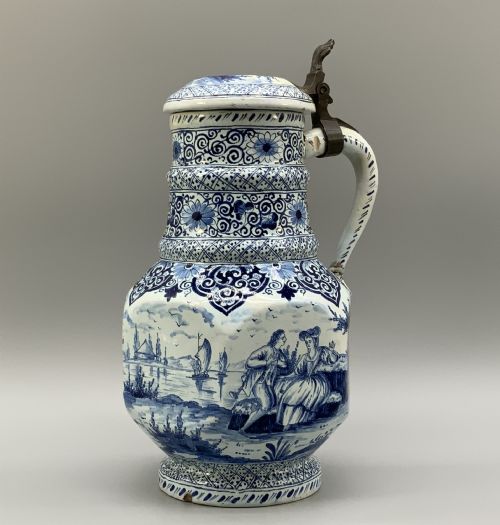
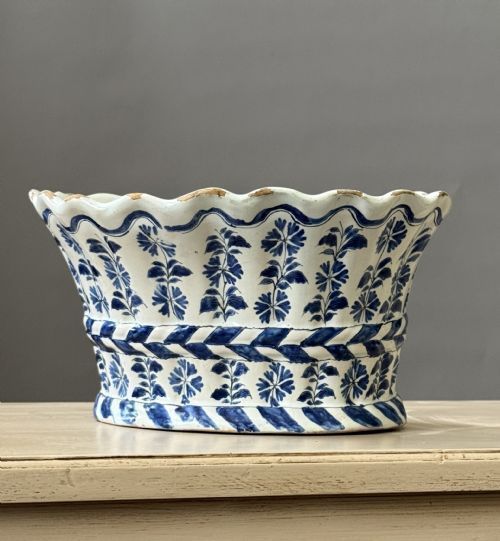
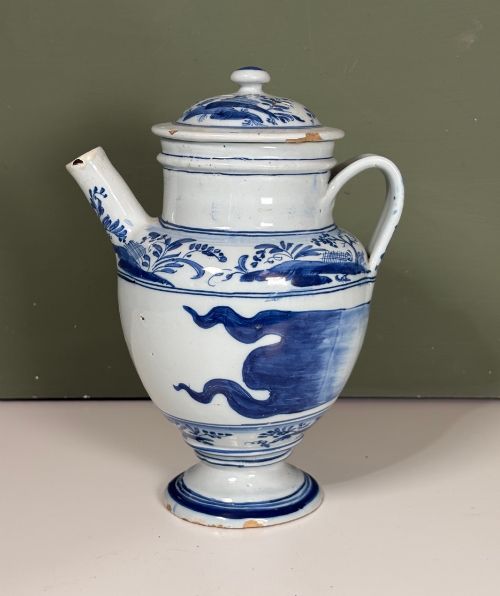
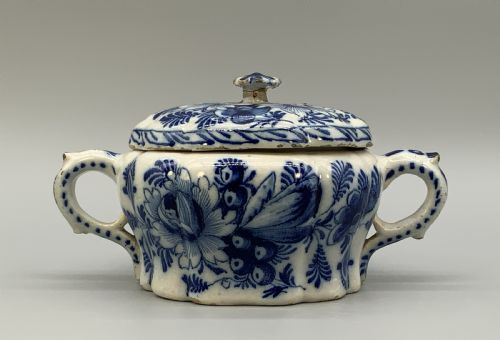
A tin glaze ceramic pot encompasses earthenware vessels produced across the seventeenth, eighteenth, and nineteenth centuries in England, the Netherlands, Italy, and France. Buyers searching for a tin glaze ceramic pot encounter forms ranging from apothecary jars and drug pots to garden urns, posset pots, and lidded jugs.
Dutch Delftware and English delft dominate the forms, alongside Italian maiolica, Naples majolica, and Nevers faience. These pieces span utility and display, from kitchen and pharmacy storage to ornamental garden planters and sweetmeat dishes.
Materials and construction
Potters built these vessels using earthenware bodies coated in a tin glaze to create an opaque white surface suitable for painting. Artisans applied cobalt pigment, manganese, and polychrome pigments directly onto the unfired or fired glaze before a final firing fused the colours.
Certain forms incorporated additional hardware, such as pewter lids fitted to ceramic jugs, while others relied entirely on the pottery body and matching ceramic covers.
Materials recorded across the inventory include tin-glazed earthenware, cobalt pigment, manganese, and brass.
Assessing quality and character
Quality rests in the crispness of the hand-painted decoration, whether in blue and white or polychrome palettes, and the stability of the tin glaze over the earthenware body. Early seventeenth-century examples display distinct potting weights and pigment depths compared to later nineteenth-century production.
The sophistication of the form, from standard pharmacy albarelli to elaborate bough pots and garden urns, dictates the visual impact of the piece within a collection.
The Tin Glaze Ceramic Pot Glossary
- Delftware
- Tin-glazed earthenware produced in the Netherlands or England, characteristically decorated in blue and white or polychrome pigments.
- Albarello
- A cylindrical apothecary jar designed for holding pharmaceutical drugs, commonly tapering slightly at the centre.
- Faience
- Tin-glazed earthenware originating in France, Italy, and other European countries, mirroring techniques seen in delftware and majolica.
- Posset pot
- A spouted ceramic vessel historically used for serving posset, a hot drink made of milk curdled with wine or ale.
- Majolica
- Tin-glazed Italian pottery featuring colourful painted designs over an opaque white glaze.
Tin Glaze Ceramic Pot: Frequently Asked Questions
What is a tin glaze ceramic pot?
A tin glaze ceramic pot is an earthenware vessel coated with an opaque white glaze, often hand-painted with cobalt or polychrome pigments.
These pieces originate from historic centres in England, Holland, Italy, and France, encompassing utility jars, jugs, and garden vessels.
How were pharmacy jars used?
Pharmacy jars, such as albarelli and drug jars, stored medicinal herbs, syrups, and dry preparations in apothecaries.
Labels painted directly onto the pottery indicated the specific contents inside the vessel for daily dispensary use.
How do I date a delft pot?
Dating relies on stylistic shifts in painting, palette choices, and potting forms recorded across the seventeenth and eighteenth centuries.
Early pieces often show distinct tin glaze thickness and floral or structural motifs typical of English and Dutch workshops.
How should I display these pots?
These ceramic pots suit placement on shelves, sideboards, or tables where their painted tin-glazed surfaces remain visible.
Larger garden urns and planters function effectively as standalone decorative focal points in interior spaces.